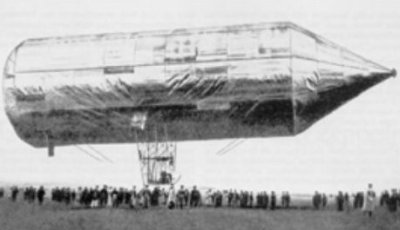
The “Tin Blimp” Was A Neither Tin Nor A Blimp: The Detroit ZMC-2 Story

After all the crashing and burning of Imperial Germany’s Zeppelins in the later part of WWI – once the Brits managed to build interceptors that could hit their lofty altitude, and figured out the t…

Hackaday
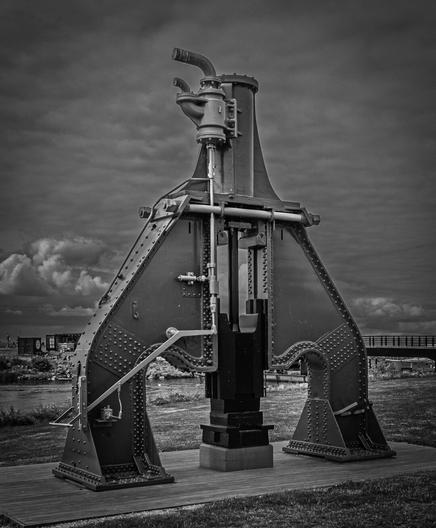
A towering 19th‑century steam hammer displayed outdoors on a wooden platform, showcasing the power and craftsmanship of early industrial engineering. The dramatic setting by the water highlights the contrast between heavy machinery and the surrounding landscape.
#industrialheritage #steammer #historicalmachinery #heavyindustry #forgingequipment #engineeringhistory #metalwork #industrialmonument #mechanicalengineering #vintagemachinery #industrialarchaeology #outdoordisplay #rivetedsteel #industrialrevolution #engineeringlandmark
Historic Engineering Wonders: Photos That Reveal How They Pulled It Off - Rare Historical Photos

Historic engineering feats come to life through rare photos that reveal the techniques, tools, and ingenuity behind some of the most impressive constructions in human history.

Rare Historical Photos

1982: Fred Dibnah shows how to erect a CHIMNEY SCAFFOLD at 200 feet [video]

https://www.youtube.com/watch?v=w3ma9iYx4rg

#HackerNews #FredDibnah #ChimneyScaffold #Construction #Video #1982 #EngineeringHistory

1982: FRED DIBNAH shows HOW to erect a CHIMNEY SCAFFOLD at 200 feet! | Fred | 1980s | BBC Archive

YouTube

@TOrynski As a fan of tram systems, I recommend Episode 184 of Well Theres Your Problem:
https://inv.nadeko.net/watch?v=SQ7J1KgCSC8&list=PLnmst0j-3FuZ5Mx5GU45uPBvA_WNTBLWm&index=133

It covers the #EngineeringHistory around the rise and fall of laissez-faire #tram operators and manufacturing

Watch this mesmerizing Stirling engine, an 1816 invention to rival steam engines without the noise. No explosions—just quiet operation (hear the background music!). It runs on external heat—here from an alcohol lamp that powers it for 18 hours on just 8 fl oz of fuel. Clean, efficient, and beautifully engineered. #EngineeringHistory

I spent a while fixating on trying to discover why the macOS iCloud/“CloudDocs”/“Mobile Documents” daemon is named bird, w/ a cli in /usr/bin named brctl

After some digging I’m /pretty/ sure the b stands for uBiquity— an internal codename for what was marketed as “iCloud”; this is supported by e.g. [1]’s equivalence between ubiquityIdentityToken and com.apple.bird.token

I’m still pretty at total guess on r, leaning “record” (maybe also as rc → record since bird is code-internally BRCDaemon ; though it also seems likely c = container. I don’t think rc → runcom by way of initrc, bashrc, etc)

secondary theory is br is for “barrier” based on a loose symbol or two.

I’m pretty strongly guessing that “i” in bird stands for nothing so much as “OMG [ swe coworker], it’s not pronounced Bee-Arr-Dee, it’s pronounced BIRD” (cf gif, sql, … cuddle vs c-t-l [by rights hachyderm is ku-bECK-dl / ku-Bechdel territory] )

Anyway if anybody happens to know the answer, plz lmk. #apple #icloud #macos #brctl #clouddocs #daemon #engineeringhistory #lore

[1] https://developer.apple.com/library/archive/qa/qa1935/_index.html

Technical Q&A QA1935: Checking the availability of iCloud Drive

QA1935: describes the iCloud Drive availability on Apple's platforms.

Discover how James Watt's enhancements to the steam engine revolutionised the world in my article today.

Read it here: https://discovermyeurope.eu/remembering-the-genius-who-engineered-the-future-james-watt/

#JamesWatt #SteamEngine #IndustrialRevolution #EngineeringHistory #Innovators

Remembering The Genius Who Engineered The Future: James Watt

Early Life and Influences James Watt, born on this day on 30 January 1736 in Greenock, Scotland, is celebrated not for inventing the steam engine, but for revolutionising it in a way that transformed the world. Watt’s work laid the groundwork for the Industrial Revolution, changing industries and societies forever. From a young age, Watt [...]

Discover my Europe