 cmrosens
Interview with Paula D. Ashe: Body Horror, Weird Fiction, and Fkd Up Family
Listen Nowhttps://open.spotify.com/episode/5vay5XYuaRRaJTeQRGY8SP?si=d5fd318ca9f2434c
Bio
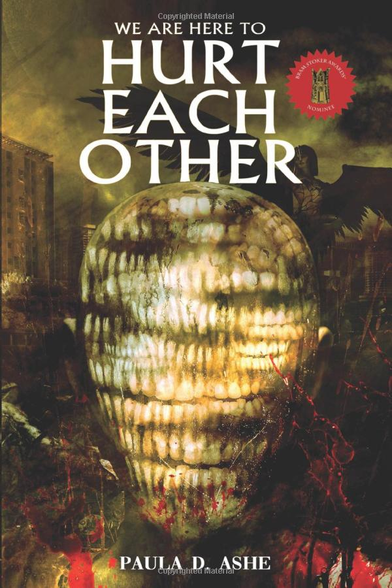
Paula D. Ashe is an educator and an award-winning writer of dark fiction. She lives in the Midwest with her family. Her collection, We Are Here to Hurt Each Other, was nominated for the Bram Stoker award for ‘superior achievement in a fiction collection’.
Subscribe to Newsletter Follow on Twitter Buy NowIntroduction
CMR: Hello! Welcome back to Eldritch Girl, and today we’ve got Paula D. Ashe with us. I am so excited. So Paula! Can you introduce yourself for us, please.
PDA: Sure. Yeah, Thank you so much again for having me. My name is Paula D. Ashe. I’m the author of the short story collection We are Here to Hurt Each Other, which came out in February of 2022 from Nictitating Books, and it was recently nominated for a Bram Stoker award for a superior achievement in a fiction collection. That phrase is so surreal to me. But I mean I got to say it. So. Yeah. But thank you. Thank you so much for having me, CM. This is exciting.
CMR: Yeah, this is. It was well deserved, I think! I’m really excited for you yes. I love that collection. And yes, it did fuck me up quite a lot.
PDA: That’s what it does. That’s my lane, apparently. That’s… yeah, and it’s funny, because, you know, I think, you know, anyone, like, which is true for a lot of writers… Most of us live pretty normal… Quote unquote “normal”, you know, lives, and so when I tell people I’m a writer, and I say, I want, you know, a horror writer, and I like oh, cool like Stephen King, and I’m just like… No. Mm-mm. No, no, and they’re like, oh like what? And I’m like, I don’t know if you should read it because you won’t talk to me anymore. But it – you know, it works out okay, but it’s pretty extreme stuff for sure.
CMR: No, I did really enjoy it, though, and I’m excited because you’re going to read an extract from one of the stories in the collection. Would you like to introduce that and kind of give it a little bit of context for it?
PDA: Yeah, absolutely. So this story the excerpts is from a story called Jacqueline Laughs Last in the Gaslight, and it is the only historical piece in the collection. And I actually wrote this story because, I mean I’m sure as you can tell I’m in the United States, I’m American for better or for worse, and so I wrote this story after visiting London, and specifically the Whitechapel district. And that’s kind of what this, what this story is about, and this is the opening paragraph.
And so yeah, so I’m gonna read it. And just be aware, as with you know, a lot of my stuff, it’s pretty… not all of my stuff, but this excerpt in particular, is a little racy, let’s say, and it has some language. So yeah, so that’s it.
Alright, so I’m gonna go ahead and read.
Extract from ‘Jacqueline Laughs Last in the Gaslight’
Early July 1888.
The young bride and her handsome Deacon, her hand like painted porcelain nestled delicate and safe in the sanctuary of his forearm. In Whitechapel’s rookery of wastrels the fine pair is as prominent as a hanged man’s prick. Spectacles of health in a garden of steaming grime.
They walk the Flower and Dean, mouths stiff but smiling as cutthroats and pickpockets threaten the woman with rape. Slatterns with pickled brains emphatically offer the Anglican a variety of slick and tight delights, flipping their ragged skirts at the pass of his shadow to give him a glimpse of their puckered and pestilent holes.
This is their honeymoon.
Jacqueline Laughs Last in the Gaslight – Paula D. AsheInterview Transcript
CMR: Wow, yeah.
PDA: It’s racy.
CMR: Yeah, it’s yes, it’s just … grimy.
PDA: Yes, no it really is! I always forget sometimes when I read that part. I’m just like, That’s so… yucky. On various levels, you know what I mean? I’m like, yeah, ew!
CMR: Yeah, it reminds me, because you use like a lot of that kind of body horror, and that you do a lot of body horror in your work. And it kind of reminds me of the Rotting Man, I think it is.
PDA: The Rotting Man is in the story All the Hellish Cruelty of Heaven. Yeah, that that character is from that story. Yeah.
CMR: Yes, and you’ve got this real talent for creating very visceral but also a weirdly beautiful imagery at the same time. And there’s something about that, like the beauty and the grotesque. And then it’s great, because it kind of crosses that line into ‘no that is just revolting’, and then back again into oh, oh, that’s… *approving sound* Yeah, I love that about your prose. That’s one of the reasons I was excited to chat about it with you.
Paula D. Ashe on Body Horror
So how central is body horror to your work? And what drew you as a writer, to focus on the body as a site of horror in some of your stories?
PDA: it’s funny because somebody… there were a lot of people in the book first came out, a lot of folks were were saying… They were comparing it to David Cronenberg, which was super flattering to me because I love both Cronenbergs’ work at this point, but I grew up on, you know, Cronenberg the the elder, and so that was really flattering to me. I didn’t realize that what I was doing was body horror. It just kind of came natural to the way that I tell a story, and I didn’t… it never… I mean, again, like it didn’t strike me until the collection came out, and people started to respond to it, that’s what they were seeing, and that’s kind of what I was doing. I mean. I guess it’s central, because I think for me the reason why I feel so drawn to body horror… I feel drawn to body horror for several reasons.
One of them is I’m just not scared of supernatural stuff in literature. Just doesn’t often scare me. That’s not to say that I don’t like it, or that I think it’s not valid or anything like that. I just, as a writer, I don’t feel like – I don’t know, like that just doesn’t spark my imagination, for whatever the reason is, it just doesn’t, cause I think I think I know me as a writer, and I would use the supernatural as like a ghost in the machine kind of thing, like I would be like, Oh, I don’t know how to end this story, so I’ll just have some ghost show up. You know what I mean, because they can do, and so for me, to make it a challenge that I can tangle with creatively and intellectually, it has to be grounded in reality, and it has to be grounded in the body. So that’s part of it. It’s just so stupid. And again, it’s like, you say that I don’t write about supernatural stuff – I have, and I’m sure that I will in the future. But for this collection in particular, me and the editor, Shawn Thompson, talked a lot about the body horror aspect of it, and how it’s like you said after the the excerpt. It’s grimy. It’s meant to be. It’s a grimy kind of embodied focus.
I think also as far as my work goes, I choose a lot of body horror because I feel like as a marginalized subjects on a lot of different levels, that women are kind of conscripted to the body. Like that’s that whole binary, that duality thing, like you know, men have the intellect, and women have the body, and so I think just that kind of – not saying that that’s true. But just… A lot of my background is in a lot of feminist theory study, and I just think that’s really interesting. I’m familiar with the work of Julia Kristeva and Monique Wittig and all of these feminine theorists who talk a lot about the body and embodiment, and so that’s also a big part of it, too. I really am fascinated by Julia Kristeva’s work on objection, and how like you know, the body as the site of both life, but also death and decay. And you know the undeniable kind of corporeal reality of our bodies, that’s just really interesting to me. I like to play around with that. because I also just find bodies gross like, let’s just… I mean like, being an embodied subject, sometimes it’s gross, and that’s a side [of it that] I think – we have a lot of anxiety for people for a lot of reasons, and I think that my work kind of plays around with that as well.
CMR: Yeah, definitely, I think like that’s… the corporeality of the horror makes it so much harder to deny, as well. And you have to then face up to things like, not just mortality, but also changes that you can’t control within yourself and the outward expression of those changes. And that can be incredibly frightening on multiple levels, whether or not there’s a supernatural element to it, because the cause at that point is kind of by the by, it’s what’s actually physically happening to you that you have to reckon with, particularly if it’s irreversible, or it appears to be irreversible in the moment.
PDA: Sure.
CMR: I’m thinking about the one story that actually maybe stop reading for the longest time. I had to pause the whole collection because I couldn’t carry on [laughs] – was the Carcosa one. which is – for anyone who hasn’t read it – it’s told via email. So it’s kind of epistolary which I love.
PDA: It’s my favourite.
CMR: I love that form that’s really cool. You’ve got that that distance and the ability to tell that story through sections, but also just the concept of this drug that makes you mutilate yourself in a trance-like way. But, oh, my God, I was like No.
[laughter]
PDA: I’m sorry that you had that experience. But thank you so much for telling me that because that’s so flattering to me as a writer! I’m like Yes, yes, she was repulsed! Hooray!
CMR: Loved it. I think that one is probably the one that still haunts me from there [there = the collection].
PDA: Sure, sure. That one, that particular story messes with a lot of people, and I’m really proud of it, because that, like you were saying, that epistolary format is really hard to nail down. I know we’re talking about body horror, and we’re going to go too far off on a tangent, but it’s so hard, I think, to tell a story in that format well, and I’m just so blessed that worked. I’ll just I’ll leave it at that. But this so, Thank you. But glad that worked out.
CMR: Yeah, definitely. And I think, like that brings us on to the whole, to the other question that I had, which is about the weird fiction elements in your work, because it’s not just about the body horror. And I think there’s a lot more we can dig into with the body horror as well-
PDR: For sure.
CMR: But something that I found was also the uncanny nature of it, and that idea of your body changing, and something familiar becoming very unfamiliar. And that direct reference to The King in Yellow as well, which is the Robert Chambers King in Yellow, play kind of story, reference, playing about with Lovecraftian mythos. And I found there were quite a few other sort of classic Weird fic elements and tales in your work. And so there’s definitely a weird vibe with the uncanny nature of some of them.
Paula D. Ashe on Weird Fiction
So how and when did you get into weird fiction and did that naturally present itself as a vehicle for storytelling for you?
PDA: Yeah, that’s a great question. I don’t know how direct an answer I have for that one. I’ve always been into what in the nineties and early 2000s was called ‘horror/dark fantasy’ like that was its own kind of section. They were combined together, and then they kind of split apart for a bit. I think they’re coming back together for some folks, but for HDF, horror/dark fantasy, was just like my jam, that’s so much of what I read, and I particularly read a lot of Tanith Lee, and so from reading Tanith Lee that led me to… Um? I read a lot of Clive Barker and Tanith Lee and Caitlin R Kiernan, and Poppy Z. Brite, who, you know, currently known as Billy Martin, but used to write as Poppy Z. Brite, and I don’t know when I discovered Thomas Ligotti. It wasn’t… maybe 10 years ago?
But then I started reading it, and that was when, like, I started to recognize the Weird as the Weird, there was a kind of Weird resurgence, particularly in the United States, and we had, you know, writers like Olivia Llewellyn with Furnace, and you know we had, like Matt Cardin and Laird Barron and Matt Bartlett, and Victor LaValle came out with the Ballad of Black Tom, and I was just reading all these things, and just really like digging that that vibe, that uncanny strangeness, but also the philosophical implications.
One of my favorite books of all time is Thomas Ligotti’s The Conspiracy Against the Human Race, and, like I read that book, and it just made me feel like, oh, like somebody gets it. You know what I mean like. Oh, somebody understands. It’s fine, I mean, obviously it’s kind of a cornerstone of cosmic pessimism, so it’s not the most chipper kind of perspective to have, and it’s certainly a – my perspective just has changed over time. It’s really becoming a parent has changed that for me in a lot of ways.
But you know, reading Ligotti, reading the work of Jon Padgett and reading… the magazine or the Journal of Vastarien… What else? There’s just so much of that stuff that that came out in that group.
You know. Early- to mid-noughts, I guess, was just really like — I just devoured all of that stuff because it seemed to Vibe with me in such a way that it was engaging intellectually to me, but it was also it went beyond just ghosts or vampires, or werewolves. It was the nature of reality and not itself, is malevolent or off. And I just found that to be really, really intriguing. And so I really like to play around with that in my own work, and I particularly like to play around with that in my own work, because I think it resonates in the sense of what they call now kind of like social horror. But I don’t know how much I like that phrase.
But I think if you are again part of any kind of marginalized, historically underrepresented, however you want to put it, you know, oppressed group, you know reality is not always safe for you, so fiction that represents that, that plays around with that, is really engaging for me. I think it also not laundry list of names, and you know, books and stuff.
I also forgot to mention, like, probably, one of the big cornerstones of my own kind of development as a writer was the work of Toni Morrison, who is not known as a horror writer, but her work is absolutely horrific, and it’s structure, and it’s intent, and it’s, you know, deployment. So that was also a big influence, particularly the book, her first novel, The Bluest Eye, which is a story about a young, very dark skinned Black girl in the fifties, who, because all of her life she’s been told that the white eurocentric standard of beauty is the— well, that is it, and because she doesn’t fit it, she is ugly, and she’s been treated horrifically her entire young life, because of that, and it’s one of those books that made me realize, like the perspective that a person has on the world, and where they fit into it, it’s not only influenced by their experiences. It’s also influenced by how the world perceives them as well. So if the world perceives you as a threat, then you’re going to see threats in the world, right? Because that’s like how people respond to you.
And so I just — I don’t know I kind of write. I try to write often from from that perspective I think it makes things more interesting. That was a really long answer. So. [laughs]
Paula D. Ashe on Fucked-Up Family Dynamics & Themes of Intersectional Socialization
CMR: no, yeah, that’s that makes a lot of sense as well like, and it reminded me of one of the stories I think you sent a link to in your newsletter (which everyone should sign up to, by the way, links will be in the transcript), which was a very disturbing kind of weird tale, which is the family dinner and some weird shape that appears between them, and then it kind of takes— and then it it just gets massively, wildly out of control. It didn’t go anywhere I thought it was going to go, but it kind of — yeah that kind of microcosm of threats, and the strange dynamics within a microcosm of a family which I love.
PDA: Yeah, yeah.
CMR: Yeah, so that just reminded me of that. And I was like, No, I can see it. I can see the influences in that story.
PDA: That’s cool that you say that because I never even thought about that. But I think you’re right with that particular story, because I do a lot of stuff on family dynamics and family, families that are fucked up like I — that’s just my — let’s be real. And but yeah, certainly for that one, I also like the idea of a threat that only certain people can see, because that just that creeps me out. You know what I mean like that’s just really upsetting to me. So yeah, I think that’s that’s a big part of it as well, the the threat being a thing that only certain people can see, for whatever reason, I can see how that has some parallels with social horror as well, and being part of a marginalized group, because in those cases, certain context, the threat is only something you can see. I mean that’s what a microaggression is, right. Like. It’s something that only certain people interpret rightfully as aggressive, discriminatory behavior.
CMR: Right.
PDA: But not everybody else sees it that way because it’s not attacking that part of their identity or whatever. So, yeah.
CMR: The more I think about that Thanksgiving story the more I want to go back and re-read it, and see, like, yeah. But also, fucked up families it as it as their own thing is, is a a really interesting theme to play around with, and you can get the microcosm of threat in those dynamics, in the way that different members of that family, and then how relative power dynamics play out. And you can show such a lot about society and such a lot of that anxiety and fear and change, and all of that stuff through that kind of — yeah, is that why you like to write about families or —?
PDA: I mean my therapist probably has a different answer the one I’m going to give, but I’m going to say, [laughs] no, I think it’s because — I mean, I think you’re right, it’s a microcosm, my background is also in sociology, I’m a sociologist, and so you know, I’m very big on socialization, and the processes of socialization, and how we learn how to be human in society, and how we teach people how to be human in society, and the biggest, you know, most powerful influence when it comes to socialization is the family. We learn everything about everything from the family. You cannot escape that, you know, for better or for worse, so those dynamics echo throughout your life. If they’re positive — and again, I’m not trying to say that people are like doomed or anything, but if they’re positive dynamics, then that’s good. You can build on that very strong foundation. But if they’re not, that’s where we — that’s where you know, a lot of trauma comes from, a lot of mental illness, and things like that can come from those sorts of things, and I just. I’m always intrigued by how much power families have and how family dynamics are so — I don’t know, prophetic in a way.
I mean again, I’m not trying to say — I know that people don’t like to hear, particularly for people who come from, you know, like abusive backgrounds, that you know, that’s all that they’ll ever be. That’s not what I’m saying, but what I’m saying is, it is difficult to view the world as a safe place when your first experience of the world was was one where you weren’t safe, right?
So that’s kind of the thing that I find really. really fascinating, and I come back to over and over again. And to be fair, I grew up in a relatively, in a comparatively safe household, I think, certainly less safe than some others, but I think it’s all kind of — you know, it all kind of just depends. But, for me, I think I was very acutely aware of that when I was young. I don’t know why, I just always have been kind of aware of that.
And I think one thing that I’ve also noticed, as I’ve, you know, like I’m a parent, is realizing how difficult it is to keep, you know, to protect your family, to protect yourself, to protect your children from like the forces outside of your home, whether it’s like, you know, economic chaos or social strife, or, you know, like even interpersonal stuff. But you have to compartmentalize that for your family, and that’s really hard, and it just makes me kind of think about how difficult it is to maintain those kinds of structures and keep all that stuff in place, you know, while at the same time, like being a productive number of society and all of that other stuff. So it’s a lot to deal with, I think.
CMR: Yeah, and I think — you kind of said, the generational cycles as well,
PDA: Yes, mm-hm.
CMR: I think that’s what you were alluding to there,
PDA: Yeah, yeah.
CMR: -They’re really, really hard to break out of, and it’s really hard to be a cycle-breaker,
PDA: Yes, for sure.
CMR: especially when you’re the first person to do that, and you have no kind of reference. You have no—
PDR: —You have no model. You’re just doing it all on your own, and it’s so easy to make those same mistakes. I think you start to realize that a lot of times people, you know, it’s because there’s no model. There’s no frame of reference, like you said, it’s so easy to go back on that, you know, those past generational traumas, because, it’s all, even if it’s terrible. It’s almost like it’s easier to do that, because it’s familiar, than it is to strike out into the unknown. So yeah, I think that’s a big part of it too, as well, I think, yeah.
CMR: yeah, and that kind of brings us interestingly back to body horror Doesn’t it?
PDA: It does!
Paula D. Ashe on the Interplay between Internal Suffering and Physical Deconstruction with Reference to Religious Horror
CMR: Cause like, yeah, families inscribe themselves on you in that kind of way. You can’t help but look like the people you’re related to you, you literally carry their DNA around, you literally embody them, and you embody that cycle, and there’s all sorts of yeah, studies on how trauma literally changes your DNA and changes your brain and all of that. And I was really interested, looking at your brand of body horror — I don’t know if you have a brand, but the kind of body horror that you like to write — and there seems to be a really strong connection, especially in the collection, between internal pain and physical deconstruction. And again, I’m thinking about the Carcosa story in particular. But yeah, just because that’s just in my brain like a brainworm.
PDA: [laughs]
CMR: But how do you see that relationship manifesting in your work and the connections between those two themes?
PDA: Between like, internal pain, and then —
CMR: Yeah, between internal pain and physical deconstruction, and how does that go together?
PDA: So okay. So I’m gonna try to think of how to explain this in a way that doesn’t make me sound like a complete lunatic. I probably disappointed you already. I mean, I think there’s certainly a connection there. I think so. I keep talking about ‘my background is in… blah blah blah’, and it sounds like I have like 17 different majors, but I studied a lot of stuff. I’ve been in school for quite some time. So another thing I studied was abnormal psychology, and I was really fascinated by that. And so I am really interested and intrigued by – there’s no way to talk about this without sounding weird, but this is the Eldritch Girl podcast, I’m guessing ‘weird’ is what people are here for, so!
CMR: Yeah…
PDA: I’m really fascinated by self mutilation. Whether it’s for religious reasons, whether it’s for what we might call pathological reasons, whether it’s, for, you know, I like to call it self-expression, whether it’s piercing or branding, or like the hooks that –? Like meathooks, basically?
CMR: Yeah yeah yeah, the hooks people like to hang themselves from, meathooks, yeah.
PDA: And I’m so fascinated by that and why people do that. (Also I have to have an aside and talk about, yes I am obsessed with Hellraiser, how did you know?) I’m really intrigued by that. I think that as somebody who was also raised in a very evangelical household, there’s so much — There’s a lot of physical suffering in Christian theology, right, like there’s just…. that’s just name of the game, and I’ve always been intrigued by the idea of transubstantiation and transformation, and then, like transfiguration, and how you can change yourself, like so kind of, I think kind of similarly to what what you were saying, CM, about the way that you carry your family in your body, like you wear the face of people who came before you that you’re related to. What if you don’t like that? What if you want to change it?
And so one of the ways you can do that is by — You know, what we would call mutilation of the face, or, you know, piercings or tattoos, or you know, branding or scoring, or what have you. And I’m always, I’m interested in that, because one, I think it’s a really fascinating way to look at expression and trying to break some generational curses or generational trauma. But then I also think it’s really interesting in a more spiritual sense, like you defining who you are, and also you having agency over your flesh in a way that you like, I can’t change my DNA, but if I look like somebody in my family, or you know, whatever the situation is, I can alter myself, you know I can alter myself physically. I can alter myself externally, and maybe I can’t change myself internally, but I can change.
I can alter myself externally, and if I get to see that in the mirror, and be reminded of myself, and my own choices, and my own power, rather than looking in the mirror and be reminded of the people who came before me, that can do something to help shift my perspective toward some kind of actualization of some sort, or some kind of like, you know, a sense of agency, some kind of sense of an internal locus of control.That’s the one thing I can control, right, I can control – to an extent – how I look. And I think for a lot of people, and I’ve studied a great deal — I have plans for a novel that plays around this idea, in a much kind of bigger way – uh-oh [laughs at CMR’s excitement while on mute] You’re like ye–eeessss. [laughs] Thank you, thank you so much.
CMR: Literally sitting here like yeee-ess. [laughter] Yesss, excellent.
PDA: Bless you, thank you so much. But, um, that plays around with these ideas of mutilation and apotheosis. Like I don’t know, I know it’s weird –
CMR: Yeah.
PDA: I can’t really explain it, I think in a linear way, because it’s not linear, it’s, you know, I mean at least particularly within, like the Christian faith, like that’s – you know, the way that salvation works, not the only way but one of the clear ways that we tend to celebrate is through suffering. And so I mean, I don’t know, that’s kind of what we’re given to work with in a lot of ways, and I think that’s really interesting.
CMR: Yes, yeah, definitely. I’m a medievalist. That’s my background. I was also raised in a a a Welsh Baptist context, via Greek Orthodoxy with a little bit of — [laughs] So I grew up partially on some of the Greek islands. So I, yeah. So I had quite a lot of the iconography of suffering. But also I find Greek Orthodoxy as much more also about the expression of joy. But it’s more the aesthetic of the small churches, the very gloomy, no natural light except candle light… And Papa Petros, who used to pick me up so I could like candles because I was too small, you know, like that. He was just this like pillar of black. I would look up, and there’d just be this black cloth and then a beard up there somewhere, so you know. And so I kind of remember those sorts of things. And then coming back into a coming back to the UK and growing up in the UK, in a very Welsh Baptist context, and hearing about that that emphasis on suffering and also personal suffering, and that the idea that Christ came to suffer and to be lonely and to be mortal and experience that, and I had that real kind of… that resonated a lot with me, I think.
But then, when I so studied medieval expressions of Christianity and medieval traditions, I think one of the things that I was thinking of as you were talking, there was a priest who was concerned that he didn’t really believe in transubstantiation. So he prayed to God to give him the kind of definitive answer. Is this the body of Christ? Am I to believe that these wafers [correction, should be bread not wafers at this stage] are literally You? And he had a dream. As you should do in all good —
PDA: Oh, sure
CMR: you know. So he had this dream about someone performing the Eucharist, and as he lifted the bread to bless it, it was a baby. And then he tore the baby apart.
PDA: [laughs like what the fuck]
CMR: Literally a literal, actual baby, in the dream, and that obviously was Christ, not as a man, but as an infant as the Incarnated. But and that’s so… that’s an incredible visceral… horrible image. I think that’s worse than actually, you know, cannibalizing an actual adult. It’s just lifting up a baby and tearing it.
PDA: Tearing it apart, yeah.
CMR: And then he was like, oh, you’re right, you know what transubstantiation? That’s fine.
PDA: I’m good! I got it! Thanks! I believe you! Hoo boy.
[Laugher]
CMR: Yeah, so the medieval relationship to suffering, a relationship to to bodily suffering and embodied suffering was kind of off the charts. But yeah, so that that made me think of that kind of embodied visceral image and religious imagery. Yeah. So I get that. So it’s —
PDA: Yeah, yeah.
CMR: So coming at it from a slightly different angle to to the spiritual angle of expressing yourself through —
PDA: No, but I think that that’s part [of it]. I mean it — I mean it’s certainly in the sense of like. you know, as far as the Western thought, that’s kind of a big, like the whole idea of bodily suffering that transforms, you know, the spiritual access to grace and salvation through bodily suffering with that, kind of undergirds everything. I mean, particularly like in the United States, you know, the influence of Puritanism, but that’s everywhere like that’s it. It’s everywhere. It’s in everything. That’s just it, you know? it’s everywhere, it’s in everything, and I’m trying to – I’m trying to – because you said you were a Medievalist, because I’m really interested in fascinated by the Convulsionnaires and the sex, in I think it’s fifteenth or sixteenth century France. They were basically like cenobites of that time period. But they were people, and they, and it was again for religious purposes, and they just did so much of the mortification of the flesh. Just reading about it… At first it sounded like just the normal, you know, “normal” flogging, and all that sort of stuff, then they just go into some really wild places that brings us to today, and kind of a lot of the extreme, more extreme body modification practices of today. it just seems like a thing that humans are really — pardon the pun, but it seems like a thing that humans are really hung up on, is that, that — you know, I’m this thinking meat, and it causes me some issues, so I’m going to hurt myself to try and like, transcend it or transform that or something. And I just think that’s — I don’t know it fascinates me that that’s such a common practice across cultures, a common practice across, you know, time periods. No matter how intellectual we get, we still… there’s some pockets of society that still come back to that over and over and over again. And yeah, I mean, I don’t think that necessarily consciously that’s in my work. But I think certainly that’s a big, that’s kind of what’s going on in the back of my head at a lot of times and in those kinds of stories that feature, those those kinds of acts, I think.
CMR: Yeah, that’s really interesting. I can’t wait to see what else you do with those sorts of themes. Like, novels, as well. That’s going to be delicious.
[laughter]
PDA: It’s going to be really awful. Like, I’m saying now, it’s gonna be… [disgusted noise] but you know it’s… but I appreciate that, and I think that’s one thing I kind of have to say, that this was not a question that you asked at all, but the reaction to the collection, for the most part, has been really like affirming, because I think a lot of people have these kinds of questions, or have these kinds of thoughts, or, you know, are intrigued by these sorts of things, and I think that knowing that is really like, oh, okay, that kind of — I don’t know, lets some of the pressure off, I think.
Before the book came out I was really nervous about it’s content, I mean, you know there’s a very long content warning at the beginning of the book, and I was like man. I don’t know, this might be too much for a lot of people, and if it is that’s fine. You know what, that’s okay.
I wasn’t so worried about that. I didn’t you know, not release the book. I didn’t change anything or calm down anything like that. But I think it’s affirming for me that that the book connected with so many people, even though it’s it’s pretty extreme, and it’s themes, and just in the the writing itself. So I have found that to be really lovely.
CMR: Yeah, I think that goes back to what you were saying, it’s like a universal thing that people kind of — you know, not everybody?
PDA: Sure, certainly.
CMR: But like, there’s perhaps a group of us.
PDA: Yes. A small group of us you are, you know, just into that sort of thing. Yeah.
CMR: Yeah! Even if we don’t do it to ourselves,
PDA: Correct.
CMR: it’s a cathartic way, I think, and a safe way of using fiction and expressing things through fiction, and like dealing with personal trauma and stuff,
PDA: Sure.
CMR: -through this kind of physical, this fictional depiction of physical suffering or physical changing or physical something. And I think that’s that is the allure of body horror, isn’t it, for a lot of people.
PDA: Yeah, yeah, I think you’re right. I mean it’s just like you said, it’s a safe way to, you know, to explore some of these anxiety that we have, and some of these, you know, experiences that we have as as human beings that we just can’t really articulate well. But you know we can present it in some kind of visualized way that that resonates, you know.
I was watching Possession a couple of weeks ago, and I’d never seen it before. I had never seen Possession with, you know, Sam Neill and Isabella Adjani. You know everybody talks about that scene where she’s in the the subway, and she’s, yeah. If you haven’t seen Possession, you have to. I think it’s on Shudder now. I don’t know if it’s on like, UK Shudder, but I know it was on Shudder in the US, and I was watching it, and it was just like, you know. Trying to explain to somebody what that movie is about is really, really difficult. But there are parts of that movie where I’m like. I get it exactly. I totally understand what that is meant to to represent. I’ve never done those things in real life, but I emotionally, I completely understand what these characters are going through. And that’s just really fascinating, the fascination with any kind of arts or creativity is that it can make sense on some level that you may not be able to, like, verbally or even textually articulate, but like you get it, it makes sense in some way. So.
What Next?
CMR: Yeah. I think that’s a good place to end it, because that’s all we’ve got time for at the minute. [Laughter] I wish [we could go longer]. But. Before we go, is there anything you would like to plug, anything you’ve got coming out this year [2023], anything you already have that you want to reiterate?
PDA: So I do have a story coming up in this collection called This World Belongs To Us, an anthology of horror stories about bugs. My story is about earwigs, because I think they’re so gross. Yeah, they just gross me out. That collection will drop, I believe, mid to late March, from From Beyond Press. It has a fantastic line up of writers. So please be on the lookout for that.
And then, yeah, I mean the best way to to stay in contact with me or just keep up with me is probably via Twitter. Sadly enough. I’m always on Twitter. But yeah, my twitter handle is just @PaulaDAshe. But yeah, so. But thank you so so very much CM, for having me. This has been a lovely conversation.
CMR: Yes, definitely! It would be lovely to have you back and we can talk more insects and body horror and gooey things!
PDA: Yeah!
[Laughter]
CMR: But thank you so much for coming on the show, it’s been fantastic to have you, and best of luck with everything that you’ve got going on.
PDA: Thanks so much, and to you as well.
[Outro: Waltz Primordial – Kevin McLeod]
#AuthorInterview #bodyHorror #bugHorror #eldritchGirl #eldritchGirlPodcast #featured #paulaDAshe #Podcast #religiousHorror #socialHorror #thisWorldBelongsToUs #weAreHereToHurtEachOther #WomenInHorror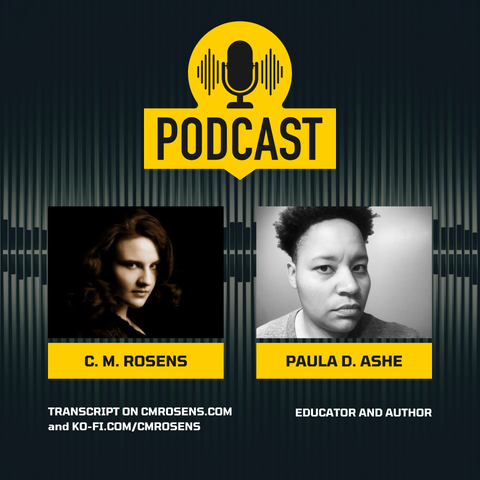


 Dekafox


 C. M. Rosens
