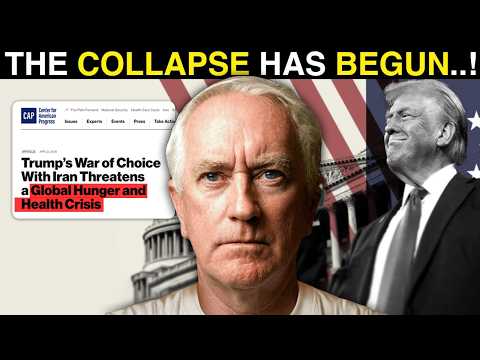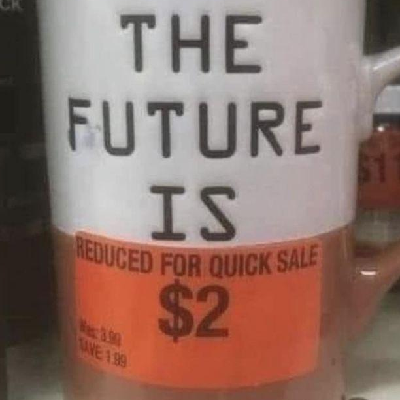
WARNING: AI Created a Secret Language. The "Great Bifurcation" Market Crash of 2026 Explained https://youtu.be/HIInifF4QXM?si=qGhgVgaCwZ8-soM5 через @YouTube
#GreatBifurcation #MarketCrash2026 #EconomicCollapse #ArtificialIntelligence #BlackSwanEvent #CryptoNews #TechAnalysis
WARNING: AI Created a Secret Language. The "Great Bifurcation" Market Crash of 2026 Explained

YouTube

🌍🔥 The Suicide Pact: What Happens the Moment We Touch Greenland…

https://www.facebook.com/ritchiepage2001/posts/pfbid02ZfQNNKhWHUHsdt5NmmcdkgcWaFvGWeVv8Cd8JcduMfFKae2YEDwRopUDoLW1vstql

If the United States follows through on the threat to invade Greenland, we need to be crystal clear about what happens the next morning. This is not a real estate transaction or a routine military exercise. It is the geopolitical equivalent of pulling the pin on a grenade in a crowded elevator. The moment American boots hit the ground in Nuuk to seize territory from a fellow NATO member, the world as we know it ends. The consequences will not be temporary sanctions or angry letters. They will ...

#Greenland #NATO #Article5 #EconomicCollapse #Boeing #WorldCup #PariahState #Geopolitics #EndOfTheWest #VoiceOfReason

#Project2025 #TechBros #CorpMedia #Oligarchs #MegaBanks vs #Union #Occupy #NoDAPL #BLM #SDF #DACA #MeToo #Humanity #FeelTheBern

Richard Clinton Maenpaa

The Suicide Pact: What Happens the Moment We Touch Greenland… written by Brent Molnar 🌍🔥 The Suicide Pact: What Happens the Moment We Touch Greenland… If the United States follows through on the...

🌍🔥 The Suicide Pact: What Happens the Moment We Touch Greenland…

https://www.facebook.com/ritchiepage2001/posts/pfbid02ZfQNNKhWHUHsdt5NmmcdkgcWaFvGWeVv8Cd8JcduMfFKae2YEDwRopUDoLW1vstql

If the United States follows through on the threat to invade Greenland, we need to be crystal clear about what happens the next morning. This is not a real estate transaction or a routine military exercise. It is the geopolitical equivalent of pulling the pin on a grenade in a crowded elevator. The moment American boots hit the ground in Nuuk to seize territory from a fellow NATO member, the world as we know it ends. The consequences will not be temporary sanctions or angry letters. They will ...

#Greenland #NATO #Article5 #EconomicCollapse #Boeing #WorldCup #PariahState #Geopolitics #EndOfTheWest #VoiceOfReason

#Project2025 #TechBros #CorpMedia #Oligarchs #MegaBanks vs #Union #Occupy #NoDAPL #BLM #SDF #DACA #MeToo #Humanity #FeelTheBern

Africa: Maduro's Fall - When Democracy Collides with Sovereignty: [allAfrica] The capture and indictment of Nicolás Maduro by the United States marks the end of an era many Venezuelans never chose and could not escape. For a people battered by economic collapse, political repression, and forced exile, his removal is not merely the downfall of a man -- it is the possible reopening of a democratic future that… http://newsfeed.facilit8.network/TQ7pck #Maduro #Venezuela #Democracy #PoliticalReform #EconomicCollapse
Pakistan is in freefall. Security forces face historic casualties, skilled professionals flee, multinational corporations abandon ship, and industries collapse. Corruption, mismanagement, and apathy have trapped the nation in a crisis loop. #PakistanCrisis #BrainDrain #EconomicCollapse #EndCorruption #HumanRights #AccountabilityNow https://salmanmehdijournal.blogspot.com/2025/12/pakistans-crisis-deepens-security-surge

Economic Collapse in Japan, US, and Europe: Insights from Experts Glenn Diesen and Sean Foo

Insights from Experts: Economic Collapse in Japan, US, and Europe

The specter of economic collapse is haunting major global powers, with Japan, the United States, and Europe facing unprecedented challenges from mounting debts, currency fluctuations, and geopolitical pressures. In a recent interview, Professor Glenn Diesen, an expert on Russian international affairs and geoeconomics, engaged with economist and China specialist Sean Foo to dissect these issues. Their discussion, grounded in empirical observations, highlights how these economies are trapped in cycles of stimulus, tariffs, and dependency that could precipitate broader economic collapse if not addressed.

Japan’s predicament exemplifies the risks of prolonged fiscal imbalance. With a debt-to-GDP ratio hovering around 230-250%, the country has relied on massive stimulus packages to avert immediate economic collapse. Foo points out that Japan’s central bank, the Bank of Japan (BOJ), recently hinted at raising interest rates to stabilize the yen, which has been depreciating sharply against the dollar for months. This currency collapse exacerbates import costs, particularly for energy, as Japan imports 85-90% of its energy mix post-Fukushima disaster. Oil, LNG, and coal prices surge when the yen weakens, driving up domestic inflation and industrial input costs. For instance, manufacturing a car becomes more expensive, threatening Japan’s export-driven economy.

The interview reveals how U.S. tariffs, potentially reaching 10-20%, are already impacting Japanese exports to America, which have declined for five to six consecutive months. The U.S. administration’s push for Japan to relocate factories, such as automobile and semiconductor plants, to American shores adds further strain. This could lead to industrial hollowing out in Japan, mirroring broader fears of economic collapse. Instead of dumping U.S. Treasuries—Japan holds over $1 trillion worth—the BOJ’s interest rate hike aims to attract capital back home, potentially appreciating the yen but increasing debt servicing costs. Foo warns that this is a short-term fix, as higher rates on such massive debt could eventually trigger default or deeper economic collapse.

Shifting focus to the United States, the conversation underscores a debt spiral that has ballooned from $9 trillion in 2009 to $38 trillion today. Diesen notes that post-2008 financial crisis, countries like China and Russia began diversifying away from U.S. dependency, launching initiatives like the Belt and Road and the Asian Infrastructure Investment Bank. Yet, U.S. debt continues to accelerate, fueling assumptions of inevitable economic collapse unless inflation is weaponized. Foo argues the U.S. is trapped: inflate to sustain hegemony or face defeat in the global economic war. Massive borrowing supports supply chain rebuilding in allies like Australia and Southeast Asia, as well as the semiconductor and AI sectors.

The U.S. advantage in technology, particularly AI, is being propped up by redirecting funds from Main Street consumers to tech giants via tariffs and deficits. This “hollowing out” of industrial America aims to win the AI war against China, but it risks economic collapse if the bubble bursts. Empirical data shows U.S. strategies involve arm-twisting allies, extracting wealth to bolster GDP growth at their expense—a “Count Dracula strategy,” as Foo quips. Actions like bailing out Argentina with $10-20 billion or pressuring Venezuela for oil highlight efforts to dominate the Western Hemisphere, compensating for losses in the Global South.

Europe’s woes compound the narrative of potential economic collapse across the West. High energy prices from severing Russian ties have deindustrialized key sectors, with German industries relocating to the U.S. for cheaper energy. Sanctions on Russia, intended to strangle its economy, have backfired by redirecting vast energy resources—like gas from Power of Siberia 2—to China, granting it a competitive edge. Europe’s obedience to U.S. demands for expensive American LNG over affordable Russian supplies has inflated costs, eroding industrial competitiveness. Foo suggests Europe could regain advantage by negotiating directly with Russia for cheap energy and labor, but political indecision and bloc politics block this path.

The interview emphasizes how U.S.-led sanctions since 2022 have accelerated de-dollarization, pushing Russia and China into a formidable economic bloc. Trade between them has reached 99.1% de-dollarized, using rubles or yuan, with Russia issuing yuan-denominated bonds to manage its surplus. This virtuous loop—cheap Russian commodities fueling Chinese manufacturing—strengthens both against Western pressures. China’s holdings of U.S. Treasuries have dipped to around $700-800 billion, with diversification into gold (buying 10 times reported amounts, per analysts) and Belt and Road investments. Foo predicts China will retain nominal U.S. debt for trade but shift fully once yuan settlement dominates cross-border deals.

The Economic Collapse Threat in the AI Race

Central to averting or accelerating economic collapse is the U.S.-China AI race. The U.S. pours trillions into achieving artificial general intelligence (AGI), gambling on innovation to leapfrog rivals. However, China holds advantages in manufacturing capacity, creating a virtuous innovation loop absent in the debt-fueled U.S. model. Foo doubts outright U.S. victory, suggesting survival depends on cannibalizing G7 allies. Decoupling into geoeconomic blocks—U.S.-led West versus China-Russia-led East—seems inevitable, with remnants of trade persisting but critical sectors like chips bifurcating.

China’s slowdown, with recent data showing moderated industrial output and retail sales, fuels U.S. optimism for outlasting it in economic competition. Yet, Foo counters that China’s lower borrowing costs (1.8-1.9% vs. U.S. 4-4.2%) and efficient stimulus spending give it an edge. Stimulus rumors in China could stretch further than U.S. equivalents, avoiding wealth inequality and revolt risks. The yuan’s stability, appreciating 3-6% against the dollar, attracts borrowers, eroding the Eurodollar market’s $30-100 trillion dominance.

Broader Implications for Global Financial Systems

The petrodollar’s decline, replaced by Eurodollar demand, faces threats from U.S. deficits destabilizing the system. Countries issuing dollar-denominated debt may pivot to yuan for stability, especially with China’s export prowess. Iran’s sanction-evading expertise and Russia’s resilience highlight parallel systems emerging. The interview warns that without an “amicable divorce,” U.S. debt implosion could trigger widespread economic collapse.

Europe’s path to recovery lies in ending the new Cold War with Russia, reintegrating for prosperity. Yet, hatred and NATO dependencies hinder this, perpetuating division. India’s caution against U.S. blocks underscores risks of vassalage and weakening.

The interview paints a grim picture of economic collapse risks in Japan, US, and Europe, driven by debt, tariffs, and misguided geopolitics. While the West clings to unipolar strategies, China and Russia’s alliance accelerates multipolarity. Empirical trends suggest a bifurcated world, where innovation and manufacturing decide winners, potentially averting total collapse through diversification but demanding radical policy shifts.

👉 Share your thoughts in the comments, and explore more insights on our Journal and Magazine. Please consider becoming a subscriber, thank you: https://dunapress.org/subscriptions – Follow J&M Duna Press on social media. Join the Oslo Meet by connecting experiences and uniting solutions: https://oslomeet.org

References:

#debtCrisis #DebtCrisis #economicCollapse #EconomicCollapse #Geopolitics #GlennDiesen #GlobalFinance #SeanFoo

Economic Collapse in Japan, US, and Europe: Insights from Experts Glenn Diesen and Sean Foo

As economic collapse looms in Japan, US, and Europe, experts Glenn Diesen and Sean Foo dissect debt burdens, tariff wars, and the rise of alternative financial systems. A must-read for understanding global shifts. #EconomicCollapse #Geopolitics #DebtCrisis

https://dunapress.org/economic-collapse-japan-us-europe/

Economic Collapse in Japan, US, and Europe: Insights from Experts Glenn Diesen and Sean Foo - JM Duna Press

Delve into the risks of economic collapse in Japan, US, and Europe amid soaring debts, weakening currencies, and geopolitical tensions. Based on expert analysis, this article explores empirical data on fiscal challenges and potential outcomes.

J&M Duna Press
#596: The Edge Of An Economic Cliff (Clip)

PeerTube