“Beauty is the first test: there is no permanent place in this world for ugly mathematics”*…
Is mathematical beauty real? Or is it just a subjective, human ‘wow’ that is becoming redundant in an AI age? Rita Ahmadi explores…
It is a hot July day in London and I take the bus to Bloomsbury. I often come here for the British Library, the British Museum or the London Review Bookshop. More than a location, Bloomsbury feels like stepping into a work of art – maybe one of Virginia Woolf’s stories, or Duncan Grant’s paintings.
This time, I am here for mathematics: the Hardy Lecture at the London Mathematical Society (LMS), named after G H Hardy, a professor of mathematics at the University of Cambridge, a member of the Bloomsbury Group, and a president of the LMS. You may know him from the film The Man Who Knew Infinity (2015), in which he’s played by Jeremy Irons.
The 2025 lecture is by Emily Riehl of Johns Hopkins University in Baltimore, who is talking about a complex mathematical ‘language’ known as infinity category theory: could we teach it to computers so that they could understand it? If successful, computer programs could verify proofs and construct complex structures in this area.
A few seats to my left, I recognise Kevin Buzzard, wearing the multi-coloured, patterned trousers he’s known for among mathematicians. Based at Imperial College London, Buzzard is working on a computer proof assistant called Lean. His interest is personal: after long disputes with a colleague over a flawed proof, he lost trust, as he often puts it, in ‘human mathematicians’. His mission now is to convince all mathematicians to write their proofs in Lean. In the Q&A after one of his talks, he said of the debate between truth and beauty in mathematics: ‘I reject beauty, I want rigour’ – though his vibrant sense of fashion suggests otherwise.
Interest in an AI-driven approach to mathematics has been exponential, and many mathematicians have left traditional academic research to explore its potential. Recently, one group of distinguished mathematicians designed 10 active, research-level questions for AI to tackle. At the time of writing, various AI companies and researchers had claimed to find solutions, which were under evaluation by the community.
Sitting in the room in Bloomsbury, I stared at the Hardy plaque and wondered: would Hardy find proofs generated by AI beautiful? I wasn’t sure. He believed there should be a strong aesthetic judgment in mathematics, drawing parallels with poetry, and argued that beauty is the first test of good mathematics. He went as far as to say that there is no permanent place in the world for ugly mathematics.
If asked, many mathematicians today still talk about the aesthetic appeal of one approach over another.
Yet we live in a different century to Hardy and his Bloomsbury peers, with different technologies and techniques, so perhaps we need a clearer definition of what mathematical beauty actually is. Over the history of mathematics, we can find examples where both rigour and the pursuit of beauty have shaped mathematics itself. So, if we’re completely replacing this with a computer-assisted quest for truth and rigour, we ought to know what we’d be abandoning, if anything. Is mathematical beauty like the beauty in literature and art – or is it something else?…
[Ahmadi explores the idea of “beauty,” generally and in mathematics; traces the rise of AI as a tool, and concludes…]
… my own definition of beauty in mathematics would be as follows:
“Asimplemathematical structure that surprises even the most experienced mathematicians and transfers a sense of vitality.”
But is an AI-assisted proof simple or surprising? How do we define vitality in a machine? On these questions, the jury is out. Myself, I am torn. Maybe models just need more training to match our creativity. But I also wonder whether our limbic system is required. Can we write proofs without emotional kicks? I am also unsure if perfectly efficient brains can come up with novel revolutionary ideas.
Ultimately, this debate is about more than aesthetics; it is closely tied to the development of AI-assisted mathematics. If AI models can produce novel mathematical structures, how should we direct them? Is it a search for beautiful or truthful structures? A question that possibly guides the years to come.
Some mathematicians say they prefer the ‘truth’ and only the ‘truth’. However, my recent discussions with mathematicians showed me that most immediately recognise, enjoy, and even wholeheartedly smile at a beautiful piece of maths. In fact, they spend their whole lives in search of one…
Fascinating: “The eye of the mathematician,” from @ritaahmadi.bsky.social in @aeon.co.
* G. H. Hardy
###
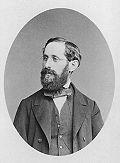
As we embrace elegance, we might send garcefully-calculated birthday greetings to Eduard Heine; he was born on this date in 1821. A mathematician, he is best remembered for his introduction of the concept of uniform continuity, for the Mehler–Heine formula, and for the Heine–Cantor theorem… all of them, quite beautiful.
source
#AI #artificialIntelligence #Beauty #culture #EduardHeine #elegance #epistemology #GHHardy #history #Mathematics #Science #Technology LAnewGirl.com
 RADAAR (TEST)
 Blast From the Ads!
 (Roughly) Daily
 Ronald Grandpey
 Fabrice 🇫🇷
 SpringGnoll


 jsr_ffd2