I posted this some time ago, but now that I have a few blind friends who are involved in programming, and especially the musical side of things, I figured I would try again. To summarise. I want to see if it is possible to make pre-electric recordings sound like early electric ones. So one from 1903 might sound like it came from 1930. I doubt we could go any higher than the 1940's, if that, given the constraints of acoustic recording, but it would still be a huge improvement in sound. Perhaps, with the right software, some frequences can be restored. The trouble is that there are only a few such programs and all are inaccessible with screen readers. I explain things more fully at the below link. Normally, this is a subreddit about opera recordings and singers from the 1950's and earlier, so if you have no clue about this but like opera, feel free to join us in general.

Frequency Restoration in Acoustic Recordings

https://www.reddit.com/r/OldOpera/comments/1oqgz2k/frequency_restoration_in_acoustic_recordings/

#accessibility #AcousticRecordings #Android #AudioRestoration #blind #DigitalRecording #FrequencyRestoration #gramophone #IOS #Linux #MacOS #opera #phonographs #records #software #technology #Windows
Think I mentioned The Nightfly album recently which I see was an album recorded (and almost abandoned due to technical difficulties) digitally before we could really listen digitally (pre CD) . Interesting to read the history of digital recording and was amazed to see the first albums recorded digitally occurred in 1972. #DigitalRecording
#DigitalAudio #Wikipedia #history #technology
https://en.m.wikipedia.org/wiki/Digital_recording
Digital recording - Wikipedia

Even if it's impossible to upsample the actual #recording (yeah, if you record in 44.1kHz, you can't magically add the detail to make it 96kHz or 192kHz), but your effects/processing plugins at least have a better clarity in the final product.

This also applies if you use #MIDI #instruments that have the capability for higher sample rates. For example, in #LogicProX the #Alchemy #synth has a Quality selector that can be set to Ultra.

#DigitalAudio #DigitalRecording #musician #producer

Despite the debate about whether listening to #music at particularly high sample rates has diminishing returns, #mixing and #mastering at the highest sample rate possible still has benefits, especially for time-based processing effects such as delay (which I use a lot of)

It makes sense, since the master version is higher quality, so the best source possible gives even lossy formats like mp3 a better chance.

#DigitalRecording #recording #AudioEngineer #musician #producer #IndependentProducer

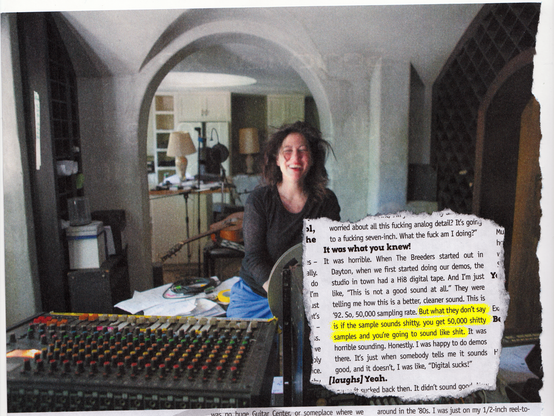
#KimDeal talks about the early days of #DigitalRecording in the latest #TapeOp magazine 🎶 👍 😁 #Music #Recording #TheBreeders #ThePixies #Dayton #Ohio

One of the world’s first digital recording systems: the Denon DN-023R (1972), an 8-channel system with 13-bit resolution at a sampling rate of 47.25kHz, which recorded onto Hitachi 4-head open-reel broadcast videotape in low-band (black & white) mode (it was cheaper & had fewer dropouts than colour) – seen here with Dr. Takeaki Anazawa, one of the system’s inventors.

#DenonDN023R #DigitalAudio #DigitalRecording #DrTakeakiAnazawa

Death of The Key Change

"So what is going on? Both of the shifts can be tied back to two things: the rise of hip-hop and the growing popularity of digital music production, or recording on computers."

I find it fascinating that cultural and technology changes have created a different soundtrack.

The explanation of the latter makes me a bit uneasy but also leads me to believe that additional advances could create another change.

#Music #DigitalRecording #KeyChange

https://tedium.co/2022/11/09/the-death-of-the-key-change

How the Billboard Hot 100 Lost Interest in the Key Change

One of the key changes—pun intended—to the pop charts in the last 60 years is the demise of key changes. What happened?

Tedium: The Dull Side of the Internet.