๐ŸŒโ„๏ธ ๐—ง๐—ต๐—ฒ ๐—ป๐—ฒ๐˜„ ๐—ฃ๐—ผ๐—น๐—ฎ๐—ฟ ๐—ฃ๐—ผ๐—ฟ๐˜๐—ฎ๐—น ๐˜„๐—ฒ๐—ฏ๐˜€๐—ถ๐˜๐—ฒ ๐—ถ๐˜€ ๐—น๐—ถ๐˜ƒ๐—ฒ!

Weโ€™re excited to launch the updated version of ๐—ฃ๐—ผ๐—น๐—ฎ๐—ฟ๐—ฝ๐—ผ๐—ฟ๐˜๐—ฎ๐—น.๐—ฑ๐—ธ โ€“ your gateway to ๐—ฟ๐—ฒ๐—ฎ๐—น-๐˜๐—ถ๐—บ๐—ฒ ๐—ฑ๐—ฎ๐˜๐—ฎ ๐—ผ๐—ป ๐—”๐—ฟ๐—ฐ๐˜๐—ถ๐—ฐ ๐˜€๐—ฒ๐—ฎ ๐—ถ๐—ฐ๐—ฒ ๐—ฎ๐—ป๐—ฑ ๐˜๐—ต๐—ฒ ๐—š๐—ฟ๐—ฒ๐—ฒ๐—ป๐—น๐—ฎ๐—ป๐—ฑ ๐—œ๐—ฐ๐—ฒ ๐—ฆ๐—ต๐—ฒ๐—ฒ๐˜.

๐Ÿ“Š On ๐—ฃ๐—ผ๐—น๐—ฎ๐—ฟ๐—ฝ๐—ผ๐—ฟ๐˜๐—ฎ๐—น.๐—ฑ๐—ธ, Danish research institutions share up-to-date monitoring and expert knowledge on the state of the Arctic cryosphere.

๐—›๐—ฒ๐—ฟ๐—ฒ ๐˜†๐—ผ๐˜‚ ๐—ฐ๐—ฎ๐—ป ๐—ณ๐—ถ๐—ป๐—ฑ ๐—ฑ๐—ฎ๐˜๐—ฎ, ๐—ฎ๐—ป๐—ถ๐—บ๐—ฎ๐˜๐—ถ๐—ผ๐—ป๐˜€ ๐—ฎ๐—ป๐—ฑ ๐˜‚๐—ฝ๐—ฑ๐—ฎ๐˜๐—ฒ๐˜€ ๐—ผ๐—ป:
โ€ข Surface conditions on the Greenland Ice Sheet and its major outlet glaciers
โ€ข Total mass balance of the Greenland Ice Sheet and its contribution to global sea-level
โ€ข Sea ice extent, thickness and volume in the Arctic
โ€ข Temperature anomalies of sea ice and the open sea in the Arctic
โ€ข Icebergs around Greenland

The portal is powered by the Danish research institutions #DMI, #GEUS, #DTUSpace and #DTUByg and supported by data from #Asiaq - Misissueqqarnerit - Grรธnlands Forundersรธgelser and #PROMICE (https://promice.org/).

๐Ÿ”— Visit the new site: https://polarportal.dk/en/

#PolarPortal #Greenland #Arctic #ClimateMonitoring #Cryosphere #IceSheet #Seaice #ClimateData #NCKF #climatechange

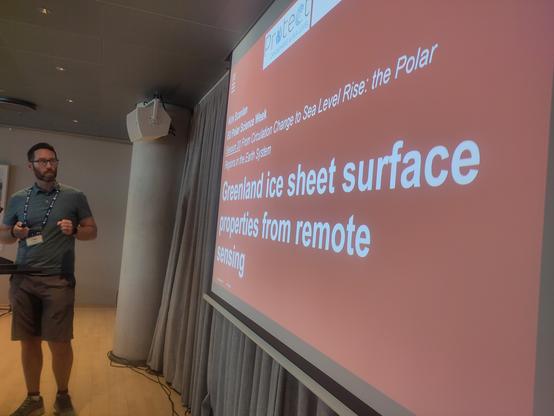
Next Kirk Scanlan of #DTUspace showed some exciting @H2020protect.bsky.social results from satellite data, where decomposing the signal in a different way allows us to probe the surface density of the #Greenland #iceSheet -> some great potential to use these results in SMB models.
3/9
GRACE mass/height change data now updated up to March 2023. Since the twin satellites were launched in April 2002, the Greenland Ice Sheet has lost a total of 4745 Gt (=4745 kmยณ), which corresponds to 13.3 mm global sea level rise. Note, this is just from Greenland.
Data on @polarportal from #DTUSpace.
Roelof Rietbroek (@[email protected])

Attached: 2 images With Icesat-2, you can measure the height of the Icesheets, but to convert to mass change there are several corrections which need to be applied, a critical one is the conversion of volume to mass which requires the uncertain ice density. Nicolaj Hansen shows results over the Ice2-sat period. #EGU23

FediScience.org
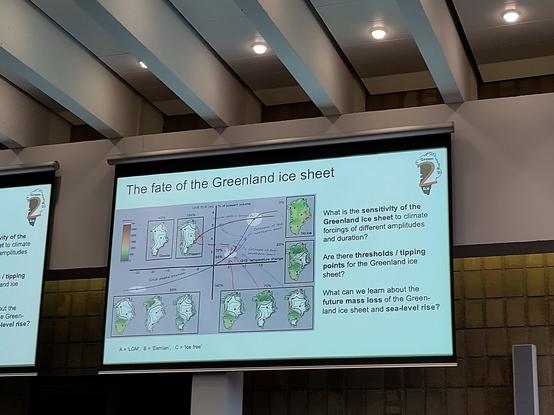
PIs are Anders Svensso. And Dorthe Dahl Jensen in Denmark but #Green2Ice also includes #DTUSpace and #GEUS partners @greenlandicesheet

Just been interviewed about this new paper Khan et al from our colleagues at #DTUSpace - it's about the NE #Greenland #IceStream #NEGIS that drains a large areas of the #IceSheet + that has accelerated and thinned since at least the early 2000s

https://www.nature.com/articles/s41586-022-05301-z

Extensive inland thinning and speed-up of Northeast Greenland Ice Stream - Nature

Analysis of global navigation satellite system observations and satellite data shows that frontal changes in 2012 of the North-East Greenland Ice Stream led to speed-up and thinning at least 200โ€‰km inland.

Nature