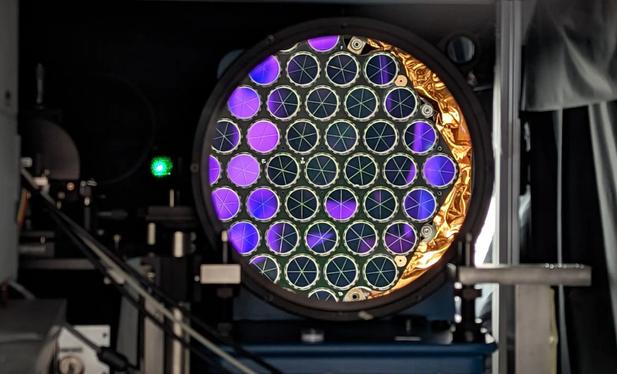
Laser Ranging Makes GPS Satellites More Accurate

Although GNSS systems like GPS have made pin-pointing locations on Earth’s sphere-approximating surface significantly easier and more precise, it’s always possible to go a bit further. …

Hackaday
Laser Ranging Makes GPS Satellites More Accurate

Although GNSS systems like GPS have made pin-pointing locations on Earth’s sphere-approximating surface significantly easier and more precise, it’s always possible to go a bit further. …

Hackaday

RE: https://mastodon.social/@be_GNSS/116024699551195000

📣#EUREF Symposium latest news

⚛️ Half-day tutorial session (Tuesday, June 23, morning) focused on quantum sensors
Preliminary program is available at https://euref2026.sciencesconf.org/resource/page/id/7

👉 https://euref2026.sciencesconf.org/
#geodesy #refrenceframes #GNSS #EPN_CB

The oceanic tidal pulse extends significantly deeper into terrestrial waterways than previously recognized, serving as a highly dynamic force that continuously alters the physical and biological landscapes of coastal rivers.
#Hydrology #Oceanography #Geodesy #EnvironmentalScience #Ecology #ClimateChange #sflorg
https://www.sflorg.com/2026/03/es03182601.html
First Global Map Reveals the Deep Reach of Ocean Tides into Coastal Rivers

For centuries, the boundary between ocean and river has been conceptualized as a relatively static margin.

Measuring Earth's Wobble Without Looking at the Stars

Most people are familiar with the fact that the Earth spins on its axis once every day. The spin however, isn’t as steady as you might think. Like a spinning top slowing down, Earth’s axis wobbles, scribing out a circle on the night sky that currently points very close to the Pole Star in the northern hemisphere. This wobble is driven by the shape of the Earth and for decades, this wobble has been tracked by a network of radio telescopes. A team of astronomers have measured this wobble to a level of accuracy that has never been achieved before.

Pure Science News
Measuring Earth's Wobble Without Looking at the Stars

Most people are familiar with the fact that the Earth spins on its axis once every day. The spin however, isn’t as steady as you might think. Like a spinning top slowing down, Earth’s axis wobbles, scribing out a circle on the night sky that currently points very close to the Pole Star in the northern hemisphere. This wobble is driven by the shape of the Earth and for decades, this wobble has been tracked by a network of radio telescopes. A team of astronomers have measured this wobble to a level of accuracy that has never been achieved before.

Pure Science News

#REFAG2026 was held 2–4 March in Munich🇩🇪

Great presentations and discussions!
• 200 participants
• advances in terrestrial🌍 and celestial #referenceframes, Earth orientation, and multi-technique #geodesy

#EarthScience

RE: https://mastodon.social/@be_GNSS/115702016888509645

#REFAG Symposium
2 - 4 March 2026.

Unable to attend?
You could still ask questions in the chat

Follow this link (valid for all three days):
https://lnkd.in/dQYXisbb

You can find the Symposium Program here:
https://lnkd.in/dfFpUvzU

#IAG #GGOS #geodesy

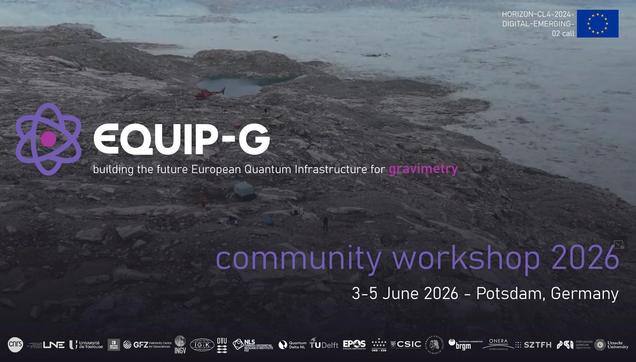
#EQUIP-G project:
making quantum⚛️ technologies for #geosciences and #geodesy🌍 available to #EU🇪🇺 researchers

Get in touch, get trained, and benefit from #quantum #gravimeters!

👉 https://equip-g.eu/
#earthscience #gravimetry

@konrad @internetarchive oh wow, this looks amazing! I need to figure out how to get in place something like this for my measuring.earh/minutes project

#OCR #geodesy #digitisation