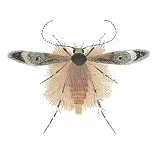
Slides from my talk last night to the Field #Naturalists Association of #Canberra:

"Lessons from #Malaise trapping in Aranda"

https://codeberg.org/dhobern/presentation/src/branch/main/Lessons_from_Malaise_trapping_in_Aranda.pdf

As with most of my talks, there are few notes, but the gallery of amazing #insects may mean something to some of you.

#entomology #taxonomy #DNAbarcoding #biodiversity #OnceAndFutureKing #Hymenoptera #Lepidoptera #Strepsiptera #Hemiptera #Collembola #Araneae #wasps #moths #springtails #spiders


presentation/Lessons_from_Malaise_trapping_in_Aranda.pdf at main

presentation - Presentation - ridiculously minimal presentation tool

Codeberg.org

The 10th iBOL 2026 conference site is online and registration is open!

https://dnabarcodingconference.com

To sign up for e-mail alerts, go to the website and click on the link on the bottom right-hand corner, above the social media links.

#iBOL2026 #DNAbarcoding #iBOL #InternationalBarcodeOfLife #biodiversity #monitoring

Index - iBOL 2026

Building on Barcodes: Impacting Science & Society iBOL 2026 Register Now! Early Bird Registration is OPEN Join us at the 10th International Barcode of Life

iBOL 2026

Improving taxonomic resolution, biomass and abundance assessments of aquatic invertebrates by combining imaging and DNA megabarcoding

TLDR - megabarcoding is defined in this study as "high-throughput [DNA] barcoding of single specimens, with semi-automated imaging and deep neural networks to produce accurate taxonomic identifications, abundance, and biomass estimations..."

https://peerj.com/articles/20501/

#DNAmegabarcoding #HighThroughput #DNAbarcoding #Imaging #EPT #CNN

Improving taxonomic resolution, biomass and abundance assessments of aquatic invertebrates by combining imaging and DNA megabarcoding

Understanding biodiversity change requires a comprehensive assessment of not only the identity of species inhabiting an ecosystem but also their biomass and abundance. However, assessing biodiversity on the species level with precise biomass information is a time-consuming process and thus rarely applied. While DNA-based approaches like DNA barcoding offer precise species identification, they lack information on specimen size and biomass. In contrast, high-throughput imaging techniques enable rapid measurements of a specimen’s size and morphological features but may have low taxonomic resolution. In this study, we combined DNA megabarcoding, i.e., high-throughput barcoding of single specimens, with semi-automated imaging and deep neural networks to produce accurate taxonomic identifications, abundance, and biomass estimations for insects. In a multiple stressor field experiment, we collected a dataset of 743 specimens from 14 species of the orders Ephemeroptera, Plecoptera, and Trichoptera (EPT), which are routinely used as aquatic biological quality indicator taxa. Each specimen was imaged, weighed, and megabarcoded using the COI barcode gene. From the images captured using the semi-automated imaging device BIODISCOVER, we curated a final dataset of 146,439 images taken from two perpendicular cameras. We trained convolutional neural networks (CNNs) with these pictures for species identification and biomass estimation and evaluated their performance. In addition, we investigated whether models pre-trained for species identification perform better on the biomass estimation task, compared to models trained solely for biomass estimation, thus potentially reducing the need for extensive labelled data in future studies. Our findings demonstrate that combining DNA megabarcoding with automated imaging and deep neural networks enables fast, reliable, but also comprehensive assessment of species composition and biomass on the specimen level, contributing to the urgently needed methods in conservation biology, ecology, and evolution.

PeerJ
My mentees this year in the Urban DNA Barcoding Research Program. They'll be continuing our work on bird diversity at the Marine Nature Study Area in Oceanside, NY, which we've been doing for the past three years. They were doing the field component of their study, collecting feathers for DNA extraction and sequencing. #DNAbarcoding #birds #biodiversity #saltmarsh #ecology #climatechange
Assessing Genomic Evolution of Tubulin Gene Family for Camelina Species Genotyping - Cytology and Genetics

Abstract Tubulin plays a key role in the functioning of cytoskeletal systems that regulate such fundamental processes as cell division and growth. Correct identification of isotypes and determination of the orthology of tubulin genes in plants is a nontrivial task that requires the involvement of a complex of bioinformatics approaches. In the present study, a genome-wide search and identification of tubulin genes was carried out in diploid representatives of the genus Camelina, in particular in the C. neglecta, C. laxa, and C. hispida species, which allowed the authors to identify complete sets of Ξ±-, Ξ²-, and Ξ³-tubulin genes as well as their pseudogenes. Phylogenetic analysis and a series of genome-wide comparisons allowed for establishing the orthology of the tubulin genes, determining isotype identity of the encoded tubulins, and tracing evolutionary changes in tubulin gene sets during species divergence and the emergence of allohexaploid C. sativa species. Genotyping of the accessions of different Camelina species using TBP-, cTBP-, and Ξ³TBP-markers allowed effective differentiation of species based on the assessment of polymorphisms of intronic regions of the Ξ²- and Ξ³-tubulin genes. The obtained results lay a strong groundwork for further studies of the isotype and functional diversity of tubulins in Cruciferae and other groups of flowering plants and will also contribute to the development and implementation of new, highly efficient molecular marker systems for DNA-barcoding and marker-assisted breeding of plant species, including such promising oilseed crops as C. sativa.

SpringerLink

"Discovering the unseen: a performance comparison of taxonomic
classification methods under unknown DNA barcodes"

https://www.biorxiv.org/content/10.1101/2025.10.13.681976v1

#DNAbarcoding #Classification

Discovering the unseen: a performance comparison of taxonomic classification methods under unknown DNA barcodes

1. DNA barcoding and metabarcoding have emerged as cost-efficient, standardized methods for characterizing local biodiversity. Based on the sequencing of a small targeted gene fragment, it is theoretically possible to identify a wide diversity of taxa by comparing them with reference sequence databases. However, a key challenge for accurate taxonomic classification is the incompleteness of such databases, leading to most query sequences lacking species-level matches. 2. Where species-level matches are missing, it may be possible to classify query sequences to a higher taxonomic level, such as genus or family, based on the similarity of related reference taxa. The challenge then lies in confidently recognizing whether the sequence belongs to an unobserved (here, β€œnovel”) taxon on a given taxonomic level. 3. In this study, we evaluated the performance and utility of several methods for taxonomic classification. Methods were assessed based on the classification accuracy of both observed and novel taxa, training time, space requirements, and run time. We did this for two cases: the COI barcode for arthropods, and the ITS barcode for fungi, with the latter representing an instance with substantially greater variation within classes. To test classification of novel taxa, we used well-curated datasets with partially distinct taxonomic distribution. Novel taxa were present at multiple taxonomic levels, including genera, families, and orders. We further assessed the effect on performance when shifting from full-length barcodes to shorter sequences as generated through metabarcoding in the testing dataset. 4. This study sheds light on the strengths and limitations of different classification algorithms across varied ecological contexts and provides valuable guidance for researchers in selecting suitable algorithms for DNA barcoding and metabarcoding applications. In particular, it demonstrates the supreme performance of phylogenetic placement methods such as EPA-ng for classification of COI barcodes, and composition-based classifiers such as SINTAX, RDP, and IDTAXA for ITS. ### Competing Interest Statement The authors have declared no competing interest.

bioRxiv

BOLDconnectR is now on CRAN!

Facilitates retrieval, transformation, and analysis of the data from the Barcode of Life Data Systems (BOLD) database at https://boldsystems.org

#DNAbarcoding #Rstats #BOLDsystems #OpenScience

https://cran.r-project.org/web/packages/BOLDconnectR/index.html

BOLD – The Barcode of Life Data Systems

BOLDistilled: Automated Construction of Comprehensive but Compact DNA Barcode Reference Libraries

https://onlinelibrary.wiley.com/doi/10.1111/1755-0998.70043

#DNAbarcoding #BOLD #database #COI

CanPests V1.0: A comprehensive dataset
for arthropod pests of Canada integrating
DNA barcodes

https://preprints.arphahub.com/article/171542/

#DNAbarcoding #Canada #arthropods #preprint

CanPests V1.0: A comprehensive dataset for arthropod pests of Canada integrating DNA barcodes

Arthropod pest species represent a serious threat to agriculture and forestry. Canada is no exception, with over 1200 recorded pest species. Although a consolidated dataset would benefit research, management, and policy, information on these species has never been compiled into a unitary database.This publication merges available information to create a checklist for the pest insects of Canada and updates the taxonomy for these records based upon the Catalogue of Life. Each species record includes 1) their local/global distribution, 2) feeding guild for adults and larval stages (when available), and 3) identifiers to obtain DNA barcodes from the Barcode of Life Data Systems (when available).

ARPHA Preprints