CS education folks!

I just read a very interesting paper:

Margaret-Anne Storey. 2026. From Technical Debt to Cognitive and Intent Debt: Rethinking Software Health in the Age of AI. https://doi.org/10.48550/arXiv.2603.22106

It gives us a couple good ways to describe to students what is lost when they have an AI write all their code -- namely, that you're incurring cognitive and intent debt.

But I have a colleague (Dave Musicant at Carleton College) who had an experience that seems to suggest we need another category of this debt/capital.

The assignment was a relatively large project (implement a Scheme interpreter in C). My colleague had a student who he was quite certain had AI write all the code. His assessment includes an oral exam in which he asks the student questions about the code. This student was able to answer his questions pretty well. So the student had, in terms of that paper, very little technical, cognitive, or intent debt.

But it seems like the student is missing...something. It seems like a student who completed that assignment without any AI use would get something out of the experience that the AI-using student didn't. Some knowledge? Some skill? Some attitude or habit of mind? What kind of capital is developed by that student?

Thoughts?
#csed #cseducation #education #softwaredevelopment

From Technical Debt to Cognitive and Intent Debt: Rethinking Software Health in the Age of AI

Generative AI is accelerating software development, but may quietly shift where the most significant risks lie. As AI generates code faster than teams can understand it, two under appreciated forms of debt accumulate: cognitive debt, the erosion of shared understanding across a team, and intent debt, the absence of externalized rationale that developers and AI agents need to work safely with code. This article proposes a Triple Debt Model for reasoning about software health, built around three interacting debt types: technical debt in code, cognitive debt in people, and intent debt in externalized knowledge. Cognitive debt is a team-level, project-level property reflecting the erosion of shared understanding across a software system over time, leading to increasingly inadequate shared mental models for reasoning about and safely changing the system. Intent debt refers to the absence or erosion of explicit rationale, goals, and constraints that guide how humans and agents evolve the system. We discuss how generative AI changes the relative importance of these debt types, how each can be diagnosed and mitigated, and surface points of debate for practitioners.

arXiv.org

#introduction Hello fediverse! I'm a queer, disabled prof at McGill University, with a 50/50 appointment in computer science and education (DISE).

I'm currently on medical leave with #LongCovid. 😷

Generally my research has focused on the sociology of computer science education. #CSEd #STS #sociology

Other research interests of mine include sustainability education, critical pedagogy, history of CS, sociology of professions, #DisabilityStudies, and #QueerStudies. 🌈

I'm a cat parent, tree-hugger, Linux/FOSS enthusiast, and sci-fi nerd. Here is my void:

It was fantastic to learn from Kylie McColl’s workshop on K-12 outreach at the 2025 IDEATE Summit! 🎓
If we want more diverse students in computing at Australian unis, we need to rethink how we engage with schools.
See the slides: https://ideate.community/resources/outreach/
#HigherEd #Computing #STEM #Diversity #K12 #CompSci #Inclusion #CSed #AussieEd #EdTech
Outreach - IDEATE

Presentation by Kylie McColl at IDEATE Summit 2025 on Inclusive tech futures: Secondary school engagement

IDEATE

Calling all Australian uni computing and software engineering educators!

IDEATE is hosting a free workshop on UDL in tech on May 19. Learn how to design inclusive courses. Better student experience, less need for adjustments.

Details: https://events.humanitix.com/ideate-workshop-resources-for-udl-in-tech

#UDL #EdTech #HigherEd #CSed

IDEATE Workshop - resources for UDL in tech

Join Dr Anne Ozdowska for a workshop on UDL resources for computer science and software engineering courses at Australian universities.

Charles Martin has an excellent set of resources for Australian university tutors in computing and software engineering — a great addition to your tutor induction toolkit. Find them in IDEATE's resources:
https://ideate.community/resources/educator-development/

#HigherEd #Accessibility #CSed #Computing #SoftwareEngineering #UniAus

Educator Development - IDEATE

These resources include presentations from the IDEATE Summit held at The Australian National University in Canberra in September 2025, as well as resources shared by our partner universities. She Belongs – Kim Jackson Scholarship Program Presented by Dr Fiona Scotty at the IDEATE Summit 2025, the Kim Jackson Scholarship Program…

IDEATE
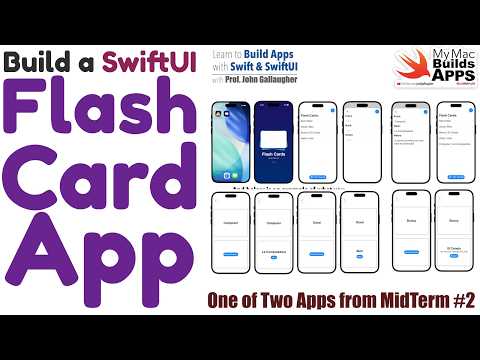
Build a Flash Card app in #SwiftUI using #SwiftData. One of two apps my students needed to build w/o AI during their hands-on 2.5 hr. in-class 2nd mid-term. Use this as a test, (pause after each question shown, complete, and compare answers), or watch it as a refresher lesson that provides a "recipe" breakdown for thinking about basic SwiftData setup w/MockData. https://youtu.be/pyKM3FJhQWg #CSed, #ADE, #Swift
Build a FlashCards iPhone App - Challenge & Solution using SwiftData

YouTube
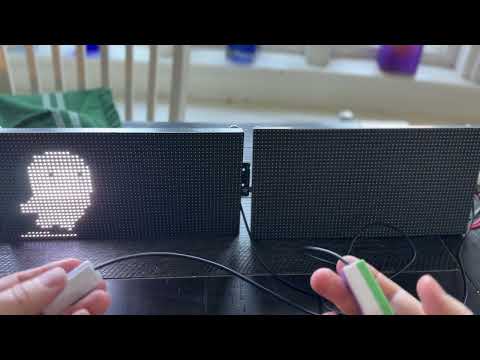
"Ghost Catch", an accessibility game I'm prototyping for the Campus School at Boston College, which allows children with severe motor restrictions to pass an animation back and forth. https://youtu.be/98N8J6Ri4L4 GitHub repo in description. #CircuitPython #MakerSpace #TechForGood #Accessibility #CSed
Accessible Catch Game for people with severe Physical Challenges

YouTube
#CSed friends, my academic interests have shifted hard toward tech ed (flipped class, SwiftUI app dev, Physical Computing w/Assistive Tech). Am wondering which conferences I should seek out to share ideas with other educators.
Such a nice profile of the #AssistiveTech work being done by my Boston College Physical Computing students. https://www.bc.edu/content/bc-web/sites/bc-news/articles/2026/spring/the-class-that-makes-a-difference-.html May be interesting to folks in the #CSed #MakerSpace #RaspberryPi and #CircuitPython communities.
‘Cool Stuff’ that makes a difference

In ‘Tech for Good,’ Boston College students turn sensors, code, and LEDs into accessible learning tools for kids with disabilities

Boston College
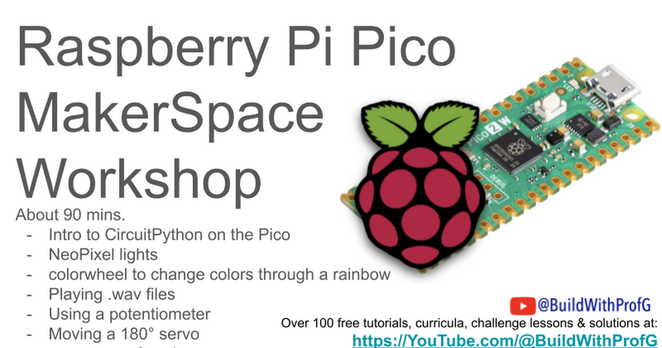
90 min newbie intro to #CircuitPython #raspberrypipico workshop. Lights, sound, potentiometer, and servo! Slides I use with parts & code for all #csed & #makerspace educators can be found at https://bit.ly/pico-workshop If you want to see a student demo video see: https://bsky.app/profile/gallaugher.bsky.social/post/3mhnmurcaqk2f
Raspberrry Pi Pico MakerSpace Workshop

Raspberry Pi Pico MakerSpace Workshop About 90 mins. Intro to CircuitPython on the Pico NeoPixel lights colorwheel to change colors through a rainbow Playing .wav files Using a potentiometer Moving a 180° servo map_range function Over 100 free tutorials, curricula, challenge lessons & solutions a...

Google Docs