Frozen Ark (Zoology 🦥)

The Frozen Ark is a charitable frozen zoo project created jointly by the Zoological Society of London, the Natural History Museum and University of Nottingham. The project aims to preserve the DNA and living cells of endangered species to retain the genetic knowledge for the future. The Frozen Ark collects and stores samples taken f...

https://en.wikipedia.org/wiki/Frozen_Ark

#FrozenArk #Zoology #Cryobiology #Biorepositories #ConservationProjects #RareBreedConservation
Frozen Ark - Wikipedia

Frozen zoo (Zoology 🦥)

A frozen zoo is a storage facility in which genetic materials taken from animals are stored at very low temperatures in tanks of liquid nitrogen. Material preserved in this way can be stored indefinitely and used for artificial insemination, in vitro fertilization, embryo transfer, and cloning. There are a few frozen zoos across the world that implement this...

https://en.wikipedia.org/wiki/Frozen_zoo

#FrozenZoo #Zoos #Cloning #Zoology #Cryobiology #InVitroFertilisation

Frozen zoo - Wikipedia

The protein that helps plants survive the cold

As climate conditions become increasingly unpredictable, understanding how plants respond to cold is crucial for securing future crop resilience. In her doctoral thesis, Varvara Dikaya at Umeå University has studied the protein PORCUPINE, which plays a central role in how plants adapt to low temperatures. Her research reveals that this protein is part of multiple intertwined signaling pathways that help plants survive.

Phys.org

Frozen Ark (Zoology 🦥)

The Frozen Ark is a charitable frozen zoo project created jointly by the Zoological Society of London, the Natural History Museum and University of Nottingham. The project aims to preserve the DNA and living cells of endangered species to retain the genetic knowledge for the future. The Frozen Ark collects and stores samples taken f...

https://en.wikipedia.org/wiki/Frozen_Ark

#FrozenArk #Zoology #Cryobiology #Biorepositories #ConservationProjects #RareBreedConservation

Frozen Ark - Wikipedia

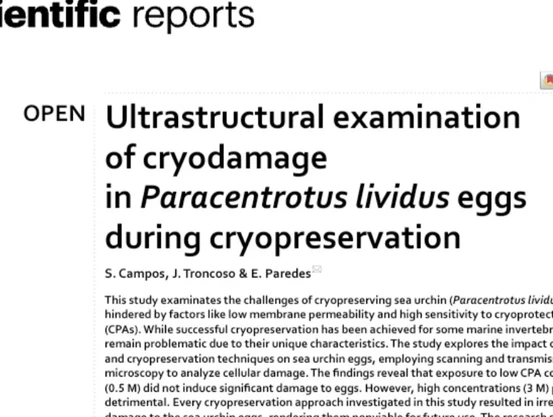
Ultrastructural examination of cryodamage in Paracentrotus lividus eggs during cryopreservation - Scientific Reports

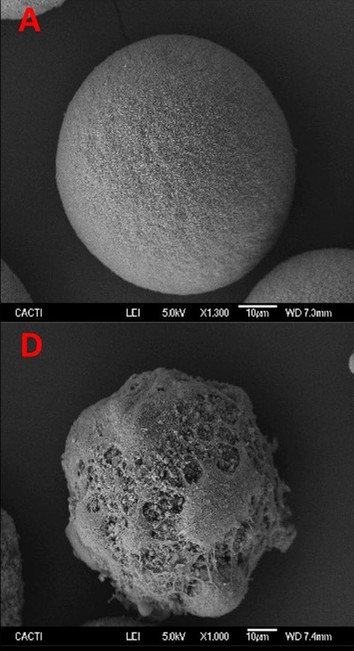
This study examinates the challenges of cryopreserving sea urchin (Paracentrotus lividus) eggs, a task hindered by factors like low membrane permeability and high sensitivity to cryoprotective agents (CPAs). While successful cryopreservation has been achieved for some marine invertebrates, eggs remain problematic due to their unique characteristics. The study explores the impact of various CPAs and cryopreservation techniques on sea urchin eggs, employing scanning and transmission electron microscopy to analyze cellular damage. The findings reveal that exposure to low CPA concentrations (0.5 M) did not induce significant damage to eggs. However, high concentrations (3 M) proved highly detrimental. Every cryopreservation approach investigated in this study resulted in irreversible damage to the sea urchin eggs, rendering them nonviable for future use. The research sheds light on the importance of understanding the structural alterations induced by CPAs and cryopreservation methods. This knowledge is essential for refining cryopreservation methods, potentially paving the way for successful preservation of these challenging cells.

Nature
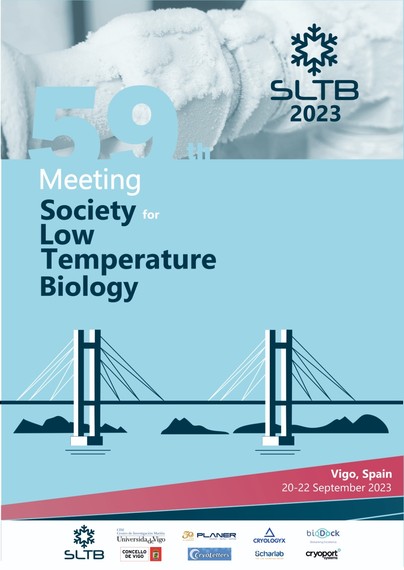
Society for Low Temperature Biology SLTB will take place in Vigo 20-22nd September 2023 #cryobiology #cryopreservation #lowtemperaturebiology #SLTB_vigo23

https://www.sltb.info/sltb-2023-info

We organize in Vigo the 59th annual meeting of the Society for Low Temperature Biology
#lowtemperaturebiology #SLTB2023
#cryobiology

SLTB Meeting 2023 — SLTB - Society for Low Temperature Biology

SLTB

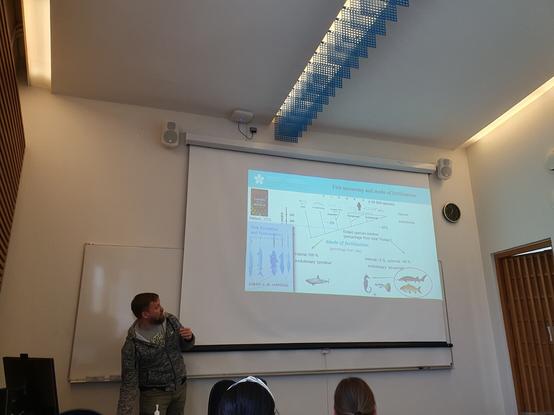
Anatolii Sotnikov PhD from Faculty of Fisheries and Protection of Waters, University of South Bohemia in České Budějovice, Czech Republic, presents:

From Cold to Life: Preserving Fish Biodiversity with Sperm Cryopreservation

#fishsperm #Freezing #CryoBiology

Hello everybody - here’s my #introduction.

I was a #research #scientist for many years working on #cryobiology, artificial #liver systems, #lasers, #microscopy, and #OpticalTweezers.

I now work as a #grant #funding research development manager. I spend my days reading grant applications and working with hundreds of fantastic #academics in the beautiful town of #StAndrews #Scotland.

I am interested in #sustainability and how we can make the world a better place.