Are smaller stomata faster in reacting to environmental changes such as light, CO2, atmospheric humidity, temperature ? I have participated with our data in a group publication where we take a closer look at the "Speedy small stomata" paradigm.
Using data from over 80 plant species, we found only weak correlations between stomatal size and maximum stomatal closing or opening speeds as well as response times.
Instead, stomatal speed appears to be context-dependent, shaped by species-specific traits, stomatal type and broader anatomical and physiological features.
These findings support a trait-based approach to assessing stomatal kinetics, which has implications for understanding #EcosystemFunctioning under #ClimateChange and #CropBreeding for higher #WaterUseEfficiency and #photosynthesis.

Woning et al. Revisiting the relationship between stomatal size and speed across species – a meta-analysis

https://doi.org/10.1111%2Fnph.70842

#AcademicChatter #BioDiversity #ClimateChange #PlantPhysiology
#Stomata

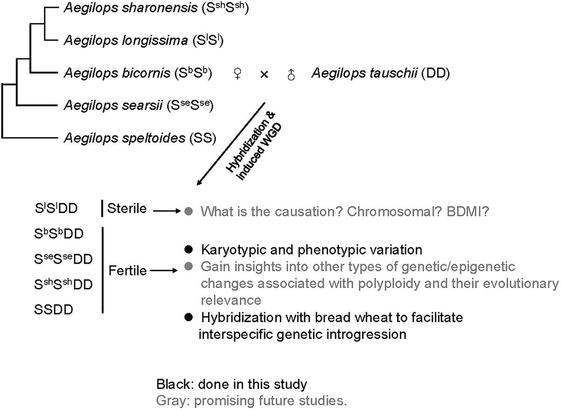
Where would #crop #plant #evolution be without #allopolyploidy?
Zhang et al. explore allopolyploidy in Aegilops as a rich source of #genetic variation amenable to natural and artificial selection in #wheat.
https://doi.org/10.1111/jse.13191
@WileyEcolEvol
#JSE #CropSci #CropBreeding #botany

Paper of the week - week 26:

Barot et al., 2017:

"Designing mixtures of varieties for multifunctional agriculture with the help of ecology. A review"

https://link.springer.com/article/10.1007/s13593-017-0418-x

A bit of an older publication I still feature it here due to it's importance.

#Biodiversity #MixturesOfVarieties #SamplingEffect #ComplementarityEffect #CropBreeding #CropTraits #MultifunctionalAgriculture #MixingAbility

Designing mixtures of varieties for multifunctional agriculture with the help of ecology. A review - Agronomy for Sustainable Development

The study of natural ecosystems and experiments using mixtures of plant species demonstrates that both species and genetic diversity generally promote ecosystem functioning. Therefore, mixing crop varieties is a promising alternative practice to transform modern high-input agriculture that is associated with a drastic reduction of within-field crop genetic diversity and is widely recognized as unsustainable. Here, we review the effects of mixtures of varieties on ecosystem functioning, and their underlying ecological mechanisms, as studied in ecology and agronomy, and outline how this knowledge can help designing more efficient mixtures. We recommend the development of two complementary strategies to optimize variety mixtures by fostering the ecological mechanisms leading to a positive relationship between biodiversity and ecosystem functioning and its stability through time, i.e., sampling and complementarity effects. (1) In the “trait-blind” approach, the design of high-performance mixtures is based on estimations of the mixing abilities of varieties. While this approach is operational because it does not require detailed trait knowledge, it relies on heavy experimental designs to evaluate mixing ability. (2) The trait-based approach is particularly efficient to design mixtures of varieties to provide particular baskets of services but requires building databases of traits for crop varieties and documenting the relations between traits and services. The performance of mixtures requires eventually to be evaluated in real economic, social, and agronomic contexts. We conclude that the need of a multifunctional low-input agriculture strongly increases the attractiveness of mixtures but that new breeding approaches are required to create varieties with higher mixing abilities, to foster complementarity and selection effects through an increase in the variance of relevant traits and to explore new combinations of trait values.

SpringerLink
The #GreenRevolution brought major improvements in #cropbreeding, irrigation & #fertilizer use, leading to a substantial rise in #foodsecurity & reduced rural #poverty. But the focus was primarily on #yields; the cultivation of other food crops decreased... (1/2) https://doi.org/10.1186/s42269-024-01281-4
Transitioning from the Green Revolution to the Gene Revolution: strengthening nutritional security using climate resilient traditional crops - Bulletin of the National Research Centre

Background World food production has significantly increased, largely attributed to advancements in breeding methods pioneered in previous decades. These advancements can be categorized into three major eras—the pre-Green Revolution era, the Green Revolution era, and the post-Green Revolution era—which we call the Gene Revolution. The pre-Green Revolution era was characterized by the utilization of mutation breeding and forward genetics approaches. Main body The Green Revolution (1950s–1980s) brought about major improvements in crop breeding, irrigation, and fertilizer use, leading to a substantial rise in food production and reduced rural poverty. However, the focus was primarily on yield, with less focus on nutritional quality. After the Green Revolution, the production of wheat and rice rapidly increased from 0.4–2 metric tonnes per hectare to 2–4 metric tonnes per hectare due to government initiatives. Nevertheless, the cultivation of other food crops, including indigenous rice varieties and millet, has decreased. In the Gene Revolution era, while advanced genome editing technologies such as CRISPR‒Cas9 and TALENs have enhanced the nutritional content and climate resilience of crops, there has also been a renewed focus on reviving indigenous crops. Conclusion This review discusses methods to bring these orphan nutria crops back into cultivation and emphasizes the importance of passing this knowledge to future generations, ensuring their place in sustainable agriculture and food and nutritional security.

SpringerOpen

OK so the "Darkness into Light" episode of "Not Your Butter Chicken," which you can watch at this link, shows the #Lethbridge Research and Development Centre where I work.

In this show, it was nice to see Harwinder and Dr. Priti Maheshwari, who both work at the research centre. Dr. Maheshwari is a scientist and prolific organizer of vital multicultural events in Lethbridge.

https://www.notyourbutterchicken.com/#watchtheshow

#womeninscience #Alberta #multiculturalism #cropbreeding #agriculturalscience

Not Your Butter Chicken

Not Your Butter Chicken

New genetic mechanisms could provide the basis for breeding plants that can better tolerate #borondeficiency and avoid yield losses: http://go.tum.de/357006

#plantgenetics #oilseedrape #cropbreeding #sustainableagriculture

📷G.P. Bienert

Boron deficiency: oilseed rape reacts as with infection and pest infestation

A study shows that the response of oilseed rape to persistent or short-term acute boron deficiency is similar to that to pests and infections.

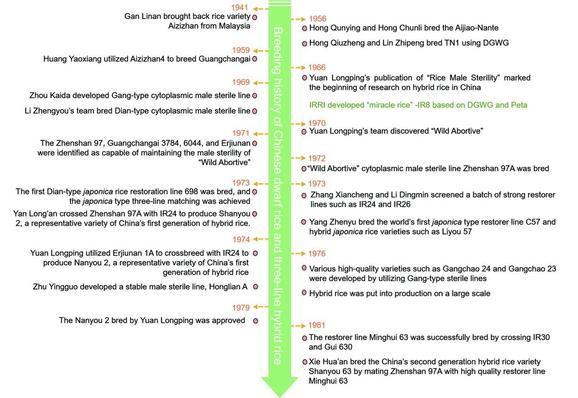
On the 50th anniversary of the success of 3-line hybrid #rice, Zheng et al. review the history of rice breeding, vital contributions to the field by #China's #plant scientists, & future #CropBreeding strategies. https://doi.org/10.1111/jipb.13598
@wileyplantsci
#JIPB #PlantSci #agriculture #PlantScience #botany
Zhang et al. report that #heterosis in #root #microbiota inhibits growth of soil-borne #fungal #pathogens in hybrid #rice, highlighting the potential for microbiota heterosis in #CropBreeding
https://doi.org/10.1111/jipb.13416
@wileyplantsci
#JIPB #PlantScience

Jabal, a durum wheat developed by breeders at the International Center for Agricultural Research in the Dry Area with cooperation of local farmers in Morocco, has been released. It is not only more drought-tolerant than most durum wheats but also tastes great according to farmers who trialled it in their fields and kitchens.

I documented ICARDA's work in Morocco in 2019 and captured a number of farmers inspecting Jabal, which is noted for its long black awns. (The photo used by The Guardian in the link below is actually one I shot in Lebanon, not Morocco and it wasn't Jabal :()

https://www.theguardian.com/environment/2022/dec/04/drough-resistant-crop-jabal-durum-wheat-food-diversity

#Morocco #wheat #agriculture #cropbreeding #climatechange #durum

Jabal: the new wheat scientists say can withstand extreme heat and drought

The variety is a cross between commercial and wild wheats – bred in a bid to develop crops that are more resilient to the climate crisis

The Guardian
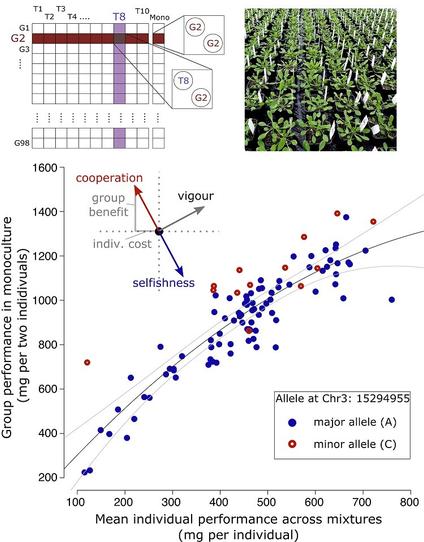
#CropBreeding methods that select for “selfish” traits can reduce yield in high-density monoculture. @SamWuest1 &co use a simple method to identify #plant genotypes that express more #cooperative traits, based on growth in social environments #PLOSBiology https://plos.io/3AYFMit
Increasing plant group productivity through latent genetic variation for cooperation

Some traditional breeding approaches select for “selfish” traits that can reduce yield in high-density monocultures. This paper proposes a simple method to identify plant genotypes that express more cooperative versus more competitive traits, based on how they grow in different social environments, and applies this method to a genetic study with Arabidopsis thaliana.