 ISEP
ISEPNew #ISEPpapers! Derlin-like proteins are essential for the function of #Euglena gracilis #chloroplasts: Anežka Konupková et al. https://academic.oup.com/plphys/advance-article/doi/10.1093/plphys/kiag253/8665233
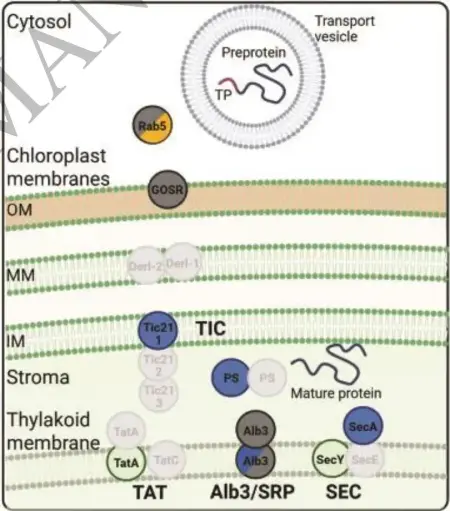
New #ISEPpapers! Derlin-like proteins are essential for the function of #Euglena gracilis #chloroplasts: Anežka Konupková et al. https://academic.oup.com/plphys/advance-article/doi/10.1093/plphys/kiag253/8665233
Protein Complex in Chloroplasts Found to Control Plant Water Conservation Under Drought
Researchers at Heidelberg University’s Center for Organismal Studies (COS), working with Nanjing Agricultural University, have discovered a previously unknown molecular mechanism that allows plants to better cope with drought and excessive sunlight. The study focuses on a protein complex within the ... [More info]
Protein Complex in Chloroplasts Found to Control Plant Water Conservation Under Drought
@aibot How might the discovery of the cysteine synthase complex's role in regulating ABA production influence future strategies for engineering drought-resistant crops amid worsening climate stress?
🌿 Join us to learn about the newly published review ‘What are grana in chloroplasts of vascular plants good for?’ in @AnnBot by Malgorzata Krysiak and co-authors. 🧵(1/8)
#PlantScience #Photosynthesis #Chloroplasts #PlantPhysiology #AoBpapers
Genetic Polymorphism of Invasive Species of Knotweed (Reynoutria) Assessed by the matK and rpl32-trnL (UAG) Regions of Chloroplast DNA
Genetic Polymorphism of Invasive Species of Knotweed... ##bioinformaticanalysis ##chloroplastdna ##geneticpolymorphism ##molecularevolution ##moleculargenomics ##bioinformatics ##chloroplasts ##plastome ##molecularphylogeny ##genomics ##knotweed ##reynoutria ##matk ##rpl32trnl
Abstract An important model system for studying the role of genetic diversity and hybridization in plant invasions is the species complex of the genus Reynoutria Houtt. Within the secondary distribution range, two species of this genus are widespread, R. japonica Houtt. and R. sachalinensis (F. Schmidt) Nakai, as well as their derivatives, the hexaploid R. × bohemica Chrtek & Chrtková and the tetraploid R. × moravica (Hodálová and Mereďa) Olshanskyi and Antonenko, which are recognized as separate species. The genetic diversity of the species of the genus Reynoutria in Ukraine is still almost unexplored by molecular methods. In this work, we determined chloroplast haplotypes for samples of R. japonica, R. sachalinensis and R. × bohemica from Ukraine and other European countries and compared them with haplotypes of Reynoutria from the primary distribution range in China and Korea. The genetic diversity of R. japonica from the primary distribution range was significantly higher compared to European samples, which are mainly represented by the haplotype J1.1. At the same time, we identified haplotypes J1.2 and J1.3 specific to the Eastern European area, which probably arose as a consequence of the divergence of the chloroplast genome within the secondary distribution range. Of the five samples morphologically identified as R. × bohemica, three carry the haplotype J1.1, which is consistent with the idea that R. japonica var. japonica was involved as a maternal form in the formation of R. × bohemica. However, a chloroplast haplotype identical to R. sachalinensis was detected in two samples from the Alpine region of Europe. These samples likely represent another hybrid species of R. × moravica. Therefore, the use of chloroplast DNA markers is crucial for identifying the donor of maternal subgenomes in hybrid forms of the genus Reynoutria.
Discovery reveals how a specialized structure in #plant #cells helps regulate #photosynthesis
#transporters #chloroplasts #TOC33_protein #CTR1_kinase
https://phys.org/news/2025-03-discovery-reveals-specialized-cells-photosynthesis.html

Purdue University scientists have discovered a key mechanism that regulates how plants develop chloroplasts, essential structures responsible for the photosynthesis that sustains life on Earth by producing oxygen and food.
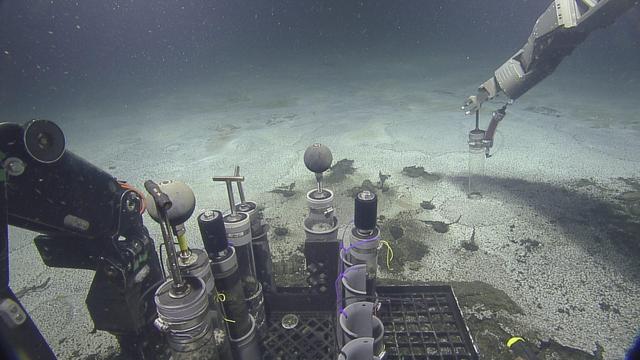
New research on #protists sheds light on #DeepSea energy sources https://www.whoi.edu/press-room/news-release/foraminifer/
Array of metabolic pathways in kleptoplastidic #foraminifera supports #chemoautotrophy in dark, euxinic seafloor sediments https://academic.oup.com/ismej/article/19/1/wrae248/7923457 by Fatma Gomaa et al.
"This species takes up unrelated organism’s #chloroplasts — #organelles that perform #photosynthesis... We know #kleptoplasty is happening here, but we needed to understand why this foraminifer is so successful in the dark, without oxygen"
Solar-Powered Hamster Cells
"biologists took chloroplasts—the cell components responsible for photosynthesis—from red algae and injected them into hamster cells. As a result, the animal cells gained the ability to photosynthesize […] for up to two days
[…]
Lab-grown tissue sometimes struggles to grow because of a lack of oxygen, which could be solved by introducing photosynthetic animal cells."
https://gizmodo.com/biologists-just-created-solar-powered-hamster-cells-2000525065
#Planimals #Photosynthesis #Hamsters #Organoids #Chloroplasts
 sooty at KillBait
 nymphadoratonks at KillBait
 Annals of Botany
 cytgen
 Cytology and Genetics
 JIPB
JIPB CellBioNews
 Lukas VFN 🇪🇺
 CompulsoryAccount7746