Book Review: The Great Abolitionist by Stephen Puleo
Author: Stephen Puleo
Title: The Great Abolitionist : Charles Sumner and the Fight for a More Perfect Union
Publication Info: New York : St. Martin’s Press, 2024.
Other Books Read By the Same Author:
Summary/Review:
The Great Abolitionist is a biography of Charles Sumner, the 19th century senator from Massachusetts, and a history of cause of abolition and equality for Black Americans just before, during, and after the Civil War. Stephen Puleo makes a bold, and I believe inaccurate, claim that Charles Sumner was “the nation’s most passionate antislavery and equal rights champion.” This is hard to accept when there were enslaved and formerly enslaved people like Frederick Douglass advocating for Black freedom and equality. While this statement made me wary, I did find the rest of the book was a well-composed biography of Sumner as the greatest advocate for abolitionism within Congress.
Puleo notes that Sumner coined the concept of “equality before law.” While abolitionists of the William Lloyd Garrison considered the Constitution an unholy document for allowing slavery, Sumner contended that the Constitution contained the seeds for freedom and equality for all. Raised in a prominent Boston family and Harvard educated, Sumner passed the bar and became active in Boston’s abolitionist community. He rose to prominence as a prosecuting attorney in the Roberts v. City of Boston case which failed to desegregate public schools, although his testimony would prove influential.
The Massachusetts legislature elected Sumner to the Senate in 1851. Sumner’s early days in the Senate found him caught between a body sternly opposed to letting anyone speak against slavery while his constituents at home grew increasingly angry that Sumner was not doing enough. Ultimately, Sumner would become the leading abolitionist voice in the Senate, introducing objections to the injustices of the Fugitive Slave Law and the Kansas-Nebraska Act.
The most famous incident in his life came after a two-day speech against slavery in 1856 in which he targeted South Carolina Senator Andrew Butler. Two days later, Representative Preston Brooks, a cousin of Butler’s, attacked Sumner in the Senate chamber, brutally beating him with a cane. None of the Senate intervened to aid Sumner and several Senators cheered for Brooks. The House chose not to expel Brooks, but he resigned anyway, only to be be returned in the special election and become a hero to Southerners. (When people say that the United States has never been more divided than it is now, keep this in mind to remember we’ve often been like this).
Sumner’s injuries were so severe he was unable to return to his regular Senate duties for over three years. He was nonetheless reelected with his empty chair in the Senate chamber becoming a symbol of the abolitionist movement. He returned to the Senate just before the Election of 1860 and the Civil War. Sumner often disagreed with Abraham Lincoln who was reluctant to endorse abolitionism and equality. He nonetheless became a trusted advisor pushing the president towards emancipation. Sumner’s experience as the chair of the Committee on Foreign Relations also proved beneficial in easing tensions with the United Kingdom after the Trent affair nearly brought them into war with the United States.
Even before the war ended, Sumner pushed hard for Reconstruction and the 13th, 14th, and 15th amendments, objecting to more conciliatory proposals that didn’t include equal rights for Black Americans. The Civil Rights Act of 1875, which he co-authored, passed a year after his death and was his final legacy. Unfortunately, the Compromise of 1877 delayed Sumner’s dream of equality under law for at least a century, but his ideas would be cited in Brown vs. the Board of Education and by leaders of the Civil Rights Movement.
Recommended books:
Rating: ****1/2
#AmericanHistory #Biography #BookReviews #Books #CharlesSumner Liam O'Mara IV, PhD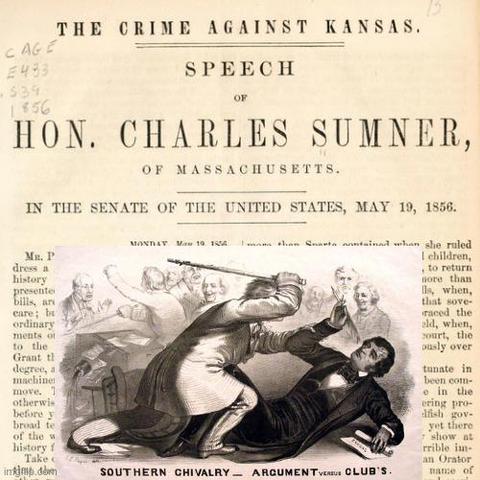
 Panorama of the Mountains
 Coach Sankhavaram ®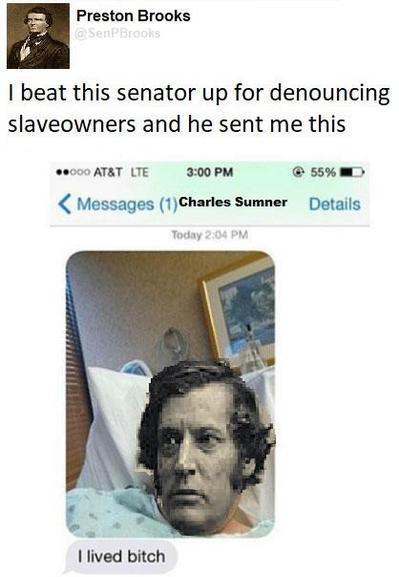
 Adrian Riskin


 quoteallthethings #Yang2020 🐉