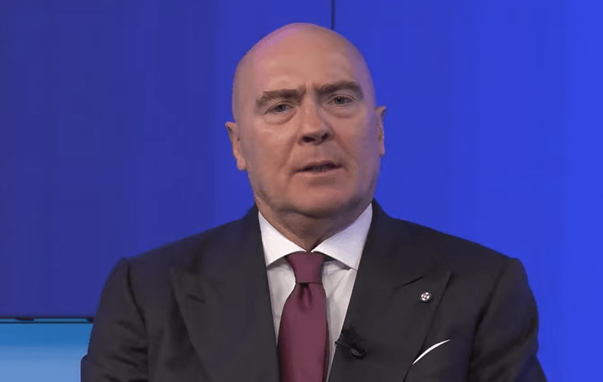
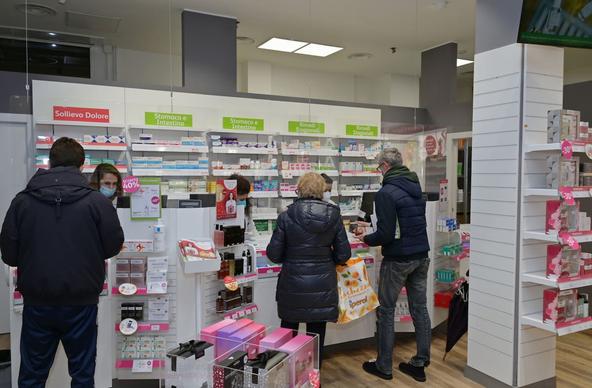
Adnkronos - ultimoratop: Farmaceutica, Cattani (Farmindustria): "Capacità di innovare è la sua forza"

(Adnkronos) - 'Oltre 4,5 mld in R&S, 74 mld di produzione e 70 di export, cresce occupazione - Sostenere il settore perché possa brillare per crescita e valore'

Pharmaceutical, Cattani (Farmindustria): "Innovation is its strength"

(Adnkronos) - More than €4.5 billion in R&D, €74 billion in production and €70 billion in exports, employment is growing – Supporting the sector to shine with growth and value.

#Cattani #Farmindustria

https://www.adnkronos.com/economia/farmaceutica-cattani-farmindustria-capacita-di-innovare-e-la-sua-forza_4QDN1NnAvglHgfNSIsuhFW

Farmaceutica, Cattani (Farmindustria): "Capacità di innovare è la sua forza"

'Oltre 4,5 mld in R&S, 74 mld di produzione e 70 di export, cresce occupazione - Sostenere il settore perché possa brillare per crescita e valore'

Adnkronos

L'Unità: Hormuz chiuso, allarme anche per i farmaci: prezzi in aumento e disponibilità a rischio se lo stretto non riapre

Non solo petrolio, cherosene e gas. Le conseguenze del blocco dello stretto di Hormuz, la sottile striscia d’acqua dove sono ferme centinaia di navi sotto la minaccia iraniana, reazione della Repubblica Islamica agli attacchi subiti da Stati Uniti ed Israele, potrebbero interessare anche un altro settore nevralgico: quello farmaceutico, col rischio concreto già questa estate, in caso di mancata riapertura, di una carenza di farmaci essenziali.
Parliamo di medicinali di largo consumo ed utilizzo, dagli antibiotici agli antidiabetici, passando per il paracetamolo e fino a quelli necessari per le terapie oncologiche: tutti farmaci la cui produzione dipende in larga misura da precursori petrolchimici che arrivano dal Golfo Persico e transitano per Hormuz.
Ad alzare l’attenzione sul tema è stato Marcello Cattani, presidente di Farmindustria, che al Corriere della Sera ha sottolineato come il settore sia oggi colpito dal terzo grave shock in quattro anni dopo la guerra in Ucraina e la crisi del Mar Rosso.
Una serie di eventi che ha colpito simultaneamente logistica, energia e costi di produzione portando ad un aumento esponenziale dei costi degli ingredienti attivi, fino al 60 per cento in più nei casi più critici. A questi rincari vanno aggiunti poi quelli delle materie prime destinate al packaging, come alluminio, plastiche e PVC, prezzi cresciuti tra il 20 e il 35 per cento.
E ai problemi relativi ai costi va aggiunto quello sulle scorte: se la crisi nel Golfo dovesse protrarsi ancora, le aziende del settore andrebbero in difficoltà nel reperire materie prime fondamentali per la produzione dei farmaci.
“Le carenze sono legate due temi: l’insostenibilità industriale dei costi e l’indisponibilità di talune materie prime, a partire dagli ingredienti attivi”, spiega Cattani al Corriere. Quanto alle scorte, fare una previsione è difficile perché ciascuna azienda ha propri piani di approvvigionamento, “ma normalmente lo stock è di alcuni mesi”, dunque è l’estate la “dead-line” per il settore.ar

Hormuz closed, alarm also for medicines: prices rising and availability at risk if the strait does not reopen.

Not just oil, kerosene, and gas. The consequences of a blockade of the Strait of Hormuz, the narrow strip of water where hundreds of ships are held under the threat of Iran, represent the Islamic Republic’s reaction to attacks by the United States and Israel, could also affect another crucial sector: the pharmaceutical one, with the concrete risk already this summer, in case of non-reopening, of a shortage of essential medicines.

We’re talking about widely used medications, from antibiotics to antidiabetic drugs, passing through paracetamol and up to those necessary for oncological therapies: all drugs whose production depends largely on petrochemical precursors arriving from the Persian Gulf and passing through Hormuz.

Marcello Cattani, president of Farmindustria, raised the issue in Corriere della Sera, highlighting that the sector is today hit by the third major shock in four years after the war in Ukraine and the Red Sea crisis.

A series of events that simultaneously impacted logistics, energy, and production costs, leading to an exponential increase in the cost of active ingredients, up to 60 percent more in the most critical cases. To these price increases must then be added those of raw materials destined for packaging, such as aluminum, plastics, and PVC, prices up 20 and 35 percent.

And to the problems related to costs must be added that relating to stocks: if the crisis in the Gulf were to persist, companies in the sector would have difficulty in sourcing fundamental raw materials for the production of medicines.

“Shortages are linked to two themes: the industrial unsustainability of costs and the unavailability of certain raw materials, starting with active ingredients,” explains Cattani to Corriere. As for stocks, it’s difficult to make a prediction because each company has its own supply plans, “but normally the stock is for a few months,” so summer is the “dead-line” for the sector.

#Hormuz #theStraitofHormuz #theUnitedStates #Israel #thePersianGulf #MarcelloCattani #Farmindustria #third #Ukraine #RedSea #upto60percent #20and35percent #Cattani #Corriere

https://www.unita.it/2026/04/15/allarme-farmaci-chiusura-stretto-hormuz/

Hormuz chiuso, allarme anche per i farmaci: prezzi in aumento e disponibilità a rischio se lo stretto non riapre

Non solo petrolio, cherosene e gas. Le conseguenze del blocco dello stretto di Hormuz, la sottile striscia d’acqua dove sono ferme centinaia di navi sotto la minaccia iraniana, reazione della Repubblica Islamica agli attacchi subiti da Stati Uniti ed Israele, potrebbero interessare anche un altro settore nevralgico: quello farmaceutico, col rischio concreto già questa estate, […]

L'Unità

Il Tempo: Cattani (Farmindustria): "Testo unico per superare payback e nuove sfide"

Roma, 4 mar. (Adnkronos Salute) - "E' necessario un Testo unico per la farmaceutica che possa garantire la giusta priorità nell'allocazione degli investimenti sulla spesa farmaceutica ospedaliera, sull'innovazione, sui vaccini e sulla prevenzione, introducendo nuovi criteri e superando l'annoso tema del payback". Lo ha detto Marcello Cattani, presidente di Farmindustria, all'ottava edizione di 'Investing for Life Health Summit', convegno organizzato da Msd Italia oggi a Roma.
L'esigenza di un Testo unico per Cattani "è oggi ancor più forte alla luce" di nuove sfide, di "strumenti come il 'Most favoured nation', l'ordine esecutivo 301 che mira a ribilanciare la valorizzazione della ricerca e dell'innovazione tra Stati Uniti e Paesi europei. L'Europa è chiamata a investire meglio e di più laddove c'è maggiore bisogno di innovazione - chiarisce il presidente di Farmindustira - garantendo al contempo un percorso di 'early access', con accesso rapido e omogeneo" alle cure "su tutto il territorio nazionale. Nel momento in cui l'Ema (Agenzia europea dei medicinali) approva un nuovo farmaco o un vaccino, l'accesso deve essere immediato - rimarca Cattani - Questo non serve solo a rendere la nostra nazione più attrattiva per l'industria, ma è soprattutto una questione di diritti dei cittadini verso l'innovazione". In tempi in cui "la supply chain avrà problemi a causa della guerra - conclude - serve agire con urgenza e visione".

Cattani (Farmindustria): “Single text to overcome payback and new challenges”

Rome, March 4 (Adnkronos Salute) – “It is necessary for there to be a single text for the pharmaceutical industry that can guarantee the proper priority in the allocation of investments on hospital pharmaceutical spending, innovation, vaccines and prevention, introducing new criteria and overcoming the long-standing issue of payback.” This was stated by Marcello Cattani, president of Farmindustria, at the eighth edition of ‘Investing for Life Health Summit’, a conference organized by Msd Italia today in Rome.

The need for a single text, according to Cattani, “is today even stronger in light of” new challenges, such as “instruments like the ‘Most favoured nation’, Executive Order 301 which aims to rebalance the valuation of research and innovation between the United States and European countries. Europe is called to invest better and more where there is greater need for innovation – clarifies the president of Farmindustira – while guaranteeing a pathway of ‘early access’, with rapid and uniform access” to treatment “across the entire national territory. At the moment when the EMA (European Medicines Agency) approves a new drug or vaccine, access must be immediate – Cattani emphasizes – This is not only to make our nation more attractive to the industry, but it is above all a matter of citizens’ rights towards innovation.” In times when “the supply chain will have problems due to the war – concludes – it is necessary to act urgently and with vision.”

#Farmindustria #AdnkronosSalute #MarcelloCattani #eighth #MsdItalia #Cattani #theUnitedStates #European #Europe #Farmindustira

https://www.iltempo.it/adnkronos/2026/03/04/news/cattani-farmindustria-testo-unico-per-superare-payback-e-nuove-sfide--46656952/

Cattani (Farmindustria): "Testo unico per superare payback e nuove sfide"

Roma, 4 mar. (Adnkronos Salute) -