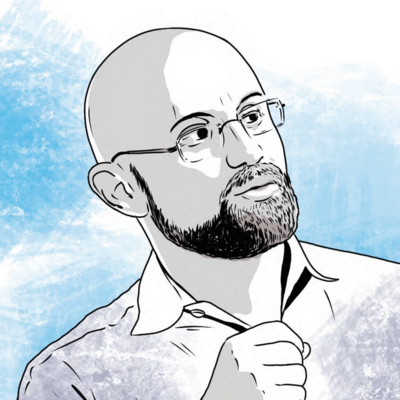
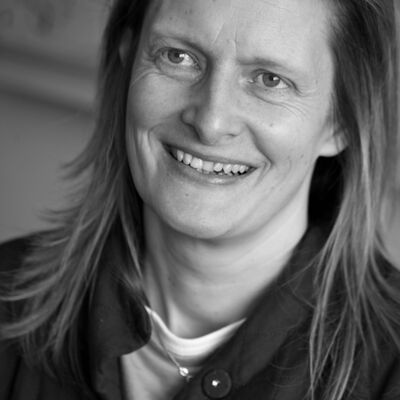
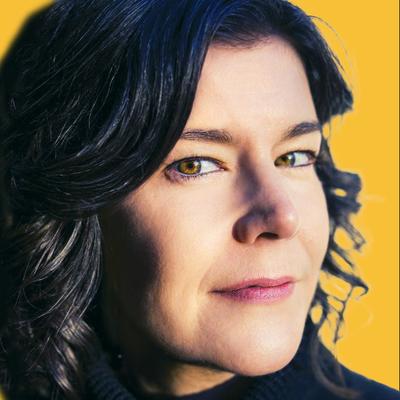
Next was a slate of talks at #CCN2025:
Nancy Kanwisher - intuitive physical reasoning in the brain https://www.youtube.com/watch?v=WvUXUm1AMCU
Anna Schapiro - learning representation of specifics and generalities over time https://www.youtube.com/watch?v=w7_7qd_giug (5/9)
Keynote Lecture: Nancy Kanwisher - CCN 2025

YouTube

I posted about Ellie Pavlick’s excellent talk on compositionality in #LLMs at #cogsci25 last week. I just saw that she is also giving this keynote #ccn2025 and anyone can watch it here:

I recommend it!

https://hva-uva.cloud.panopto.eu/Panopto/Pages/Embed.aspx?id=b26bd214-6afd-413e-898d-b2dc00787139

CCN Congres 2025 - Keynote 5 - (REC A0.01 - REC A1.02, REC A1.03) - 15-8-2025

Appreciate @davidpoeppel.bsky.social's reminder to scientists of their role in this time, at #CCN2025 (the reminder may be even more pertinent to non-US colleagues who have a chance to prevent the some of the worst effects before they really arrive)
Check out @catrinahacker.bsky.social's #CCN2025 poster this afternoon! We've long worked with spikes. Here we ask: would we have made the same inferences about memory with the signals often recorded in human neurosci (iEEG, LFPs)? The answer surprised me. Not only yes! but with 3-fold *less* data.

RE: https://bsky.app/profile/did:plc:seqqfxsmbtncskqh7ptdt3bv/post/3lwb3dzxuik2g

🧠🤝A great Mindmatching event today at #CCN2025 @CogCompNeuro with Megan Peters!

✨We helped to connect some of the brightest minds in cognitive computational neuroscience!

Learn more about how it's done here: https://neuromatch.io/networking/

🧠 TODAY at #CCN2025 ! Poster A145, 1:30-4:30pm at de Brug & E‑Hall. We've developed a bio-inspired "What-Where" CNN that mimics primate visual pathways - achieving better classification with less computation. Come chat! 🎯

Presented by main author Jean-Nicolas JÉRÉMIE and in cosupervision with Emmanuel Daucé

https://laurentperrinet.github.io/publication/jeremie-25-ccn/

Our research introduces a novel "What-Where" approach to CNN categorization, inspired by the dual pathways of the primate visual system:

  • The ventral "What" pathway for object recognition

  • The dorsal "Where" pathway for spatial localization

Key innovations:

✅ Bio-inspired selective attention mechanism

✅ Improved classification performance with reduced computational cost

✅ Smart visual sensor that samples only relevant image regions

✅ Likelihood mapping for targeted processing

The results?

Better accuracy while using fewer resources - proving that nature's designs can still teach us valuable lessons about efficient AI.

Come find us this afternoon for great discussions!

#CCN2025 #ComputationalNeuroscience #AI #MachineLearning #BioinspiredAI #ComputerVision #Research

For everyone who can not attend the CCN Conference this year in amsterdam, all keynote lectures can be streamed here:

https://2025.ccneuro.org/keynote-lectures/

Full schedule with livestream links here:
https://2025.ccneuro.org/schedule-of-events/

First off, Nancy Kanwisher at 11.30 am (CET)

Edit: Not only keynotes but also symposia can be live streamed 🙂

#ccn2025 #neuroscience #cognitivescience #computationalneuroscience #CompNeuro

Keynote Lectures

Really excited for #CCN2025! Come see our poster (A58). We asked people to describe the same pictures with different task instructions and trained a CNN to learn these sentence embeddings. Both networks learned task-relevant visual features that humans also needed for the same tasks!

This year at #CCN2025 we will be showcasing our research on the classification of Mental Workload 🥵 Spatial Effects using Riemannian Manifold.

📅 When: Wednesday, August 13, 1:00 – 4:00 pm
📍 Where: CCN 2025 Conference Venue, de Brug & E-Hall
📋 What: Poster B152

  • It leverages advanced mathematical techniques to better understand and classify mental workloads, offering new insights into cognitive processes and potential applications in various fields such as neuroscience, psychology, and human-computer interaction.
  • By utilizing Riemannian geometry, this research provides a robust framework for analyzing spatial effects in mental workload, paving the way for more accurate and efficient classification methods. This contribution not only advances our theoretical understanding but also has practical implications for improving mental workload assessment and management.

See you there! 🚀

https://laurentperrinet.github.io/publication/choplin-25-ccn/

👏 CNRS @cnrs - Aix-Marseille University - ONERA, The French Aerospace Lab CNRS

#CCN2025 #Mental #Workload #MentalWorkload #Riemannian #Manifold

Classification of Mental Workload Spatial Effects using Riemannian Manifold | Next-generation neural computations

This study investigates the use of Riemannian geometry to classify mental workload from an EEG dataset collected in an aeronautical context. The analysis, based on EEG data recorded from 16 participants performing a Simon task, aimed to differentiate low and high workload conditions. Using covariance matrices and a Minimum Distance to Mean (MDM) classifier, the results demonstrate spatial effects of mental workload irrespective of the investigated spectral domain. This demonstrates that spatial information is distributed evenly across all explored frequency bands.

Next-generation neural computations
On my way to @cogcompneuro.bsky.social in Amsterdam! Who’s around tomorrow for a long walkabout to explore and get on local time? #CCN2025