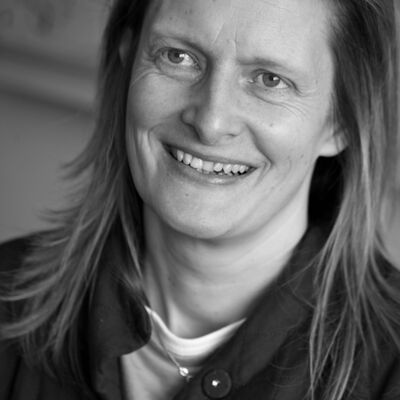
I posted about Ellie Pavlick’s excellent talk on compositionality in #LLMs at #cogsci25 last week. I just saw that she is also giving this keynote #ccn2025 and anyone can watch it here:

I recommend it!

https://hva-uva.cloud.panopto.eu/Panopto/Pages/Embed.aspx?id=b26bd214-6afd-413e-898d-b2dc00787139

CCN Congres 2025 - Keynote 5 - (REC A0.01 - REC A1.02, REC A1.03) - 15-8-2025

slightly disconcerting: we had three papers at #cogsci25 but only two have been indexed on Google Scholar....

this one on exploring the impact of 'flooding the zone' on argument diffusion with an agent-based model is missing (with @schoeppl )

https://escholarship.org/uc/item/8z32x661

Flooding the Zone: An Agent-based Exploration

Author(s): Hahn, Ulrike; Assaad, Leon; Schöppl, Klee | Abstract: Online public discourse faces many threats such as human and bot networks spreading disinformation or harassment campaigns aimed at excluding certain voices. One such threat is the strategy of 'flooding the zone': intentionally pumping into the discourse information that is irrelevant to, or distracting from, an important issue. This technique is employed by both individual and state actors with seeming success. How and why that technique is successful, by contrast, is less well understood. In this paper we use agent-based modelling to help elucidate the disruptive impact of flooding the zone on communication itself. Specifically, we probe the ways in which flooding hampers the spread of relevant information and show consequences of this even for idealized, rational, actors.

#cogsci25 a great talk by Ellie Pavlick on ‘emergent compositionality in neural networks’:

Compositionality in language and thought has been one of the long running debates in cognitive science. It refers to the way complex meanings are established from component parts. Specifically, it’s the idea that the meaning of a complex unit can be derived solely from the meanings of its parts: e.g., the meaning of “black cat” can be built up directly from the meanings of “black” and “cat”.
🧵

#cogsci25 I’m really pleased to see Doug Medin announced as the winner of the CogSci society’s 26th Rumelhart Prize

I started out doing research on concepts and categorization and his work in that area is foundational, but he then also went on to do really important work on cross-cultural cognition.

https://cognitivesciencesociety.org/rumelhart-prize/

Rumelhart Prize - Cognitive Science Society

Cognitive Science Society
#cogsci25 final keynote: Lauren Ross, UC Irvine "Cognitive Science and its Philosophy: Looking to the Future"

another great talk #cogsci25 yesterday was by Sean Trott on "Do we know enough to know what language models know" on the difficulties in trying to make sense of LLMs.

One of the most useful things I thought was his point that we need to think more clearly about what it would mean if an LLM passes a human behavioural test, say a theory of mind test:
-do we bite the bullet and acknowledge the capacity
- do we reject the capacity regardless (if yes why?)
- do we change our views on the construct validity of the test for either machines or machines and humans?

I think these are questions to think about in advance that could yield a lot of conceptual and methodological clarification

just heard a really interesting talk by Ruoxi Qi from the University of Hong Kong about bias in LLMs.

They investigated LLMs bias toward WEIRD values by prompting LLMs and comparing their answers to World Values Survey (WVS) data (Haerpfer et
al., 2022). The WVS contains questions about human values and data from large representative samples from different parts of the world.

As expected they found bias toward WEIRD but also bias toward East Asia and Russia, presumably reflecting balance in the training data. In fact, whether a country was rich or not, was the best predictor of bias.

A really nice summary plot of their results from the paper is the Fig. 4 heatmap overlaid with clustering results that plots distance between model distribution and WSV distributions as a measure of value alignment! #cogsci25

https://escholarship.org/content/qt87d9k3tg/qt87d9k3tg.pdf

first up for me today at #cogsci25 is Moira Dillon’s Gleitman Prize lecture. Great talk!

https://cognitivesciencesociety.org/gleitman-prize/

Gleitman Prize - Cognitive Science Society

Cognitive Science Society

gave my talk “What *is* reasoning, anyway?” at the Workshop “Reasoning Across Minds and Machines” earlier today. #cogsci25

Thanks to everybody here who provided references and discussion on this in the last two weeks! It really helped clarify my thoughts.

it's here! will (virtually) be attending #cogsci25 and, time permitting, posting about things of interest I encounter

https://cognitivesciencesociety.org/program/

Program - Cognitive Science Society

Cognitive Science Society