Testing leads to failure, and failure leads to understanding.
-- Burt Rutan
⬆ #Wisdom #Quotes #BurtRutan #Failure #Testing #Understanding
Das Universum scheint die Empathie bei den beiden Brüder Dick und Burt Rutan ungleich verteilt zu haben. Burt, der jüngere, kämpft Zeit seines Lebens (noch bis zum Tod seines Bruders im Mai 2024) um die Zuneigung und Akzeptanz des um 5 Jahre älteren Bruders.
Dick Rutan, den ich vor Jahren selbst persönlich an einem Abend als extrem egozentrisch und kalt gegenüber anwesenden Menschen kennengelernt hatte, war ein außergewöhnlicher Pilot. Einer der besten, wenn es um Kampfeinsätze oder außergewöhnliche fliegerische Situationen im Cockpit ging. Selbst seine Freundin Jeanna [sprich: Gina] Jaeger, mit der er den Rekordflug der Voyager einmal um die Erde ohne aufzutanken flog, kannte er nach dem Flug nicht mehr. Sie existierte einfach nicht mehr in seinen Erzählungen, obwohl ohne sie der Rekordflug nicht durchführbar gewesen wäre.
Jeanna Yeager und Dick Rutan vor der VoyagerDas Burt Rutan Model 76 Voyager, das mit Dick Rutan und Jeanna Yeager einmal um die Erde flog ohne aufzutanken. Mehr als neun stressvolle Tage liegend an Bord…Wie hart dieses Verhalten auch seinen Bruder Burt traf, wurde (mir) erst gestern Abend im Theatre in the Woods klar, als der 81 jährige Burt Rutan mehr als drei Stunden offen aus seinem beruflichen und privaten Leben erzählte.
Egal, wo Burt Rutan auftaucht, wo er spricht. Stets ist er umringt von Menschen, die ihn ob seiner Lebensleistung bewundern. Standing Ovations gab es nicht nur am Abend im Theatre in the Woods, sondern auch bei all seinen gut besuchten Vorträgen in den folgenden Tagen.Burt versuchte schon als Teenager die Gunst seines Bruders zu erlangen. Der war da bereits auf seinem Ausbildungsweg zum Kampfpiloten, später zu gefährlichen Misty-Missions in Vietnam. Der kleine Bruder Burt, der Modellflieger baute und dabei eine Trophäe nach der anderen absahnte, kümmerte ihn wenig.
Ironischerweise drehte sich der Spieß später um. Nach dem Ende von Dicks kriegerischer Pilotenlaufbahn gab es in den USA zu viele Ex-Kampfpiloten auf der Suche nach zivilen Pilotenjobs. Testpiloten in der aufsteigenden Phase des Flugzeugbaues waren rar. Aber, so Burt Rutan, die Anforderungen an einen Testpiloten sind komplett anders als die an einen Kampfpiloten. Und so wollte letztere keiner einstellen. Bis auf ihn. Nun arbeitete Dick als Angestellter in der aufstrebenden Flugzeughersteller-Firma von Burt. Das aber konnte aufgrund der Geschichte nicht gut gehen. Streit und Auseinandersetzungen waren an der Tagesordnung.
LongEZ, VariEZ, VariViggen – nicht nur das Design ist ungewöhnlich bei Rutans Konstruktionen. Interessanterweise mokiert er sich über den Namen Airbus: „So nennt man doch keinen Flugzeugkonzern“…Rutans Spezialität sind Canard-Flugzeuge. Bei Canard-Flugzeugen (Entenflügler) befindet sich das Höhenleitwerk vor den Tragflächen. Sie sehen also so aus, als wenn der Pilot, der drin sitzt, verkehrt fliegt. Die Flügelflächen sind gepfeilt und haben an den Enden große Winglets. Der Antriebspropeller dreht nicht vorne an der Nase, sondern hinten am Heck.
Die Rivalität der Brüder führte jedoch auf beiden Seiten zu Höchstleistungen. Burt entwickelte sich weiter zum vermutlich genialsten Flugzeugkonstrukteur, den es auf der Welt gab und gibt. Alleine die schiere Anzahl von 49 teilweise abartig aussehenden Flugzeugen, die ihre Entstehung ihm verdanken, ist unerreicht.
Burt Rutans liebstes und bestes Flugzeug ist nach eigenen Worten der Boomerang. Ein ungewöhnliches Flugzeug, das von Piloten oft als häßliches Flugzeug bezeichnet wird, weil es asymmetrisch ist.
Das aber ist das Geniale daran, dass dadurch der sogenannte p-Effekt des Propellers (1. Stunde Lehrstoff für angehende Piloten) aufgehoben wird.
Und damit sieht das Flugzeug zwar nicht symmetrisch aus, aber es „fliegt symmetrisch“.
Etliche von Rutans Konstruktionen wurden von der Allgemeinheit als UFO klassifiziert und angezeigt. Was durchaus der Wahrheit entspricht: ein unidentifiziertes Objekt, das fliegt…
Burt Rutan ist einer der herzlichsten Menschen, die mir bekannt sind. Er kümmerte sich stets in einem Maß um seine Angestellten, die seinesgleichen sucht. Jeder sollte immer am Erfolg seiner Flugzeuge teilhaben. Das realisierte er sowohl finanziell als auch ideell, in dem er jede(n) in der Firma in die Entwicklung mit einbezog.
Seine (politischen) Ansichten, mit denen er nicht hinter dem Berg hält, kosteten ihn allerdings die letzten paar Jahre die Einladung zum AirVenture in Oshkosh.
Nicht allen schmeckten die Aussagen des Teslafahrers, dass sich ein Tesla-Auto umwelttechnisch niemals rechnet, weil man 100000 Meilen fahren muss, damit die Umweltbilanz der Herstellung auf Null ist. Da die enorme Batterie aber zuvor bereit getauscht werden muss, sei die Umweltenergiebilanz sogar negativ. Eine ähnlich schlechte Umwelt-Bilanz stellt er für Windräder auf – für deren Herstellung und ihren Einsatz, bis sie veraltet wieder ausgetauscht werden.
Erfreulicherweise ist nach den Burt-Rutan-abwesend-Jahren nun jeder Tag in Oshkosh mit einem seiner frei gesprochenen Vorträge bestückt. Eines der vielen Piloten-Highlights, für die es sich lohnt, die Strapazen und Kosten der Reise für das AirVenture in Oshkosh auf sich zu nehmen.
Nach einem Herzinfarkt und weiteren Herzproblemen mit 65 zog sich Burt Rutan von seiner Firma Scaled Composites in der Mojave Wüste zurück und übersiedelte in ein kleines Dorf nach Idaho. Er schaffte es, dass über die Jahre den Rest seiner mittlerweile großen Familie bis zu den Urenkeln ihm nachzog.
Sogar Dick Rutan.
In den letzten Lebensjahren scheint Dick sein soziales Verhalten generell gewandelt zu haben und die beiden Brüder kamen sich zum ersten Mal näher, „wie wie es von Kindheit an sein hätte sollen“, so Burt Rutan.
Burts großes Rentnerprojekt, die SkiGull, ein Wasserflugzeug der Zukunftsklasse, wurde dabei nach eigenen Worten ein totaler Flopp…
Flugundzeit Empfehlung
Wer Burt Rutan in seinen eigenen Worten lesen möchte und mehr über seine Flugzeuge erfahren möchte – er veröffentlicht seine Memoiren kostenfrei online auf seiner Website:
Die Website enthält auch zahlreiche Videos.
Fazit: Sehens- und lesenswert!
Wenn Sie „burt rutan“ googeln, finden Sie Tausende von Websites und Bildern. Das meiste davon ist korrekt, aber vieles ist es nicht. Burt dachte, dass eine Website, die sich auf die Korrektur ungenauer oder irreführender Informationen konzentriert, für diejenigen, die über seine Aktivitäten recherchieren, hilfreich wäre.
[Zitat von http://www.burtrutan.com ]
Alle Fotos Bis auf [1]: ©Burt Rutan
Testing leads to failure, and failure leads to understanding.
-- Burt Rutan
⬆ #Quotes #BurtRutan #Failure #Testing #Understanding
⬇ #Photography #Panorama #Guangxi #China #LiRiver #LiJiang #TowerKarst #Geology
On December 23, 1986, Voyager completed the first nonstop, non-refueled flight around the world. Pilots Dick Rutan and Jeana Yeager completed the flight in nine days. The record still stands today.
#science #sciencefacts #burtrutan #jeanayeager #voyageraircraft #voyager #nonstopflights
I like Max more&more. Those planes *are* cool.
The most »what the …« is maybe the Boomerang. Well, at *second* glance.
https://en.wikipedia.org/wiki/Rutan_Boomerang
https://www.gocomics.com/phoebe-and-her-unicorn/2022/11/17
#Phoebe #PhobeAndHerUnicorn #Rutan #BurtRutan #RutanBoomerang #SecondGlance
After Years of Uncertainty, Stratolaunch Flies Again
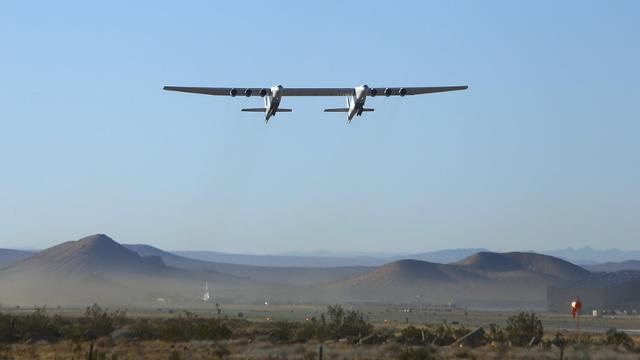
When Paul Allen founded Stratolaunch in 2011, the hope was to make access to space cheaper and faster. The company's massive carrier aircraft, the largest plane by wingspan ever to be built, would be able to carry rocket-powered vehicles up into the thin upper atmosphere on short notice under the power of its conventional jet engines. The smaller vehicle, free of the drag it would incur in the denser atmosphere closer to the ground, could then be released and continue its journey to space using smaller engines and less propellant than would have been required for a conventional launch.
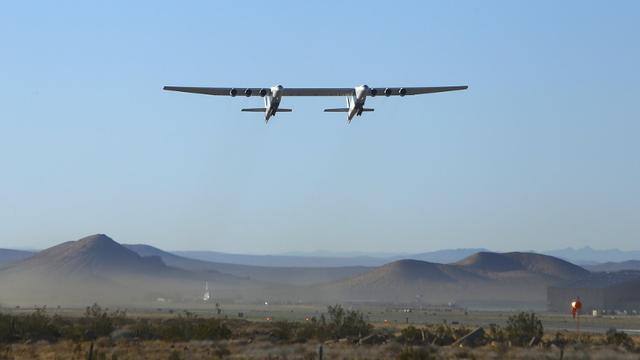
But Allen, who died in October of 2018, never got to see his gigantic plane fly. It wasn't until April 13th, 2019 that the prototype carrier aircraft, nicknamed Roc, finally got to stretch its 117 meter (385 feet) wings and soar over the Mojave Desert. By that time, the nature of spaceflight had changed completely. Commercial companies were putting payloads into orbit on their own rockets, and SpaceX was regularly recovering and reusing their first stage boosters. Facing a very different market, and without Allen at the helm, Stratolaunch ceased operations the following month. By June the company's assets, including Roc, went on the market for $400 million.
Finally, after years of rumors that it was to be scrapped, Allen's mega-plane has flown for the second time. With new ownership and a new mission, Stratolaunch is poised to reinvent itself as a major player in the emerging field of hypersonic flight.
Failed Partnerships
SpaceShipOne and its carrier aircraft.
Stratolaunch evolved from the research and development that went into the Scaled Composites SpaceShipOne, which Paul Allen had funded to the tune of $25 million in 2004. Seeing the promise in air launched rockets, Allen teamed up with SpaceShipOne's designer Burt Rutan to develop a carrier aircraft large enough to suspend a medium-lift rocket under its wings.
The design for the rocket itself was to be carried out by another company, and in 2011 it was announced that SpaceX would develop a four or five engine variant of the company's Falcon 9 booster that could be carried by Stratolaunch. But within a year, the partnership had dissolved. Speaking to Spaceflight Insider in 2015, then head of Stratolaunch Charles Beames said that the goals of the two companies simply didn't align: "We were interested in their engines, but Elon and his team, they’re about going to Mars, and we’re just in a different place."
There were other similarly short-lived agreements with various aerospace companies to develop a rocket-powered vehicle for Roc to carry, but nothing ever progressed past the concept stage. Eventually Stratolaunch realized they would need to develop both vehicles themselves, but with all of their funding and time invested in getting the carrier aircraft ready for test flights, little progress was ever made.
By the time Stratolaunch ceased operations and put their assets on the market in 2019, they only had one half of the equation. The carrier aircraft was built and tested, but it didn't have anything to carry.
Flying Higher and Faster
A rocket that's been carried out of the dense lower atmosphere by an airplane doesn't need to fight against nearly as much drag as its ground-launched counterparts, and by optimizing the engine's nozzle for the reduced ambient pressure at higher altitudes, overall efficiency can be increased. In short, it's easier for the vehicle to build up the tremendous speed necessary to climb the rest of the way out of the atmosphere and eventually reach orbit.
But what if getting into orbit wasn't the goal? What if you wanted to build a vehicle capable of sustained hypersonic flight? In that case an air launch would be ideal, as the scramjet engines used to power these aircraft only start to work when the incoming air is moving at speeds of around Mach 4. That's why previous hypersonic research vehicles like the NASA X-43 and the Boeing X-51 Waverider were air launched from the wing of a B-52 using a small booster rocket.
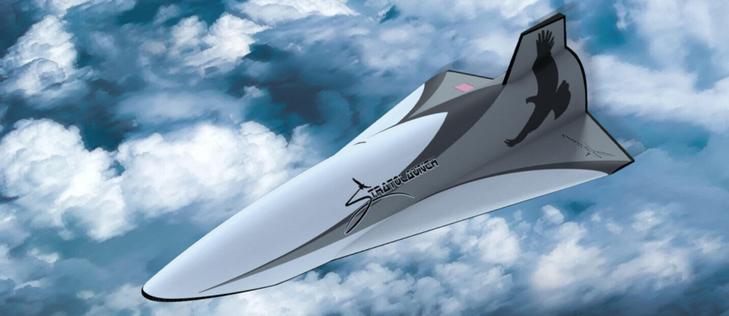
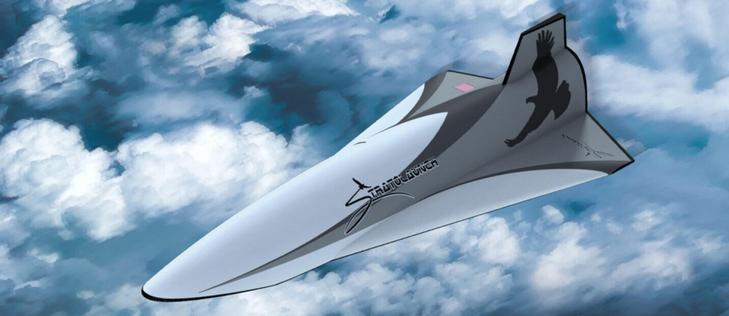
The company that now owns Stratolaunch, Cerberus Capital Management, believes the Roc carrier aircraft is an ideal test platform for hypersonic technology. They're currently developing an autonomous vehicle called the Talon-A which can carry customer payloads through the hypersonic environment and then glide down to a conventional runway landing. This would allow customers to test individual components, such as sensors and avionics, at Mach 5+ speeds without having to build their own vehicle to fly them on.
The Mach 6+ Talon-A would be about the size of the Boeing X-37 spaceplane.
As the 2,722 Kg (6,000 pound) Talon-A is far smaller and lighter than the vehicles Roc was initially designed for, up to three of them could be launched during a single flight. Each Talon-A would itself be capable of "ridesharing" several experiments simultaneously, further reducing the cost to the customer. When running at full capacity, Stratolaunch hopes to perform at least one such flight every month.
Reaching for the Stars
With increasing commercial and military interest in hypersonic engines and vehicles, Stratolaunch seems well positioned to capitalize on the next frontier of aerospace research and development. With the recent shakedown flight of the Roc carrier aircraft verifying the long grounded behemoth is still airworthy, development on the Talon-A will likely begin in earnest. The first test flight was previously scheduled for 2022, but as with many large engineering projects, it will likely get pushed back due to COVID-19.
Looking ahead, Stratolaunch still hasn't given up on Paul Allen's original dream of air launching orbital spacecraft. The company has resurrected the concept for a reusable spaceplane that they were working on before their 2019 acquisition, this time under the name Black Ice. Little is known about this craft other than the fact that it's intended for cargo flights to low Earth orbit and that a later upgraded version could potentially carry human passengers.
Given their track record, more than a little skepticism is probably in order when it comes to the future of Stratolaunch. But if they can really develop their own hypersonic aircraft and perform regular research flights within the next few years, the next logical step would be to take their place among the new breed of commercial spaceflight companies that Allen always believed would be the future.
#currentevents #engineering #hackadaycolumns #transportationhacks #burtrutan #hypersonic #scaledcompositesstratolaunch #spaceplane #spaceshipone #stratolaunch
After Years of Uncertainty, Stratolaunch Flies Again
When Paul Allen founded Stratolaunch in 2011, the hope was to make access to space cheaper and faster. The company's massive carrier aircraft, the largest plane by wingspan ever to be built, would be able to carry rocket-powered vehicles up into the thin upper atmosphere on short notice under the power of its conventional jet engines. The smaller vehicle, free of the drag it would incur in the denser atmosphere closer to the ground, could then be released and continue its journey to space using smaller engines and less propellant than would have been required for a conventional launch.
But Allen, who died in October of 2018, never got to see his gigantic plane fly. It wasn't until April 13th, 2019 that the prototype carrier aircraft, nicknamed Roc, finally got to stretch its 117 meter (385 feet) wings and soar over the Mojave Desert. By that time, the nature of spaceflight had changed completely. Commercial companies were putting payloads into orbit on their own rockets, and SpaceX was regularly recovering and reusing their first stage boosters. Facing a very different market, and without Allen at the helm, Stratolaunch ceased operations the following month. By June the company's assets, including Roc, went on the market for $400 million.
Finally, after years of rumors that it was to be scrapped, Allen's mega-plane has flown for the second time. With new ownership and a new mission, Stratolaunch is poised to reinvent itself as a major player in the emerging field of hypersonic flight.
Failed Partnerships
SpaceShipOne and its carrier aircraft.
Stratolaunch evolved from the research and development that went into the Scaled Composites SpaceShipOne, which Paul Allen had funded to the tune of $25 million in 2004. Seeing the promise in air launched rockets, Allen teamed up with SpaceShipOne's designer Burt Rutan to develop a carrier aircraft large enough to suspend a medium-lift rocket under its wings.
The design for the rocket itself was to be carried out by another company, and in 2011 it was announced that SpaceX would develop a four or five engine variant of the company's Falcon 9 booster that could be carried by Stratolaunch. But within a year, the partnership had dissolved. Speaking to Spaceflight Insider in 2015, then head of Stratolaunch Charles Beames said that the goals of the two companies simply didn't align: "We were interested in their engines, but Elon and his team, they’re about going to Mars, and we’re just in a different place."
There were other similarly short-lived agreements with various aerospace companies to develop a rocket-powered vehicle for Roc to carry, but nothing ever progressed past the concept stage. Eventually Stratolaunch realized they would need to develop both vehicles themselves, but with all of their funding and time invested in getting the carrier aircraft ready for test flights, little progress was ever made.
By the time Stratolaunch ceased operations and put their assets on the market in 2019, they only had one half of the equation. The carrier aircraft was built and tested, but it didn't have anything to carry.
Flying Higher and Faster
A rocket that's been carried out of the dense lower atmosphere by an airplane doesn't need to fight against nearly as much drag as its ground-launched counterparts, and by optimizing the engine's nozzle for the reduced ambient pressure at higher altitudes, overall efficiency can be increased. In short, it's easier for the vehicle to build up the tremendous speed necessary to climb the rest of the way out of the atmosphere and eventually reach orbit.
But what if getting into orbit wasn't the goal? What if you wanted to build a vehicle capable of sustained hypersonic flight? In that case an air launch would be ideal, as the scramjet engines used to power these aircraft only start to work when the incoming air is moving at speeds of around Mach 4. That's why previous hypersonic research vehicles like the NASA X-43 and the Boeing X-51 Waverider were air launched from the wing of a B-52 using a small booster rocket.
The company that now owns Stratolaunch, Cerberus Capital Management, believes the Roc carrier aircraft is an ideal test platform for hypersonic technology. They're currently developing an autonomous vehicle called the Talon-A which can carry customer payloads through the hypersonic environment and then glide down to a conventional runway landing. This would allow customers to test individual components, such as sensors and avionics, at Mach 5+ speeds without having to build their own vehicle to fly them on.
The Mach 6+ Talon-A would be about the size of the Boeing X-37 spaceplane.
As the 2,722 Kg (6,000 pound) Talon-A is far smaller and lighter than the vehicles Roc was initially designed for, up to three of them could be launched during a single flight. Each Talon-A would itself be capable of "ridesharing" several experiments simultaneously, further reducing the cost to the customer. When running at full capacity, Stratolaunch hopes to perform at least one such flight every month.
Reaching for the Stars
With increasing commercial and military interest in hypersonic engines and vehicles, Stratolaunch seems well positioned to capitalize on the next frontier of aerospace research and development. With the recent shakedown flight of the Roc carrier aircraft verifying the long grounded behemoth is still airworthy, development on the Talon-A will likely begin in earnest. The first test flight was previously scheduled for 2022, but as with many large engineering projects, it will likely get pushed back due to COVID-19.
Looking ahead, Stratolaunch still hasn't given up on Paul Allen's original dream of air launching orbital spacecraft. The company has resurrected the concept for a reusable spaceplane that they were working on before their 2019 acquisition, this time under the name Black Ice. Little is known about this craft other than the fact that it's intended for cargo flights to low Earth orbit and that a later upgraded version could potentially carry human passengers.
Given their track record, more than a little skepticism is probably in order when it comes to the future of Stratolaunch. But if they can really develop their own hypersonic aircraft and perform regular research flights within the next few years, the next logical step would be to take their place among the new breed of commercial spaceflight companies that Allen always believed would be the future.
#currentevents #engineering #hackadaycolumns #transportationhacks #burtrutan #hypersonic #scaledcompositesstratolaunch #spaceplane #spaceshipone #stratolaunch