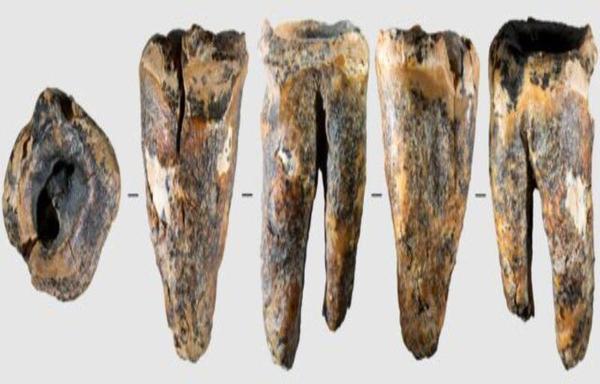
Cuneiform tablets say Sumerians ate fish. Their teeth say otherwise. New zinc isotope analysis of dental enamel from 4,500-year-old Abu Tbeirah reconstructs diet where collagen has long since vanished. #Bioarchaeology #AncientMesopotamia #IsotopeArchaeology https://www.anthropology.net/p/what-sumerian-teeth-reveal-about
What Sumerian Teeth Reveal About the People History Ignored

A new isotopic method unlocks diet and daily life at a third-millennium BCE Iraqi site where conventional analysis has long been impossible.

Anthropology.net
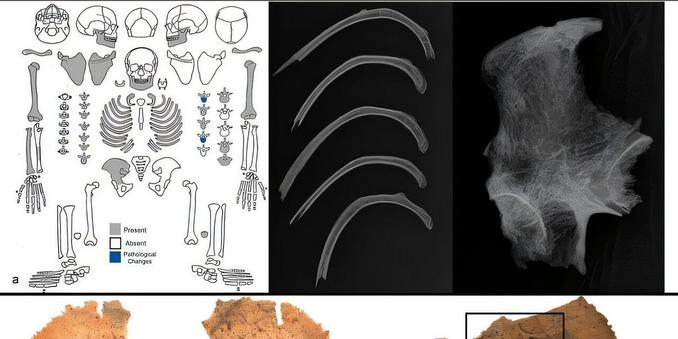
Three children in Neolithic Vietnam show classic signs of congenital treponematosis — but the evidence points to yaws, not syphilis. A new study challenges a foundational assumption in ancient disease research. #Paleopathology #Treponematosis #Bioarchaeology https://www.anthropology.net/p/congenital-syphilis-was-supposed
Congenital Syphilis Was Supposed to Be a Reliable Marker. Three Children in Neolithic Vietnam Complicate That.

A diagnostic assumption decades in the making may not hold outside western clinical contexts

Anthropology.net
How old was this skeleton, really? A new paper argues that disease alters the very bone markers used to estimate age at death — creating a methodological loop few researchers have addressed head-on. #Paleopathology #Bioarchaeology #HumanEvolution https://www.anthropology.net/p/when-a-skeleton-lies-about-its-age
When a Skeleton Lies About Its Age

The problem with reading disease from bone is that disease changes the bone you're reading

Anthropology.net
New bioengineering study on 329 experimental skull impacts offers archaeologists a framework for reading cranial fractures — and distinguishing ancient violence from accidental trauma. Bone thickness and fracture morphology carry more information than most realize. #Bioarchaeology #ForensicAnthropology #HumanEvolution https://www.anthropology.net/p/what-a-fractured-skull-can-tell-you
What a Fractured Skull Can Tell You About How Someone Died

A new bioengineering framework helps archaeologists distinguish violent from accidental cranial trauma in the archaeological record.

Anthropology.net
A 2,000-year-old burial in the Philippines is rewriting what we know about scurvy in tropical Southeast Asia — and what ancient communities owed their most vulnerable members. #Paleopathology #HumanEvolution #Bioarchaeology https://www.anthropology.net/p/a-young-man-in-the-philippines-2000
A Young Man in the Philippines, 2,000 Years Ago, Was Slowly Coming Apart at the Seams

A Metal Period burial at Nagsabaran reveals how scurvy and hip ankylosis combined to reshape one life — and how a community responded.

Anthropology.net
The Oldest Jaw Surgery in the World

CT Scan Reveals Complex Jaw Surgery Performed 2,500 Years Ago on a Woman from the Pazyryk Culture.

Omni Letters
CT scans of four Inca children sacrificed ~500 years ago on Andean volcanoes reveal blunt force trauma, possible disease, and a body partially rebuilt with textiles after burial. The ritual didn’t end at death. #Archaeology #Bioarchaeology #IncaEmpire https://www.anthropology.net/p/ct-scans-of-inca-child-sacrifices
CT Scans of Inca Child Sacrifices Reveal New Details About Capacocha Rituals

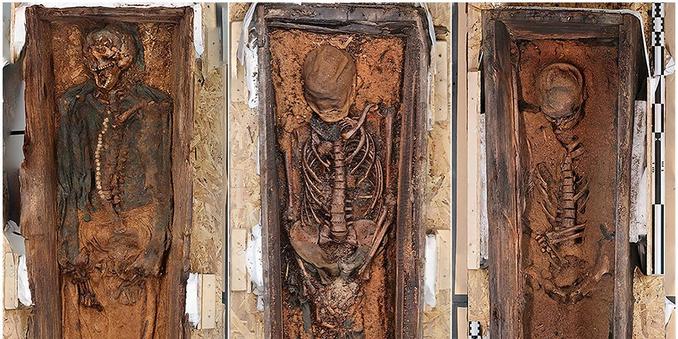
What happened to four children on Andean peaks 500 years ago, and what their frozen bodies are still telling us

Anthropology.net
A 2,800-year-old mass grave in Serbia holds 77 people, most of them women and children. New aDNA, isotope, and trauma analysis suggests this wasn't random — it was targeted. A thread on what prehistoric violence really looked like. #Bioarchaeology #AncientDNA #IronAge https://www.anthropology.net/p/the-gomolava-massacre-what-a-2800
The Gomolava Massacre: What a 2,800-Year-Old Mass Grave Reveals About Targeted Violence in Prehistoric Europe

A new bioarchaeological study of an Early Iron Age burial pit in Serbia finds that the victims were overwhelmingly women and children — and that this was almost certainly not an accident.

Anthropology.net
🦷 A new study by @[email protected] High-throughput paleoproteomics method using MALDI-CASI-FTICR mass spectrometry to estimate biological sex from tooth enamel. Great success on 130 individuals from medieval Great Moravia. #Bioarchaeology #Archaeology #Proteomics #TooMS 😉 #Teammasspec

biorxiv.org/content/10.648...
Two Neolithic communities, 4km apart, genetically related — and radically different ideas about how gender should be marked in life and death. New bioarchaeology from Hungary is genuinely strange. #Bioarchaeology #Neolithic #Osteology https://www.anthropology.net/p/what-two-neolithic-cemeteries-in
What Two Neolithic Cemeteries in Hungary Tell Us About How Gender Gets Made

Bones and burials from the same microregion, 500 years apart, tell a surprisingly complicated story

Anthropology.net