🔥 Binder Jetting Dimensional Accuracy: Stable 'til Sintering! Powder precision decoded!
Print Accuracy 📏
✅ Layer Heights: 50-380μm (100μm color, 240-380μm molds)
✅ NO HEAT = Zero warping off printer
✅ Rock-solid stability during build
Post-Process Reality ⚠️
🔥 Sintering/Infiltration: 0.8-2% shrinkage (unpredictable!)
💡 Pro tip: Scale designs UP 1-2% to compensate

#BinderJetting #DimensionalAccuracy #3DPrintShrinkage #SandCasting #WOW3DLearning #additivemanufacturing #3dprinting #stem

🔥 Binder Jetting Powder Bin Packing: Batch Print POWER! Multiple parts, zero drama!

Like SLS but BETTER:
✅ Powder bin holds ALL parts during print
✅ NO HEAT = zero warping (SLS biggest headache!)
✅ Pack TIGHT: Gears, brackets, molds side-by-side

Metal Magic: Low-mid volume production → sinter/infiltrate → real metal parts
Sand Beast: Massive foundry molds impossible

#BinderJetting #PowderBinPacking #Batch3DPrinting #3dprinting #WOW3DLearning

🔥 Binder Jetting Part Strength Reality Check! Powder parts need post-processing power!

The Truth:
❌ "Green" parts (fresh from printer) = fragile - binder alone can't match PBF strength
✅ Post-process fix: Infiltration (fill pores with bronze) OR sintering (furnace fuses metal)
✅ Sand exception: Casting molds don't need strength - just shape!

Functional parts? ALWAYS secondary process. #BinderJetting #PartStrength #3DPostProcessing #Metal3D #WOW3DLearning

🔥 Binder Jetting Print Parameters! SLS speed + inkjet precision!

Key Traits:
✅ No supports needed - powder holds EVERYTHING (like SLS magic!)
✅ Fast printing - binder jets vs laser scanning
✅ Complex geometries - overhangs, undercuts, lattices = easy

Tune Parameters:
📐 Layer height → Thinner = smoother, slower
💧 Droplet size → Smaller = finer details
⚪ Powder size → Finer grains = better resolution

#BinderJetting #3DPrintParams #PrintCharacteristics #NoSupports #WOW3DLearning

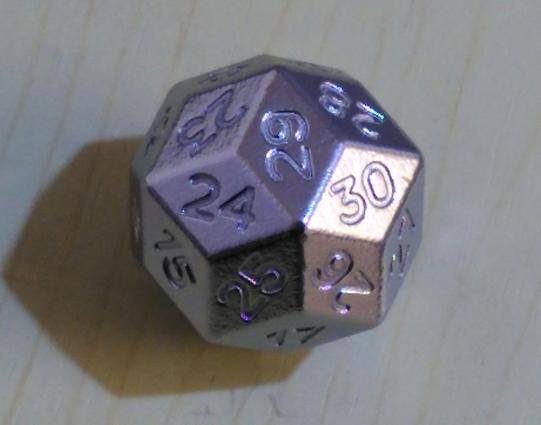
My final indulgence with this particular piece. Increased fillet radius and emboss depth.

Geometry:
D30 rhombic triacontahedron.

Manufacture process:
Binder jet formed, sintered 316 stainless steel.

25.4mm across flats, 76g.

#D30 #Dice #3Dprinting #BinderJetting #BJAM #TTRPG

From powder to product! ✨
Binder jetting 3D printing uses a liquid binder on a powder bed to build parts layer by layer—fast, precise & perfect for complex shapes.

Swipe through our new WOW3D Learning infographic to see how the recoater, powder bed & print head all work together behind the scenes.

Which part of the process amazed you most : spreading, jetting or final sintering step? Comment below!
#WOW3DLearning #3DPrinting #BinderJetting #STEM #Engineering #Makers #AdditiveManufacturing

heise+ | 3D-Druck mit Metall: Darauf ist bei der Fertigung zu achten

Dank verschiedener Dienstleister kann man auch von Zuhause aus Teile aus Metall in 3D drucken. Wir geben eine Übersicht über aktuellen Techniken.
3D-Druck mit Metall: Darauf ist bei der Fertigung zu achten

Dank verschiedener Dienstleister kann man auch von Zuhause aus Teile aus Metall in 3D drucken. Wir geben eine Übersicht über aktuellen Techniken.

heise online

Sawdust Printer Goes Against the Grain By Working with Wood Waste

Wood-infused filament has been around for awhile now, and while it can be used to create some fairly impressive pieces, the finished product won't fool the astute observer. For one thing, there's no grain to it (not that every piece needs to show grain). For another, you can't really throw it on a fire for emergency heating like you could with actual wood.

But a company called Desktop Metal has created a new additive manufacturing process for wood and paper waste called Forust (get it?) that gets a lot closer to the real thing. It might be an environmental savior if it catches on, though that depends on what it ends up being good for.

The company's vision is to produce custom and luxury wood products -- everything from sophisticated pencil cups to stunning furniture, and to take advantage of the nearly limitless geometry afforded by additive manufacturing. Forust uses the single-pass binder jetting method of 3D printing to lay down layers of sawdust and lignin and then squirt out some glue in between each one to hold them together.

Although Desktop Metal doesn't mention a curing process for Forust in their press release, post-processing for solidity and longevity is the norm in binder jetting, which is usually done with ceramic or metal-based materials.

Let's talk about those wood grains. Here's what the press release says:

Digital grain is printed on every layer and parts can then be sanded, stained, polished, dyed, coated, and refinished in the same manner as traditionally-manufactured wood components. Software has the ability to digitally reproduce nearly any wood grain, including rosewood, ash, zebrano, ebony and mahogany, among others. Parts will also support a variety of wood stains at launch, including natural, oak, ash, and walnut.

Beauty and workability are one thing. But this will only be worthwhile if the pieces are strong. This is something that isn't too important for pencil holders, but is paramount for furniture. Forust's idea is to ultimately save the trees, but how are they going to get sawdust and lignin without the regular wood industry -- they want to be circular and envision recycling of their goods at end-of-life into new goods

We wondered if the wood waste printer would ever become a thing. You know, there's more than one way to print in sawdust -- here's a printer that stacks up layers of particle boards and carves them with a CNC.

Images via Forust

#3dprinterhacks #greenhacks #additivemanufacturing #binderjetting #cellulosedust #glue #lignin #sawdust

Sawdust Printer Goes Against The Grain By Working With Wood Waste

Wood-infused filament has been around for awhile now, and while it can be used to create some fairly impressive pieces, the finished product won’t fool the astute observer. For one thing, the…

Hackaday