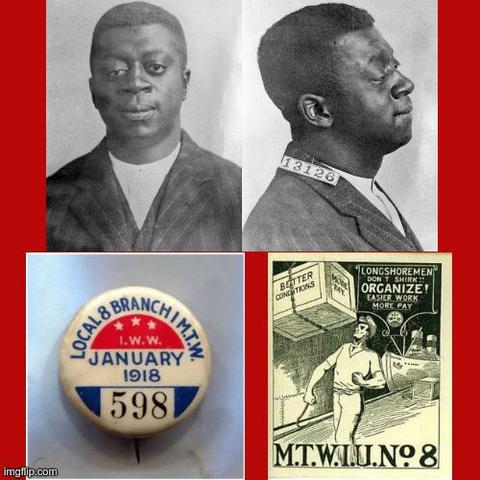
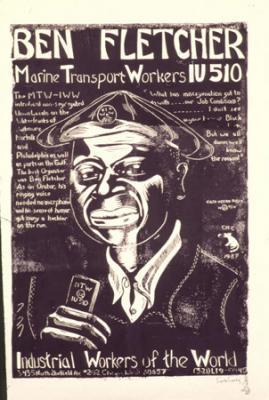
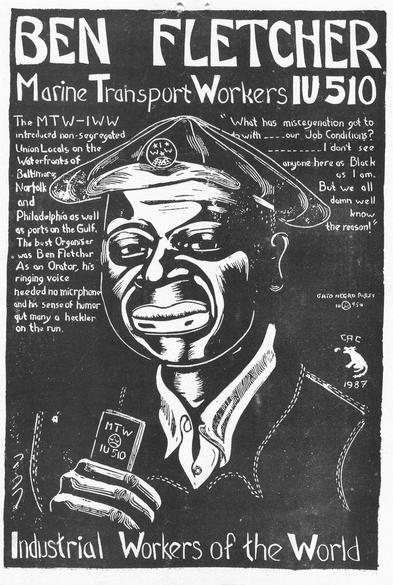
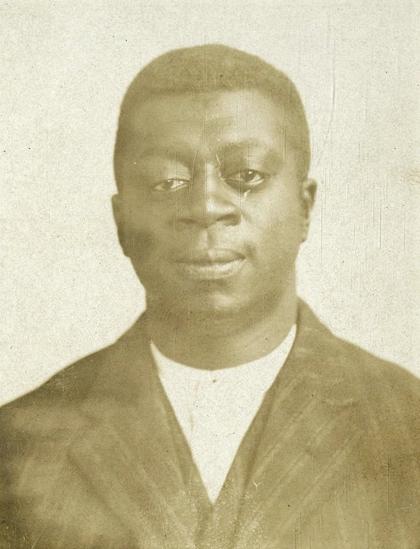
Today in Labor History March 15, 1877: Ben Fletcher, African-American IWW organizer was born on this date in Philadelphia. Fletcher organized longshoremen in Philadelphia, Pennsylvania. He joined the Wobblies (IWW) in 1912, became secretary of the IWW District Council in 1913. He also co-founded the interracial Local 8 in 1913. At that time, roughly one-third of the dockers on the Philadelphia waterfront were black. Another 33% were Irish. And about 33% were Polish and Lithuanian. Prior to the IWW organizing drive, the employers routinely pitted black workers against white, and Polish against Irish. The IWW was one of the only unions of the era that organized workers into the same locals, regardless of race or ethnicity. The IWW Dockers struck in Philadelphia on May 13, 1913. 10,000 Wobblies participated. They were protesting poor wages and dangerous working conditions. By May 28, they had won a ten-hour workday and time-and-a-half pay for overtime. However, the strike also launched one of the most successful anti-racist, anti-capitalist unions in the country: IWW Local 8. By 1916, thanks in large part to Fletcher’s organizing skill, all but two of Philadelphia’s docks were controlled by the IWW. And the union maintained control of the Philly waterfront for about a decade. After the 1913 strike, Fletcher traveled up and down the east coast organizing dockers. However, he was nearly lynched in Norfolk, Virginia in 1917. At that time, roughly 10% of the IWW’s 1 million members were African American. Most had been rejected from other unions because of their skin color. In 1918, the state arrested him, sentencing him to ten years for the crime of organizing workers during wartime. He served three years.

#workingclass #LaborHistory #IWW #BenFletcher #racism #AfricanAmerican #lynching #prison #union #strike #wobblies #longshore #philadelphia #BlackMastodon

Today, in honor of Black History Month, we celebrate the life of Ben Fletcher (April 13, 1890 – 1949), Wobbly and revolutionary. Fletcher joined the Industrial Workers of the World (IWW) in 1912 and became secretary of the IWW District Council in 1913. He also co-founded the interracial Local 8 in 1913. Also in 1913, he led a successful strike of over 10,000 dockers. At that time, roughly one-third of the dockers on the Philadelphia waterfront were black. Another 33% were Irish. And about 33% were Polish and Lithuanian. Prior to the IWW organizing drive, the employers routinely pitted black workers against white, and Polish against Irish. The IWW was one of the only unions of the era that organized workers into the same locals, regardless of race or ethnicity. And its main leader in Philadelphia was an African American, Ben Fletcher.

By 1916, thanks in large part to Fletcher’s organizing skill, all but two of Philadelphia’s docks were controlled by the IWW. And the IWW maintained control of the Philly waterfront for about a decade. After the 1913 strike, Fletcher travelled up and down the east coast organizing dockers. However, he was nearly lynched in Norfolk, Virginia in 1917. At that time, roughly 10% of the IWW’s 1 million members were African American. Most had been rejected from other unions because of their skin color. In 1918, the state arrested him for treason, sentencing him to ten years, for the crime of organizing workers during wartime. He served three years. Fletcher supposedly said to Big Bill Haywood after the trial that the judge had been using “very ungrammatical language. . . His sentences are much too long.”

#workingclass #LaborHistory #IWW #benfletcher #union #strike #philadelphia #longshore #docker #waterfront #wwi #racism #blackhistorymonth #BlackMastodon

How the Wobblies Smashed Racism - OVER A CENTURY AGO!

https://peertube.gravitywell.xyz/w/1e4rfKQbfHHLeFij4qwXWj

How the Wobblies Smashed Racism - OVER A CENTURY AGO!

PeerTube

In honor of Black History Month, a short biography of Ben Fletcher (April 13, 1890 – 1949), Wobbly and revolutionary. Fletcher joined the Industrial Workers of the World (IWW) in 1912 and became secretary of the IWW District Council in 1913. He also co-founded the interracial Local 8 in 1913. Also in 1913, he led a successful strike of over 10,000 dockers. At that time, roughly one-third of the dockers on the Philadelphia waterfront were black. Another 33% were Irish. And about 33% were Polish and Lithuanian. Prior to the IWW organizing drive, the employers routinely pitted black workers against white, and Polish against Irish. The IWW was one of the only unions of the era that organized workers into the same locals, regardless of race or ethnicity. And its main leader in Philadelphia was an African American, Ben Fletcher.

By 1916, thanks in large part to Fletcher’s organizing skill, all but two of Philadelphia’s docks were controlled by the IWW. And the IWW maintained control of the Philly waterfront for about a decade. After the 1913 strike, Fletcher travelled up and down the east coast organizing dockers. However, he was nearly lynched in Norfolk, Virginia in 1917. At that time, roughly 10% of the IWW’s 1 million members were African American. Most had been rejected from other unions because of their skin color. In 1918, the state arrested him for treason, sentencing him to ten years, for the crime of organizing workers during wartime. He served three years. Fletcher supposedly said to Big Bill Haywood after the trial that the judge had been using “very ungrammatical language. . . His sentences are much too long.”

#workingclass #LaborHistory #IWW #benfletcher #union #strike #philadelphia #longshore #docker #waterfront #worldwarone #prison #antiwar #freespeech #racism #blackhistorymonth #BlackMastodon

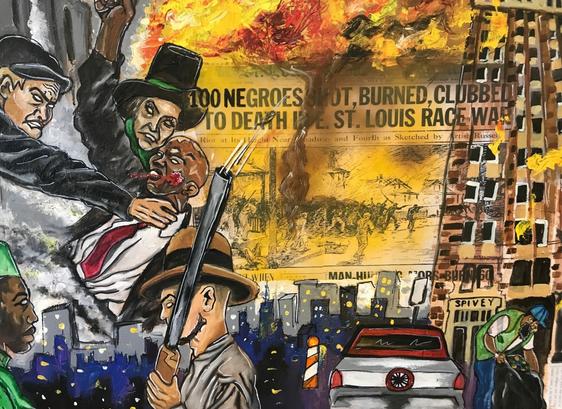
Today in Labor History July 28, 1917: The Silent Parade took place in New York City, in protest against murders, lynchings, and other violence directed towards African Americans. Organizers set up the parade to protest the East Saint Louis race riots (May-July 1917), when whites murdered up to 200 African Americans, and caused 6,000 black residents to become homeless. While Woodrow Wilson was entering World War I to “make the world safe for democracy,” black Americans were asking when he’d do the same for them.

The Silent March was organized by a coalition of groups, led by the new NAACP. Up to 15,000 participated. Organizers wanted president Wilson to enact anti-lynching legislation. He refused. Wilson appointed numerous racists to his cabinet and was an outspoken defender of segregation on “scientific” grounds. He was also fond of telling racist jokes. As an academic, prior to his political career, he was an apologist for slavery. And he used his authority to actively prevent admitting African Americans into Princeton as students or faculty. Ironically, one of the primary organizers of the Silent March, W.E.B. DuBois, had been an enthusiastic supporter of the Woodrow Wilson presidential candidacy, calling him a “liberal Southerner,” who would deal fairly with Negros.

The East Saint Louis racist pogrom occurred during one of the largest migrations of black workers from the South to the North. Between 1910 and 1920, half a million African Americans migrated north to Chicago, Saint Louis, Detroit, Philadelphia, and other cities. In 1919, there were 38 different racist riots in the U.S., all directed against the black community. The massacre in East Saint Louis began in response to a strike by white employees of the Aluminum Ore Company, after the bosses hired black replacement workers, a common practice of the bosses to divide the working class and weaken unions. Additionally, many of the unions were overtly racist and excluded black workers, including the Aluminum Ore union. To make matters worse, employment agents were going to the South and recruiting African Americans under false pretenses, offering them stable jobs and housing when, in reality, they were being recruited to work as scabs. So, it is likely that many, if not most, of the workers didn’t even know they were being hired as scabs. Regardless, they wouldn’t have been allowed to join the union, either.

Racism by unions and white workers was not inevitable in those days, and it was certainly counterproductive to the aims of working people of all backgrounds and identities. Consider that in 1920, in rural Mingo County, West Virginia, when the coal bosses brought in African American workers as scabs, the UMWA encouraged them to join the union and the strike, and achieved solidarity between white, native-born workers, African Americans from the South, and Italian immigrants. This is portrayed in John Sayles film, Matewan. And by 1916, thanks largely to the superb organizing of Ben Fletcher, all but two of Philadelphia’s docks were controlled by the IWW, uniting a workforce that was 33% Irish, 33% Polish & Lithuanian, and 33% African American. Fletcher also traveled up and down the east coast organizing dockers across race. At that time, roughly 10% of the IWW’s 1 million members were African American.

Read my biography of Fletcher here: https://michaeldunnauthor.com/2021/05/13/ben-fletcher-and-the-iww-dockers/

#workingclass #LaborHistory #africanamerican #racism #lynching #protest #riots #naacp #union #strike #scab #IWW #benfletcher #webdubois #BlackMastadon
May 27, 1916: 3000 members of the Marine Transport Workers of the IWW marched along the Philadelphia waterfront, leading to strikes at three non-union docks. Black and white Wobblies fought together against scabs and police. One of the main organizers of the Philadelphia waterfront was African American Wobbly, Ben Fletcher, who co-founded the interracial Local 8 in 1913. By 1916, thanks in large part to Fletcher’s organizing skill, all but two of Philadelphia’s docks were controlled by the IWW. And the union maintained control of the Philly waterfront for about a decade. You can read my complete biography of Fletcher here: https://www.michaeldunnauthor.com/2021/05/13/ben-fletcher-and-the-iww-dockers/

#workingclass #LaborHistory #IWW #union #dockers #philadelphia #longshore #benfletcher #racism #strike

Today in Labor History April 14, 1917: IWW sailors went on strike in Philadelphia and won a ten dollar per month raise. Ben Fletcher, an African-American IWW organizer, was instrumental in organizing the Philadelphia waterfront. Fletcher was born in Philly in 1890. He joined the Wobblies (IWW) in 1912, became secretary of the IWW District Council in 1913. He also co-founded the interracial Local 8 in 1913.

In 1913, Fletcher led 10,000 IWW Philly dockworkers on a strike. Within two weeks, they won a 10-hr day, overtime pay, & created one of the most successful antiracist, anticapitalist union locals in the U.S. At the time, roughly one-third of the dockers on the Philadelphia waterfront were black. Another 33% were Irish. And about 33% were Polish and Lithuanian. Prior to the IWW organizing drive, the employers routinely pitted black workers against white, and Polish against Irish. The IWW was one of the only unions of the era that organized workers into the same locals, regardless of race or ethnicity. And its main leader in Philadelphia was an African American, Ben Fletcher.

By 1916, thanks in large part to Fletcher’s organizing skill, all but two of Philadelphia’s docks were controlled by the IWW. And the union maintained control of the Philly waterfront for about a decade. At that time, roughly 10% of the IWW’s 1 million members were African American. Most had been rejected from other unions because of their skin color.

Fletcher also traveled up and down the east coast organizing dockers. However, he was nearly lynched in Norfolk, Virginia in 1917. And in 1918, the state arrested him, sentencing him to ten years for the crime of organizing workers during wartime. He served three years.

You can read my full biography of Ben Fletcher here: https://michaeldunnauthor.com/2021/05/13/ben-fletcher-and-the-iww-dockers/

#workingclass #LaborHistory #IWW #union #strike #benfletcher #racism #africanamerican #philadelphia #longshore #lynching #BlackMastadon

Ben Fletcher and the IWW Dockers of Philadelphia - Michael Dunn

Ben Fletcher and the IWW Dockers of Philadelphia

Michael Dunn

Today in Labor History March 15, 1877: Ben Fletcher, African-American IWW organizer was born on this date. Fletcher organized longshoremen in Philadelphia, Pennsylvania. He joined the Wobblies (IWW) in 1912, became secretary of the IWW District Council in 1913. He also co-founded the interracial Local 8 in 1913. By 1916, thanks in large part to Fletcher’s organizing skill, all but two of Philadelphia’s docks were controlled by the IWW. And the union maintained control of the Philly waterfront for about a decade. After the 1913 strike, Fletcher traveled up and down the east coast organizing dockers. However, he was nearly lynched in Norfolk, Virginia in 1917. At that time, roughly 10% of the IWW’s 1 million members were African American. Most had been rejected from other unions because of their skin color. In 1918, the state arrested him, sentencing him to ten years for the crime of organizing workers during wartime. He served three years.

#workingclass #LaborHistory #IWW #BenFletcher #racism #AfricanAmerican #lynching #prison #union #strike #wobblies #longshore #philadelphia #BlackMastadon

In honor of Black History Month, a short biography of Ben Fletcher (April 13, 1890 – 1949), Wobbly and revolutionary. Fletcher joined the Industrial Workers of the World (IWW) in 1912 and became secretary of the IWW District Council in 1913. He also co-founded the interracial Local 8 in 1913. Also in 1913, he led a successful strike of over 10,000 dockers. At that time, roughly one-third of the dockers on the Philadelphia waterfront were black. Another 33% were Irish. And about 33% were Polish and Lithuanian. Prior to the IWW organizing drive, the employers routinely pitted black workers against white, and Polish against Irish. The IWW was one of the only unions of the era that organized workers into the same locals, regardless of race or ethnicity. And its main leader in Philadelphia was an African American, Ben Fletcher.

By 1916, thanks in large part to Fletcher’s organizing skill, all but two of Philadelphia’s docks were controlled by the IWW. And the IWW maintained control of the Philly waterfront for about a decade. After the 1913 strike, Fletcher travelled up and down the east coast organizing dockers. However, he was nearly lynched in Norfolk, Virginia in 1917. At that time, roughly 10% of the IWW’s 1 million members were African American. Most had been rejected from other unions because of their skin color. In 1918, the state arrested him for treason, sentencing him to ten years, for the crime of organizing workers during wartime. He served three years. Fletcher supposedly said to Big Bill Haywood after the trial that the judge had been using “very ungrammatical language. . . His sentences are much too long.”

#workingclass #LaborHistory #IWW #benfletcher #union #strike #philadelphia #longshore #docker #waterfront #worldwarone #prison #antiwar #freespeech #racism #blackhistorymonth #BlackMastadon

Listening to #CoolPeopleDidCoolStuff and OMFG they're doing a Ben Fletcher episode. She didnt even say his name yet and I'm already crying. I'm so proud of my union @clydeside #BenFletcher #IWW