Are Jesus’ Teachings Weak?
When I was in seminary, I took a two week intensive in interfaith ministry. We heard a few speakers from an interfaith youth organization. One of those speakers, an atheist, told a story that went something like this:
I was talking with an Evangelical Christian who asked me “If you don’t believe in an afterlife, what’s keeping you from killing me right now?”
His position was that, without a threat of punishment in an afterlife, there’s no real reason from mistreating other people, including murdering them.
That made me uncomfortable, and a little scared.
Let’s go to God in prayer.
God of wisdom, may the words that I speak, and the ways they are received by each of our hearts and minds, to help us to continue to grow into the people, and the church, that you have dreamed us to be.
Amen.
The other day I was thinking of two major moral systems.
One of these is rules-based, or what I called “Statutory Morality.” This morality – based on codes, laws, rules, or statutes – is mostly do this and don’t do that.
The ten commandments are an example of this, although there are several versions of the ten commandments based on translations of Exodus and Deuteronomy.
Judaism expanded this into 613 Mitzvot, 248 positive or “do this” commandments and 365 negative or “do not do this” commandments.
Judaism and Christianity aren’t the only faiths with lists of rules, and governments obviously have decrees, laws, and regulations to determine how citizens should live.
Rules are a great way to win an argument. When someone does something you don’t want them to do, and you know a rule against it, you can just say “that is wrong because of this rule.” So rules sound strong, especially when there are associated punishments like fines, jail time, death, and eternal punishment after death.
And then we get someone like Jesus, preaching what we heard in today’s Gospel reading.
As I’ve mentioned before, Russell Moore – editor-in-chief of Christianity Today magazine, former leader in the Southern Baptist Convention, and author of the book Losing Our Religion: An Altar Call for Evangelical America, had an interview with National Public Radio’s Scott Detrow in which he said the idea for the book
“was the result of having multiple pastors tell me essentially the same story about quoting the Sermon on the Mount parenthetically in their preaching – turn the other cheek – to have someone come up after and to say, where did you get those liberal talking points? And what was alarming to me is that in most of these scenarios, when the pastor would say, I’m literally quoting Jesus Christ, the response would not be, I apologize. The response would be, yes, but that doesn’t work anymore. That’s weak. And when we get to the point where the teachings of Jesus himself are seen as subversive to us, then we’re in a crisis.”
– https://www.npr.org/2023/08/05/1192374014/russell-moore-on-altar-call-for-evangelical-america
And in today’s reading, Jesus tells us some things that might seem alarming:
- Blessed are the poor in spirit
- Blessed are those who mourn
- Blessed are those who are persecuted for the sake of righteousness,
- Blessed are you when people revile you and persecute you
and utter all kinds of evil against you falsely on my account.
– Matthew 5:3-4, 10-11, NRSVue
It’s almost as if Jesus says “Blessed are the miserable.” What kind of morality lifts up the dispirited as an example?
The counter to the kind of rules-based morality I called “statutory morality” is what I call “empathic morality.” Empathic morality is a morality that puts us in the shoes of the other. It’s the idea behind Jesus’ “do to others as you would have them do to you” in Matthew 7:12 and Luke 6:31. It’s the idea behind Hillel the Elder’s “That which is hateful to you do not do to another; that is the entire Torah, and the rest is its interpretation.” in the Babylonian Talmud, Shabbat 31a.
It’s what keeps the atheist from killing someone, even though he doesn’t believe in divine retribution.
And it’s in our reading today, because the struggles are balanced with benefits:
“Blessed are the poor in spirit, for theirs is the kingdom of heaven.
“Blessed are those who mourn, for they will be comforted.
“Blessed are those who are persecuted for the sake of righteousness, for theirs is the kingdom of heaven.
“Blessed are you when people revile you and persecute you and utter all kinds of evil against you falsely on my account.
Rejoice and be glad, for your reward is great in heaven, for in the same way they persecuted the prophets who were before you.
- Matthew 5:3-4, 10-12, NRSVue
The Beatitudes call us into trying to understand what it’s like to be among the less-privileged, and to see things from their perspective. And that kind of morality can be applied even where no one has thought to create a law yet.
Empathy requires a kind of vulnerability. While sympathy calls us to say “wow, I’ll bet that’s hard,” empathy calls us to try to understand the depth and quality of how hard something is.
Empathy has us looking at the last slice of pizza, realizing Terry will be here in a minute to eat that slice, and realizing how that person may remain hungry if we take that additional slice for ourselves. There may be no rule that says “don’t take another slice if there’s only one left and Terry will want it” but empathic morality calls us into a relationship with Terry and understand Terry’s need for a slice.
Empathic morality is not weak.
Jesus’ teachings are not weak.
They require us to have the strength of self to be vulnerable to the situations of others, to feel into their needs, and to act in ways to satisfy those needs.
This month – beginning today – is Black History Month. It was created to lift up the stories of Black people who have made real contributions to our nation and to our world.
Many of these stories had been glossed over, minimized, or ignored. Some of this has been intentional, but some is entrenched and embedded in systems.
Let me give you a non-race-based illustration of systemic bias:
Most people – roughly 90% – are right-handed. About 10% are left-handed, and a small number are ambidextrous, meaning equally adept with either hand.
Dexterity is based on the word Dexter, meaning on the right side. Sinister means on the left side. Adroit comes from the French “droit” meaning right. Gauche is French for left.
So the language we use for capability is associated with “right” and words for evil and lacking grace are associated with “left.”
But beyond that, right-handed people make things for right-handed people. If you’re right-handed, you may not realize that some items are more difficult for left-handed people to use.
For example, in most Western languages we write left to right, and most of us don’t think about it. But left-handed people using a pen or pencil may find their hands smudge the ink or graphite. It’s why left-handed Galileo often wrote right-to-left.
And if you’ve ever tried to use a pair of scissors with your left hand, you probably noticed they didn’t work well, because of the way your fingers put pressure on the blades to keep them separated rather than together.
There are left-handed scissors. They cost more.
But most right-handed people don’t have a clue about what it’s like to be left-handed in a right-handed dominant world.
Now feel into what it would mean to be part of a group of people whose achievements were not taught and whose stories were not told.
Now understand what it means to have your group represented in teaching, and having a month where those achievements are highlighted.
Representation matters.
This is why our banner out front this month will be Black Lives Matter: not because it lifts up our church, but because it lifts up people who are too often ignored or dismissed.
You may have heard “All lives matter.” That saying would not be controversial, except that it is in response to “Black lives matter.”
“Black lives matter” asserts something that might not be apparent. It rebukes the possibility that someone’s life has less value because of the color of their skin.
To answer with “All lives matter” is to dismiss the cry of those whose value is ignored. It’s not empathic. It doesn’t feel into the hurt of people who are thought of as simultaneously less capable and more dangerous.
So my challenge this week is to lean less on a statutory morality of laws and rules, and to lean into an empathic morality of feeling into the lives of the people our choices will affect.
And for this month, to take some time to learn about the vibrant and powerful history of Black people, especially in the United States.
Empathy isn’t weak.
It’s a sign of strength.
Amen.
Let’s sing NCH 180 Blessed Are the Poor in Spirit
* Scripture quotations marked NRSVue are taken from the New Revised Standard Version Updated Edition. Copyright © 2021 National Council of Churches of Christ in the United States of America. Used by permission. All rights reserved worldwide. https://www.friendshippress.org/pages/about-the-nrsvue
* Scripture quotations marked KJV are taken from the King James version of the Bible.
#beatitudes #BlackLivesMatter #empathy #HillelTheElder #Shabbat31a #strength #weakness Andy Cc
 your auntifa liza 🇵🇷 🦛 🦦
 SpiritualKhazaana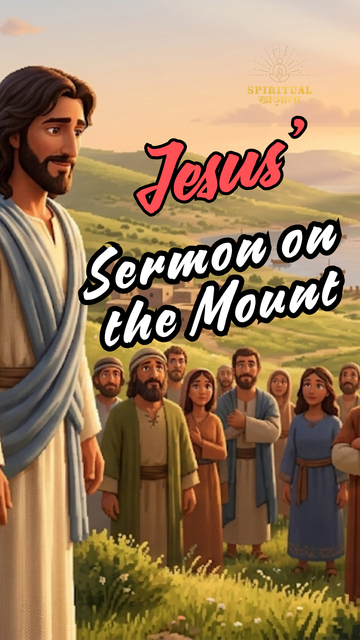
 RevDrMatthewFox
 Bienvenue sur Riposte Catholique - La réinformation catholique au quotidien
 FaithfullyThere
 sophia
 ReverendRef
 Jonathan Mills