 WPS News
The No-NATO March — A Memoir
By Cliff Potts, Editor-in-Chief
Baybay City, Leyte, Philippines — May 20, 2026
The Heat
I remember the heat first.
Not the politics. Not the speeches. The heat.
Chicago in May can flip from spring to summer overnight, and that day it did. You felt it in the pavement, in the crowd, in the slow burn of a march that was going to be longer than most people expected.
We started where it made sense—LaSalle and Jackson. The financial core. The Chicago Board of Trade. The Federal Reserve Bank. The system, in concrete and stone. From there we moved east toward Congress Plaza, toward the Bowman statue, the landmark everyone used whether they knew its name or not.
That was where people found each other.
That was where we gathered before the push.
The Route
The rally was at the Petrillo Music Shell in Grant Park.
Big stage. Big space. Big idea.
Too big. Too far.
From there, the march moved south toward McCormick Place, where the NATO summit was actually happening. It was a long route, controlled and permitted, with distance built into it. You could feel that distance in your legs and in your head.
We marched it. Every step.
But the closer you tried to get to where decisions were being made, the more obvious it became that we were not meant to get close at all.
We were visible.
We were contained.
Prepared for What Might Come
I didn’t show up casually.
I had a camera, a backpack, a gas mask, a bike helmet, heavy gloves, and earplugs. Everything I could reasonably carry as a civilian in case things escalated—tear gas, crowd control, sound dispersal. Not because I wanted trouble, but because I understood the range of possibilities.
That changes how you experience a day like that.
You’re not just there.
You’re watching, recording, and preparing at the same time.
The Veterans
The moment that cut through everything was the veterans returning their medals.
It wasn’t loud. It wasn’t chaotic. It wasn’t even particularly long.
But it had weight.
Men who had served were publicly rejecting what they had been part of, in front of a summit focused heavily on Afghanistan (NATO, 2012). That doesn’t blend into the background. That doesn’t get lost in a chant.
You didn’t have to agree to understand it mattered.
What We Thought Then
At the time, I believed NATO was outdated.
A Cold War structure still running on inertia. A system the United States was paying heavily to maintain while European defense spending lagged behind (SIPRI, 2012). That imbalance wasn’t a secret. It was a persistent point of frustration.
That was my view then.
What It Looks Like Now
Years later, the picture is less simple.
Russia’s invasion of Ukraine in 2022 changed the strategic landscape. NATO did not dissolve into irrelevance. It expanded, reinforced its eastern flank, and reasserted its role as a deterrent (NATO, 2023).
At the same time:
- NATO avoids direct conflict with Russia
- Ukraine is supported, but not admitted
- The alliance remains expensive and politically strained
So the question shifts.
Not whether NATO is outdated, but whether it is:
- Necessary but limited
- Strong but cautious
- Or effective enough to justify its cost
The answer depends on where you stand—and when you ask it.
Did It Matter?
Did the march change NATO policy?
No.
Did it stop the summit?
No.
But it did something.
The G8 summit was moved out of Chicago before the protests even began, to Camp David, a more controlled environment (White House, 2012). NATO itself operated inside a hardened security perimeter, with planning clearly shaped by the expectation of protest.
That doesn’t happen for something irrelevant.
We didn’t stop NATO.
But we were accounted for.
The Record
We marched.
We showed up in the heat, walked the distance, documented what we saw, and pushed as far as we were allowed to push.
The summit continued.
That’s the truth of it.
But so is this:
We were there.
And in a system where decisions are often made far from the people they affect, being present, visible, and recorded is sometimes the only leverage that exists.
This is not a victory.
It’s a record.
References
NATO. (2012). Chicago Summit Declaration. https://www.nato.int
NATO. (2023). NATO’s response to Russia’s invasion of Ukraine. https://www.nato.int
Stockholm International Peace Research Institute (SIPRI). (2012). Military expenditure database. https://www.sipri.org
The White House. (2012). G8 Camp David Summit fact sheet. https://obamawhitehouse.archives.gov
https://youtu.be/OfMyIcKyJDs?si=UOi9kBP-Rr_qQY4Y
#antiWarProtests #ChicagoActivism #GrantParkProtest #McCormickPlaceSummit #NATOChicago2012 #NoNATOMarch #OccupyChicago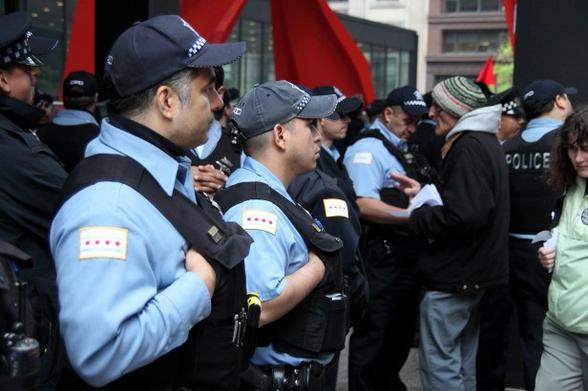
 AFRICAN CONNECTIONS (ACREF)

 Paria sans portefeuille
 DrBob, 🧠 Mechanic


 Jude Jackson

 MusiqueNow
  ✡️ 🇵🇸
✡️ 🇵🇸 


 AiRolG
 Dick Smiths Fair Go Supporters