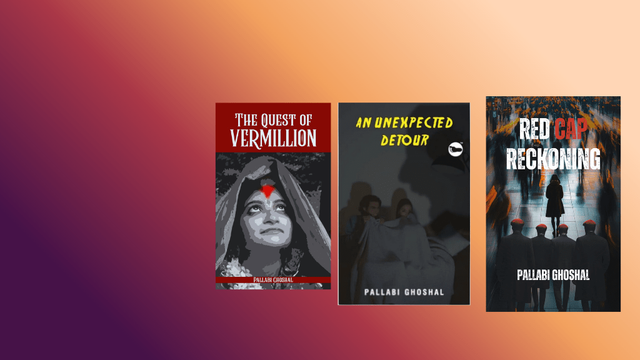
Why Do We Trust the Wrong People? The Psychology Behind Deception

[Psychology Behind My Fiction Series – Blog 1 :: Questions about trust and deception were part of what inspired me while writing AN UNEXPECTED DETOUR]

Trust is a powerful force that shapes human relationships. We make many decisions based on trust. We trust collagues with responsibilities and we end up trusting strangers in sharing a ride, signing a contract, or following advice.

But history and personal experiences show that trust can be dangerously misplaced. Deception rarely arrives wearing a warning sign and that fascinates me…

People who betray us are seldom the ones we suspect. They are mostly the ones who appear the most convincing, the most helpful, or the most trustworthy. They understand what we want to hear and how we want to feel. This raises an uncomfortable question:

Why do intelligent humans ignore red flags?

This has more to do with emotions. Human beings tend to seek connection. We want to believe that people are who they appear to be. We want our relationships to be genuine. As soon as we invest emotionally in a person, our minds starts filtering information through that investment. We attach explanations with inconsistencies. We rationalize suspicious behavior. We convince ourselves that our instincts must be wrong simply because the mind knows that the alternative is too painful to accept.

As a writer and an observer of human behavior, this psychological conflict between trust and doubt has always fascinated me. Not all villains hiding in the shadows contribute to gripping stories. Sometimes stories are about ordinary people struggling to determine whom they can trust when appearances become unreliable.

When it comes to real life, deception happens minus the drama. It gets evident through omissions, half-truths, and carefully constructed narratives. And when the truth emerges, the emotional damage has already been done.

I feel that is why stories involving psychological suspense resonate so deeply with readers. They reflect the fear of realizing that someone we trusted was never who we believed them to be.

As an author, I am repeatedly drawn to these themes because they explore trust, vulnerability, manipulation, perception, and self-deception.

I was curious to delve deeper into trust and deception and those questions were part of what inspired me while writing AN UNEXPECTED DETOUR. The novel explores how relationships, assumptions, and hidden truths can shape lives in ways we never anticipate.

Some of our life’s biggest detours begin with a simple belief:

“I trust this person blindly.”

And that belief might turn out to be the greatest illusion of all.

— Pallabi Ghoshal
Author of AN UNEXPECTED DETOUR

#AnUnexpectedDetour #authorpallabighoshal #books #booksbypallabighoshal #fiction #indianauthor #thrillers #writing

Xenodochial Warmth : Kindness Minus Backstories

“She is kind? Must have some context in the backstory!”

No. That’s not always true.
It grows from familiarity, from history, from knowing.

Xenodochial warmth begins with nothing.

No shared past.
No expectation.
No reason. Just a quiet instinct to be gentle.

It lives in small moments. I have experienced it.

A door can be held open without thought.
A smile doesn’t always come with its calculation.
A voice is allowed to soften for someone you may never see again.

It’s not rewarding. There may not be a continuity either.

There’s a brief crossing of lives and a choice to make that crossing lighter.

Xenodochial warmth is unclaimed kindness.
Kindness that doesn’t attach itself.
Kindness that doesn’t linger to be remembered.

But still, it stays.

Not in names or faces, but in feeling.

Because when you are met with unexpected grace, something shifts. A stranger who doesn’t harden the world further, but softens it, even if it’s just for a moment.

You don’t always need a reason to be gentle.
That care can exist without connection. That not everything kind is earned.

Do you sense a quiet courage in this? Well, I do.

To offer warmth without knowing who stands before you.
To risk indifference, even rejection, and still choose softness.

It doesn’t ask many questions.

It doesn’t need recognition. It doesn’t expect something in return.

I believe it’s just the simple act of making space for another human being to exist without resistance.

And maybe that’s why it matters. Because in a world that often teaches distance, xenodochial warmth closes it without any grand gestures, but with something almost invisible.

A fleeting kindness.
A passing light.

Gone in seconds, but enough to remind someone, somewhere,
that the world is not entirely cold.

Have you experienced this before? Share your stories in the comments.

If you liked reading it, please share it in your circle.

This post is a part of Blogchatter A2Z Challenge 2026.

Let us Connect on Instagram, Facebook, Linkedin, and YouTube.

Visit my Amazon Author page and browse through a collection of my published books.

#AnUnexpectedDetour #authorpallabighoshal #Humanity #kindness #RedCapReckoning #selfless #xenodochialWarmth

Vitality : A Pulse That Doesn’t Fade

Vitality is not loud. There are no party poppers for its presence. It’s not even in constant motion.

Sometimes, it is simply the quiet certainty that you are here fully, unmistakably alive.

It moves like a pulse beneath everything. It’s steady and insistent, even on days when your energy feels worn out and frayed.

Vitality is not the absence of exhaustion. It is what flickers despite it.

It shows up in small awakenings.
The way your breath deepens without effort.
The way light feels warmer on your skin.
The way a single thought shifts from enduring to feeling.

There is a sharpness to it. The world tops obscruring out for a flickering moment and progresses undeniably layered and textured.
You start noticing.

The rhythm of your own heartbeat.
The quiet strength in choosing to continue.
The subtle joy of being present in your own life, not just being called alive.

Vitality doesn’t deny pain. It doesn’t erase what weighs on you.

Instead, it coexists. It interlaces itself through fatigue, through doubt,
through everything that tried to dim you and says, still.

Still you feel.
Still you respond.
Still something within you refuses to go numb.

That needs courage.

Not vocal.
Not in attitude.

But in continuation,
in waking up again,
in noticing again,
in allowing yourself to be touched by life, even when it feelsheavy.

Vitality ebbs, retreats, softens.

But it never fully recedes.

Because as long as you can respond to light, to warmth, to meaning, there is life moving through you, quietly and powerfully.

And sometimes, that is all you need.

Not to fix everything.
Not to transform everything.

But to remind you that you are not just surviving.

You are still alive in ways that matter.

This post is a part of BlogchatterA2Z Challenge 2026

If you like my thoughts,

Let’s connect on Instagram

Let’s connect on Facebook

Connect on Linkedin

Subscribe to my YouTube Channel

#AnUnexpectedDetour #authorpallabighoshal #blogs #courage #fiction #life #mentalHealth #moment #poetry #progressive #pulse #Reading #RedCapReckoning #textured #thequestofvermillion #warmth #writing

How to Add Suspense into Writing Minus Jump Scares

Photo by Lisa from Pexels on Pexels.com

Loud music, sudden twists, or shocking reveals are considered as sole elements of building suspense. What if I told you that the most powerful suspense doesn’t scream? It comes wrapped in hushed whispers. It dwells quietly in the reader’s chest and refuses to leave.

Hi. I am Pallabi Ghoshal. I write fiction, typically psychological thrillers, and there are not many episodes of jump scares in my books. You don’t need jump scares to make your readers feel uneasy. You need to build anticipation.

Real fear isn’t about what happens. It’s about what might happen.

That kind of suspense stays with readers long after they’ve completed reading the book. It is built slowly, deliberately, and invisibly.

1. Allow the Reader to Know More Than the Character

Let your reader have that piece of information your character doesn’t have. It might be the door that shouldn’t be opened. Let the reader sense the danger in a seemingly harmless situation.

This builds quiet tension. The reader leans forward, craving to tell the character, “Don’t do it.”

But still… the character does.

Suspense breathes in the gap between knowledge and action.

2. Silence is Sometimes an Excellent Tool

I watched a movie recently. It’s last scene told me that not every moment needs dialogue. Every scene doesn’t need explanation.

Sometimes, what you don’t say lands more impact than what you do.

A paused conversation. An unfinished sentence. A glance that’s never explained. When eyes speak paragraphs of emotions…

Sometimes, let the reader to fill in the blanks. What they imagine is often far more terrifying than anything you could write.

3. Slow Down the Moment

Some scenes need stretched time to strengthen suspense.

Why do we always need to rush through a crucial scene? Slow it down. Describe the creak of a dooe, the drumming of heartbeats, the stammer before a decision.

Awareness sharpens. Tension rises.

Photo by Prithiviraj on Pexels.com

4. Build Emotional Stakes, Beyond Situational Ones

A loud event might keep your readers on the edge of their seats. Emotional investment will keep them hooked.

Why does one particular moment matter to your character? What were they about to lose?

Let readers care deeply about the outcome. You will see how the smallest uncertainty becomes unbearable for them. A closed door will no longer be just a door. It creates a boundary between safety and collapse.

5. Internalize Fear

Haunting suspense doesn’t come from external threats. It comes from within. Doubt. Guilt. Memory. Regret.

A character fighting something deep inside themselves takes decisions that carry weight. Every silence is loaded. The readers don’t just watch the story unfold. They experience it.

6. Please Don’t Resolve Too Quickly

This world demands instant answers, but suspense, my friend, lives in delay. Hold back. Let questions surface. Let discomfort exist without urgent resolution.

The longer a question remains unanswered, the deeper it roots itself in the reader’s mind. That’s where the real engagement happens. Not in trends and algorithms, but in connection.

Photo by Cemrecan Yurtman on Pexels.com

Jump scares prompt reaction. But quiet suspense holds it.

It permeates into their thoughts. It stalks them into silence. It allows them to pause, reread, and wonder. All stories don’t shock you suddenly. Sometimes they will slowly make you uneasy and you won’t realize why.

And that kind of storytelling is beyond entertainment.

Thank you for reading patiently. This blog is a part of Blogchatter A2Z Challenge, 2026.

If you feel these tips have helped you or can help aspiring authors, please do share it ahead. You may explore how I implement these tips into my own books.

#AnUnexpectedDetour #authorpallabighoshal #blogchatterA2Z #books #buildSuspenseInWriting #characterDrivenStories #creatingTensionInFiction #creativeWriting #emotionalStorytelling #fiction #fictionWritingTips #howToWriteSuspense #psychologicalThrillerWriting #RedCapReckoning #slowBurnSuspense #storytellingTechniques #suspenseWithoutJumpScares #writing #writingBlogForAuthors #writingTipsForAuthors #writingTips