The Rental Life: What Happens When You Own Nothing and They Own You
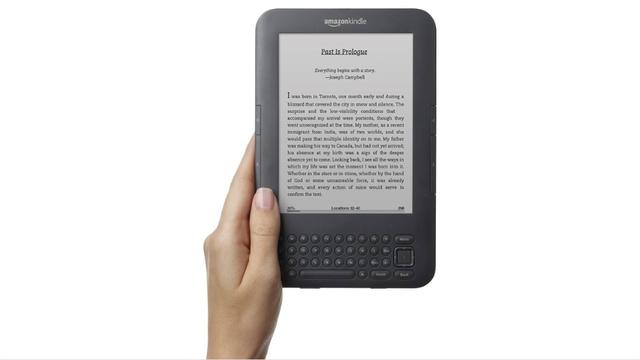
In July 2009, Amazon reached into the Kindle devices of thousands of customers and deleted copies of George Orwell’s 1984 and Animal Farm. The company had discovered that the third-party publisher selling those editions lacked the rights to distribute them in the United States. Amazon issued refunds. Then it erased the books. A high school student in Michigan lost his annotated copy mid-assignment. A class-action lawsuit followed. Amazon’s CEO called the decision “stupid, thoughtless, and painfully out of line with our principles.” The company settled and promised not to do it again, unless a court ordered it, or unless the company determined it was necessary to protect consumers from malicious code, or unless the consumer failed to keep paying.
That string of qualifications matters more than the apology. Amazon conceded only that it would try to restrain a power it confirmed it possessed. And the definition of a good reason for using that power remained, as it remains today, in Amazon’s hands.
This episode from seventeen years ago now reads as a rehearsal for the present. The subscription economy has grown from a few hundred billion dollars in 2020 to an estimated $558 billion in 2025, with projections approaching $1.2 trillion by 2030 and nearly $2 trillion by 2035. Those numbers track a civilization that has been steadily converting ownership into tenancy. Your music, your software, your games, and in some cases even your car’s heated seats exist only as long as you keep paying, keep complying with terms you did not write, and keep trusting that the company on the other end of the wire will still be there tomorrow.
The Counterfeit of Possession
When you walk into a bookstore and buy a hardcover, the transaction is finished the moment you hand over your money. The book belongs to you. You can lend it, sell it, burn it, annotate its margins, or leave it to your grandchildren. No one from the publisher’s office will appear at your door to confiscate it because a licensing agreement expired. The relationship between you and the object is complete and sovereign.
When you “buy” a digital book, a digital album, or a digital game, the word “buy” is performing a conjuring trick. You are purchasing a license, a permission slip that can be revoked. California recognized the deception clearly enough to pass Assembly Bill 2426, which took effect January 1, 2025. The law prohibits sellers of digital goods from using the words “buy” or “purchase” unless they disclose, separately and conspicuously, that the consumer is receiving a revocable license and not ownership. Plaintiffs’ firms have already begun filing class actions under the statute. Yet the law addresses only the label. After January 1, 2025, companies must tell you that “buy” means “rent.” They are under no obligation to offer you the option of actually buying.
The fact that California had to pass a law telling companies to stop lying about what the word “buy” means tells you everything about where we are. Commercial language has been hollowed out. Familiar verbs of transaction, “buy,” “own,” “purchase,” still circulate in the marketplace, but they no longer carry their historical weight. They have become costume jewelry worn over a bare finger.
Adobe provides the corporate template. In 2013, the company began phasing out perpetual licenses for its professional software. By 2017, Creative Suite 6 was pulled from sale entirely. Photoshop, Illustrator, InDesign, Premiere Pro: tools that graphic designers, photographers, filmmakers, and publishers had owned outright for decades became rental properties. If you stop paying, the software stops working. One user on Adobe’s own community forum described how the company shut down the activation server for a version he had purchased with a perpetual license years earlier. When he called support, they told him the product had been discontinued and urged him to subscribe. The perpetual license, it turned out, was not so perpetual after all.
Subscription defenders point to accessibility: Adobe’s Creative Cloud at $55 per month costs less upfront than the $2,000 that Creative Suite Master Collection once demanded. The argument sounds reasonable until you run the numbers over time. A designer who paid $2,000 in 2012 still owns functional software in 2026. A designer who has paid $55 per month since 2013 has spent more than $8,500 and owns nothing. The moment the payments stop, the tools vanish. Lower barriers to entry become higher barriers to exit, and the total cost of permanent rental exceeds the cost of ownership within a few years.
You Will Own Nothing and You Will Browse the Store
Ubisoft, the French video game publisher, demonstrated the logical endpoint of this model with a bluntness that bordered on parody. In December 2023, the company delisted its racing game The Crew from all digital storefronts without advance warning. Three months later, on March 31, 2024, it shut down the game’s servers. Because the game required an always-online connection, the shutdown rendered it permanently unplayable for everyone who had bought it, whether digitally or on disc. Players who attempted to launch the game were met with a notification: “You no longer have access to this game. Why not check the Store to pursue your adventures?”
That message deserves to be read twice. The company that took your money for a product, then destroyed that product, then invited you to spend more money in the same store, saw nothing strange about the sequence. By April 2024, Ubisoft began revoking the game licenses themselves and moved the title into an “inactive games” section. Its lawyers argued in subsequent legal proceedings that customers had never purchased “unfettered ownership rights” but merely “a limited access license.” The French consumer rights organization UFC-Que Choisir filed suit, calling the arrangement an “abusive contract.” The European consumer movement Stop Killing Games emerged in direct response.
What happened with The Crew followed the subscription model’s internal logic with mechanical precision. Your product was never yours. No transaction was ever complete. The seller retained the power to terminate the relationship unilaterally, and when that power became convenient to exercise, the seller exercised it.
The Heated Seat and the Cold Principle
If the digital domain were the only territory being converted to rental, the problem would be serious but contained. The alarm escalates when subscription logic migrates into physical objects you have already paid for.
In July 2022, BMW began charging customers a monthly fee to activate the heated seats already installed in their vehicles. The hardware was present in the car. Wiring was in place. Heating elements were embedded in the leather. But the function was locked behind software, and unlocking it cost $18 per month. The company framed this as consumer choice, a way for buyers to add features later without committing at the time of purchase. Consumers framed it differently: they were being asked to rent access to machinery they had already bought.
BMW eventually retreated from heated-seat subscriptions after sustained backlash, but the retreat was tactical while the philosophy remained intact. The company’s board member for sales, Pieter Nota, told the press that the approach “was probably not the best way to start.” BMW remains, in its own words, “fully committed” to its ConnectedDrive subscription environment and continues to offer features like adaptive suspension, adaptive cruise control, and parking assistance as paid unlocks. Tesla has moved in the same direction, paywalling features behind its Full Self-Driving subscription. Mercedes-Benz charges annual fees to unlock additional performance in its electric vehicles. Automakers have settled the principle even if the specific application of heated seats proved too visible a provocation.
Here is what that principle means in practice: you purchased the car, but the car contains capabilities that do not belong to you. Your manufacturer retains a residual claim on the object sitting in your driveway. Your property is, in a meaningful legal and functional sense, not entirely your property.
The Surgical Table
The migration of subscription logic into medicine deserves particular attention because it involves the point where commercial arrangements meet human bodies. Intuitive Surgical, the manufacturer of the da Vinci robotic surgery system, has built its business model around recurring revenue. A February 2026 report from the American College of Surgeons noted that approximately 85% of Intuitive’s revenue now comes from recurring costs rather than from the sale of the machines themselves. The surgical instruments are designed to be disposable, usable for ten to eighteen procedures before the system requires new ones. Hospitals buy the robot, but the robot’s ongoing capacity to function depends on a continuous stream of purchases that the manufacturer controls.
This is subscription logic applied to the operating room, and it differs from the ordinary fact that scalpel blades and sutures have always been disposable. Unlike traditional surgical consumables, which are generic, interchangeable, and available from competing suppliers, Intuitive’s instruments are proprietary, coded to the machine, and designed with built-in usage limits that require replacement from a single manufacturer after a fixed number of procedures. The distinction matters: a hospital using traditional instruments can switch vendors tomorrow, while a hospital locked into the da Vinci ecosystem cannot. Whether a hospital can perform surgery on you depends on whether it has remained current on its instrument purchases, whether the manufacturer continues to supply compatible parts, and whether the financial arrangement between hospital and vendor remains intact. Patients on the table have no visibility into any of these commercial relationships, yet those relationships determine whether the machine works when the surgeon reaches for it.
What Disappears When Access Replaces Ownership
Individual inconveniences of the subscription economy, a deleted book, a locked seat heater, a revoked game license, accumulate into a structural transformation that is worth examining in its constituent damages.
Cultural memory suffers first. Archives depend on permanence. A library works because the books on its shelves will still be there next year, and the year after, and a century from now. Digital content governed by revocable licenses cannot be archived in any meaningful sense because the license holder retains the right to make that content vanish. When Ubisoft destroyed The Crew, it did not merely inconvenience the people who were still playing it. It erased a cultural artifact, a ten-year-old piece of interactive art that can no longer be experienced, studied, or referenced by anyone. Modders managed to bring the game back to life in 2025, proving that an unofficial preservation solution was technically possible. Ubisoft’s response was to revoke licenses to prevent even that.
Autonomy erodes alongside memory. Ownership confers the right to modify, repair, resell, and repurpose. A farmer who owns a tractor can fix it when it breaks. Someone who owns a book can lend it to a friend. Any photographer who owns a copy of Photoshop CS6 can keep using it for twenty years without asking anyone’s permission. Subscription models extinguish these rights. You cannot modify software you are renting. Reselling a license you do not own is impossible. Nor can you repair a feature that has been locked behind a paywall in a car you have already paid for. The subscription economy converts users into dependents, people who must ask permission to use things that are already in their possession.
Democratic resilience takes the deepest wound. When the infrastructure of daily life, the tools people use to work, to communicate, to create, to travel, is governed by corporate access gates, citizens become tenants of their own civilization. A government can be voted out. A regulatory body can be reformed. But a corporation that controls whether your software works, whether your car’s features are enabled, and whether your surgical robot has fresh instruments operates outside the democratic feedback loop. Its power flows from contracts of adhesion, and those contracts are written by the party holding all the leverage.
The Counterfeit Bargain
There is a direct line between the subscription economy and the taxonomy of fakery that structures The Counterfeit Bargain. When a company sells you a “purchase” that is a license, it is offering a counterfeit transaction. Every element of the exchange looks like buying. Its language says buying. Its interface mimics buying. But the substance is rental, and the landlord holds the keys.
The average American household now maintains roughly twelve paid subscriptions, with younger consumers averaging seventeen. A Kearney survey found that 72% of consumers underestimate their total monthly subscription spending by an average of 40%. This is the arithmetic of the counterfeit: people who believe they are accumulating possessions are instead accumulating obligations. Each subscription is a thread tying them to a provider who can raise prices, change terms, degrade service, or simply disappear, leaving the subscriber holding nothing.
The subscription economy asks us to accept a bargain that previous generations of consumers would have found absurd: pay for something, and receive in return only the conditional, temporary, revocable right to use it. When the condition changes, or the term expires, or the revocation is exercised, what you have left is exactly what you started with. Nothing. The word for a person who pays to live in a space owned by someone else is “tenant.” We have become tenants of our own tools, tenants of our own entertainment, and in the case of locked car features and subscription-gated surgical instruments, tenants of our own machines. The landlord class just learned to code.
#amazon #business #company #invention #knowing #meaning #music #own #ownership #rent #rights #streaming #teaching #tech #theft Sheyla Brinstong
 David Boles

 Marcel SIneM(S)US
 The Hollywood Reporter
 Sávio Cavalcante 🍃🦗
 Author Krishna Prasanth Guttikonda
 Arnaud Mangasaryan (Ramenos)
 Mac4Ever
 Laurent Giret