Antrisch – Expedition III: Renitenzpfad Review By ClarkKent

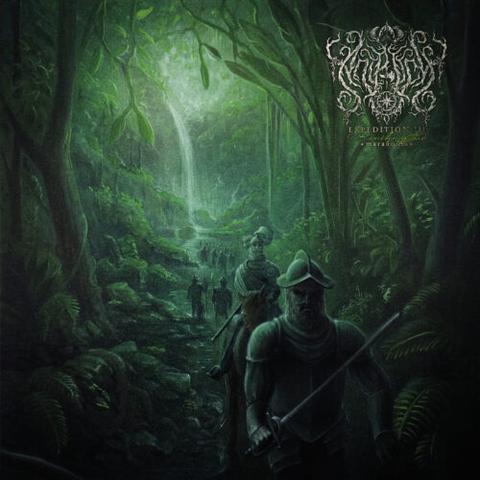
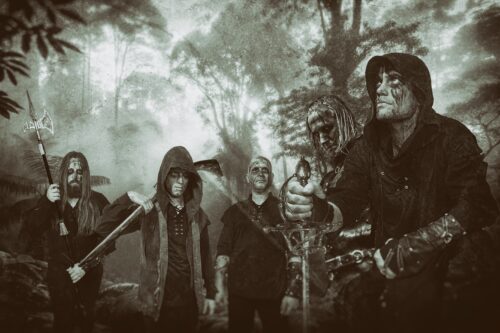
In 1560, Lope de Aguirre, a Spaniard who would deem himself the “Wrath of God,” joined Pedro de Ursúa’s expedition through the Amazon rainforest. He would eventually find himself in charge after successfully plotting to assassinate not just one, but two of the expedition’s leaders. Power hungry and full of bloodlust, Aguirre headed towards Peru to overthrow the Spanish colonial government and declare the territory for himself. Fate had other plans in mind for him, however, as his rebellion ended in his death at the hands of those he sought to overthrow. Werner Herzog perfectly captured the essence of this tale in the magnificent film Aguirre, Wrath of God,1 but clearly this is a story meant to be told in black metal. Enter Antrisch. Carcharodon heaped high praise on their debut album, Expedition II: Die Passage, which was about Sir John Franklin’s 1845 expedition in the Arctic, and predicted the independent band would soon find themselves attached to a label. Now here they are, signed with AOP Records, and ready to deliver the tale of yet another historical expedition—Expedition III: Renitenzpfad.2

With their attack-heavy brand of black metal, Antrisch is not your typical atmoblack group. Yet the atmospheric aspects of their music play a key role in their storytelling. They establish a setting through Spanish-sounding elements, such as the acoustic tremolos of what sounds like a Spanish guitar on opening song “Conquista – Prolog.” Other atmospheric touches further bring the story’s setting to life, with animal and environmental sound effects on “Verschanzt – Perleneilandterror” placing listeners firmly in the jungle. Finale “Canis Ivpvm Edit” borrows a page from Vengeful Spectre as it incorporates the din of war whilst Spanish guitars strum mournful notes. Antrisch also establish atmosphere with emotive arpeggios, ambient segments with sparse drumming, and whispered rasps from Maurice Wilson.3 They prove to be masters at immersing listeners into their narrative.

EXPEDITION III : Renitenzpfad by Antrisch

Where Antrisch really shine is in their aggressive, riff-driven black metal. Once the opening Spanish stuff ends on “Conquista – Prolog,” the tune erupts in a satisfying burst of blackened rasps, blistering blast beats, and furious riffs. And boy, do they play some great riffs. There’s a sweet melodic riff to bookend that opening song as well as some memorable tremolos throughout. The part that takes the cake is about two minutes into “Canis Ivpvm Edit,” where a bass/guitar bit combined with some impressive kitwork and vocal delivery lays down a showstopping performance. Their blend of aggressive black metal with more dramatic atmospherics has a lot in common with what Kanonenfieber do, and clearly, they have learned much from the master, Noise. Antrisch prove they can leverage their music to craft some exciting stories, even if I don’t know what the hell they’re saying.

Buoying the terrific production are some phenomenal performances. Wilson’s rasps are a force of nature. He has an entertaining vocal cadence that makes the music that much more enjoyable. His snarl is absolutely vicious, but in quieter moments, he shifts to a whispered rasp—one that’s no less menacing for being less loud. His manic energy makes for the perfect medium to tell about a madman like Aguirre. Noel Ewart Odell’s kit work has a similar persistent, manic energy. Like all aggressive black metal, he excels at incessantly pounding blast beats, but knows when to dial things back for proper ambiance and mood shifts. On occasion, he bursts into a bit of lively dance beats (“Hidalgo Infernal”) or speedy marching beats (“Bittergruen”). His omnipresence is all the more noticeable when he disappears, allowing the atmospheric elements to sink in. I’ve already spoken highly of the ever-shifting guitar work. Both Robert Falcon Strike and Alexander Gordon Laing impress with their dual attack, mixing trems with riffs and then slowing things down with poignant arpeggios. The whole crew displays an impressive bit of acrobatics and discipline.

There’s the famous Greek saying that you never “step into the same river twice, for it is not the same river.”4 Such is the case for Expedition III: Renitzenzpfad. The tracks are never the same on any given spin due to their ever-shifting, progressive structures. The constant shifts between aggression and quieter atmosphere not only keep you on your toes, but threaten to give you whiplash. While there are certainly powerful hooks you’ll keep returning to, each spin of the record reveals new depths and surprises. Antrisch successfully transport you to the lushness of the Amazon rainforest and into the mind of a madman in a riveting feat of musicianship and songwriting.

Rating: 4.5/5.0
DR: 8 | Format Reviewed: 320 kbps mp3
Label: AOP Records
Websites: Bandcamp | Facebook
Releases Worldwide: March 27th, 2026
#2026 #45 #Antrisch #AOPRecords #AtmosphericBlackMetal #BlackMetal #ExpeditionIIIRenitenzpfad #GermanMetal #Kanonenfieber #Mar26 #Review #Reviews #VengefulSpectre
Ellende – Zerfall Review By Grin Reaper

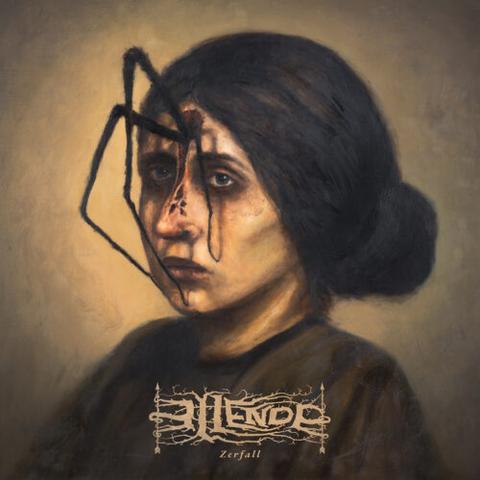
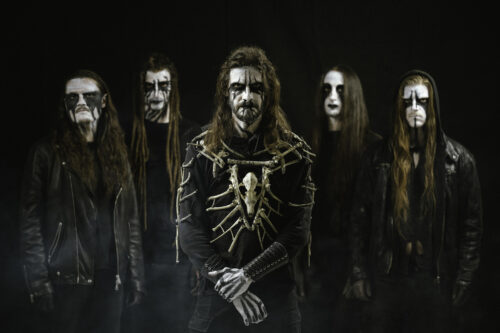
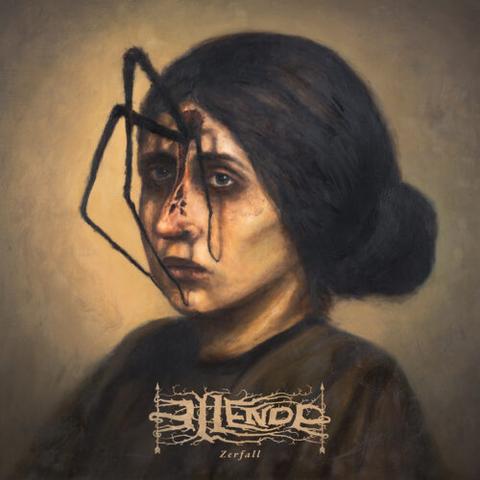
Hurtling into the new year with his heart on his sleeve (and bones on his shirt), Ellende’s one-man maestro L.G. bids to set a high bar for 2026. Zerfall, the band’s first new material since 2022,1 continues where Ellenbogengesellschaft left off, further polishing the allure of classically infused black metal. Conjuring comparisons to compatriots Harakiri for the Sky and Weltenbrandt,2 Austria’s Ellende lives somewhere between post and depressive black metal, unapologetically tackling poignant themes with passionate performances and crisp clarity. Translating to ‘decay,’ Zerfall examines the agony of a life fractured by loss and the painstaking endeavor to reclaim inner peace afterwards. Does Ellende’s latest prevail in capturing the haunting sting of tragedy and the catharsis of acceptance, or does it Zerfall short?

The aural evolution from Ellenbogengesellschaft to Zerfall flows like a frosty stream, with stirring strings and restrained piano evoking a sophisticated grace alongside Ellende’s more traditional blackened wrath. In many ways, the mettle that pushed Ellenbogengesellschaft to new heights shines even brighter here, packing more texture and ideas into Zerfall’s composition. In particular, the dedication to vocal variety begets a more nuanced performance and adds enticing wrinkles to an already dense soundscape. Choirs, whispers, and rasps swirl together in an eddy of sonic splendor, and as I revisit past Ellende albums, this dimension more than any other stands as a testament to how L.G. continues to find ways to refine and enrich his project’s musical identity.

Zerfall by Ellende

Performances across Zerfall dazzle, with the overarching imperative to buoy emotional impact before all else. While there’s little here to sate those who obsess over technical wizardry, I’ve rarely been so in tune with the spirit of music without understanding any of the words.3 Ellende’s central narrative on Zerfall follows a rollercoaster of emotional states, ranging from intense passion (“Wahrheit Teil I,” Wahrheit Teil II”) to sullen contemplation (“Übertritt”) and adventurous perspective-seeking (“Reise”). The music bolsters these themes, as resonant bass plucks support moments of introspection while anger and pain manifest in blackened wails (“Ode ans Licht”). Ellende’s fusion of feeling into melody sparkles with vitality, where even the two bonus tracks preserve (if not outright enhance) Zerfall’s tender luster. Throughout, dreamily sustained chords entwine with buzzing tremolos, drenching the album with atmosphere, while soulful guitar leads emerge with megadoses of seasoning to ensure proceedings are never bland (“Wahrheit Teil I,” “Zerfall”). Instrumentally, Zerfall presents a lush experience that rewards multiple listens to unravel and appreciate its complex flavors.

Besides Ellende’s lyrical and musical cohesion, Zerfall offers an organic production and boasts a track list that wards off weak songs as well as standout moments. The bright production and mix allow the intricate web of instrumentation to breathe, from the sharp percussive click of a pick on acoustic guitar to the slight warble of a bow’s stroke across a violin. No track is dispensable, either—opener “Nur” is closest, yet it effectively establishes Zerfall’s mood at the outset. What’s most telling as I examine my time with Zerfall is the consistency with which I’ve listened to it, both actively and passively. Every track has the same number of plays, and when I reflect on why, it’s clear that while no track should be skipped, no individual moment galvanizes me to spin it again outside of its surrounding context. For an album so steeped in impassioned expressionism, Zerfall never quite attains the zenith of drama needed to fully achieve a euphoric climax of mounting tension and emotion, and this missing ingredient holds it back from greatness.

In his review of Ellenbogengesellschaft, Doomy observed that each release hones Ellende’s songwriting. Zerfall is no exception, taking what worked on prior albums to cultivate a more mature iteration. What began as L.G.’s outlet for introverted misanthropy has developed into a layered project that wields pathos like a knife, cutting to your emotional core with a deft flick of the wrist. Musically, I remember 2025 getting off to a slow start, and Ellende excites me for what 2026 has in store. Even if the coming year doesn’t live up to expectations, Zerfall establishes a surefire safety net of quality and feels.

Rating: Very Good!!
DR: 7 | Format Reviewed: 320 kbps mp3
Label: AOP Records
Websites: Bandcamp | Facebook
Releases Worldwide: January 2nd, 2026

#2026 #35 #AOPRecords #AustrianMetal #BlackMetal #ClassicalBlackMetal #Ellende #HarakiriForTheSky #Jan26 #PostBlack #PostBlackMetal #Review #Reviews #Weltenbrandt #Zerfall

Sun of the Dying – A Throne of Ashes Review

By Thus Spoke

Autumn is well and truly here, so it’s about time I reviewed some doom. Though my ears have been diverted towards certain listworthy death/black drops these past few weeks, the pull of the gloom grows stronger in proportion with the shortening of the days. But rather than the icy climes of Scandinavia, or wintry North America, or even rainy old England, my long-awaited dose of darkness came from Spain. In less than three-quarters of an hour, Madrid’s Sun of the Dying proved that you don’t need miserable, cold weather to make music about misery. A Throne of Ashes, the group’s third LP, is a bold, strong, and stirring mélange of death-doom styles that both filled the void in my musical life and made me downright embarrassed not to have listened to them before.

Sun of the Dying borrow from across the spectrum to craft their compositions, creating richly layered soundscapes. Gracing soaring melodies with dolorous piano, they channel Swallow the Sun on the highs, and Endonomos on the lows. Sweetly sad strings and soft singing recall My Dying Bride, and a duet over warm, vibrating chords and resonant atmosphere Draconian.1 But all this familiarity detracts not one iota from the authenticity of A Throne of Ashes; if anything, it makes it easier to love. By combining the best aspects of these influences with a heavy dose of character, Sun of the Dying make them their own, constructing a powerful whole that simply oozes feeling and personality.

As an indicator of how well A Throne of Ashes communicates emotion by way of staggering death-doom, it contains not just one, but two Song-o-the-year list contenders. Contender one, opener “Martyrs,” had me sitting back in my chair completely still, to give it my full attention. Its graceful dynamism between uplifting guitars and hushed cymbal, narrated by Eduardo Guilló’s beautiful singing and untempered roars, is matched for pathos only by fellow highlight “House of Asterion.” The latter leans into the orchestral more heavily, accenting melancholy descents with ever more dramatic flourishes of strings in a way designed to stamp them into the listener’s heart. These two exemplify Sun of the Dying’s knack for creating depth of feeling and composition with careful weaving of delicacy and sturdiness— the mark of all great doom. As refrains pass between piano, synths, and guitar, they wax, wane, and build gracefully. Spacious resonance over which solo piano (“With Wings Aflame,” “Of Absence”) or strumming, or the sounds of someone sobbing (“Of Absence”) float over and bleed into, prefigures or breaks the gradual escalation into screaming strings (“The House of Asterion”), or white-hot tremolo (“Martyrs”), or the blows of shuddering riff and cymbal (“The Longest Winter,” “Of Absence”). The fullness of even the quieter moments, with bittersweet melodies detailed with touches of choir and orchestrals and multi-tracked vocals and the warm heartbeat of percussion, makes the experience powerfully immersive, heightening the climaxes and deepening the nadirs.

So strong is Sun of the Dying’s ability to draw its listener in and wring their heart out that one almost forgives their occasional structural missteps. Advance track “Black Birds Beneath Your Sky” is a crushing slab of comparatively aggressive doom-death whose string-swelling, group-sung chorus yet exemplifies most explicitly the anthemic feel that other songs hint at. It’s a good song—particularly in its more soaring second act—but it sits awkwardly between the mournful “Martyrs” and “With Wings Aflame,” suddenly brushing aside the rapturous mist of sadness only for it to descend again right after. Its mood-breaking grit is echoed, albeit faintly, by “The Greatest Winter,”‘s more grey and stolid riffing, and there’s the quiet sensation that the pair don’t quite belong with their more sombre companions. Without them, however, the album would be very short, and so rather than removing them, their use of dark and light, soft and heavy elements might simply need to be adjusted.

Even if its atmosphere isn’t perfectly sealed, A Throne of Ashes proves transportive and engrossing all the same. Heartfelt and compelling, it distils an ideal of modern doom and had me scrambling to hear Sun of the Dying’s back catalogue. Don’t let the year end without a walk on a grey day and A Throne of Ashes in your ears.

Rating: Very Good
DR: 7 | Format Reviewed: 320kbps mp3
Label: AOP Records
Websites
: Bandcamp | Facebook
Releases Worldwide: November 21st, 2025

#2025 #35 #aThroneOfAshes #aopRecords #deathDoom #doomMetal #draconian #endonomos #myDyingBride #nov25 #review #reviews #spanishMetal #sunOfTheDying #swallowTheSun

Waldgeflüster – Knochengesänge I and Knochengesänge II Review

By Killjoy

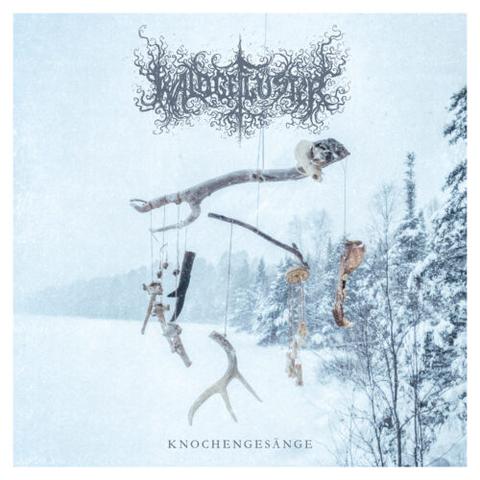
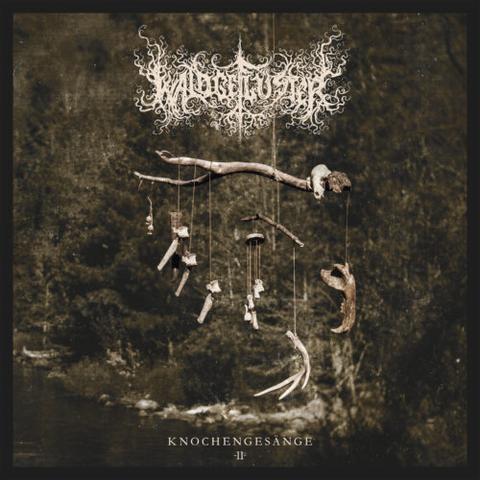
Waldgeflüster has been around for a while. Based in Bavaria, Germany and led by Winterherz, they’ve been weaving nature-themed atmospheric black metal since 2009. Waldgeflüster has passed through the hands of several atmoblack aficionados before me. El Cuervo enjoyed the Panopticon/Waldgeflüster split in 2016 but was less impressed by Ruinen later that year. Doom_et_Al found 2021’s Dahoam to be disappointing and unmemorable. Waldgeflüster used the four years since then to create double albums Knochengesänge I and Knochengesänge II. I is a more traditional atmoblack record, while II is a reconstruction of the same melodies from the standpoint of various non-metal musical genres. An intriguing idea, to be sure. Is Knochengesänge so nice you’ll want to listen to it twice?

That may not be entirely accurate because, despite being born from the same place, Knochengesänge I and II grew into very different beasts. I will sound much more familiar to those who know Waldgeflüster’s prior work. It shares a deep kinship with the folksy trem-picking of Panopticon, not to mention that both groups put out double albums this year. Austin and Bekah Lunn even directly contributed their musical and photographic talents to Knochengesänge. II is a patchwork of different musical styles. It ranges from acoustic folk (“Das Klagelied der Krähen”) to overcast post-rock (“Frankfurt, 19. März,” “The Little King and His Architect”) to semi-upbeat alt-rock (“A Crusade in the Dark”). Both records conclude with different renditions of the traditional Scottish song “The Parting Glass.”

Knochengesänge I sees Waldgeflüster attempting to escape the shadow of similar, more influential atmospheric black metal groups. It’s telling that, despite the band’s longevity, no AMG writer to date has ever tagged Waldgeflüster in another band’s review as a reference point. Indeed, much of I passes uneventfully in a Harakiri for the Sky haze, but I tend to like it best when Waldgeflüster adds their own folksy flavor. The melodies of “Der kleinste König und sein Architekt” are especially crisp, and the song really comes into its own at the end when it transitions to a warm folk section with hearty clean singing and subtle violin strings. Charlie Anderson’s violin appears frequently, adding a great deal of poignancy. “Knochengesang” and “Bamberg, 20. Juni” are other notable examples of Waldgeflüster using strings to elevate their sound.

Since this is a double album, you already know what the primary flaw of Knochengesänge is—bloat. However, the problem runs deeper than mere minute count. Even if each track were halved in length, many would still have an uphill battle maintaining my attention. This is the case with both parts but particularly true of II, most of which seemed to drag on for an eternity. The greatest exception is “Singing of Bones” almost at the very end of II, a pleasant folk number with acoustic guitar and violin working in tandem. Even though II is all over the place stylistically, most of it isn’t so wildly different from I that it couldn’t have conceivably been integrated. I even tried reordering the tracks into each album’s corresponding pairs and found that many covered each other’s weaknesses decently well (again, except for bloat), which supports my suspicion that these two mediocre albums could have been distilled into one really good album.

Knochengesänge began with an interesting double album premise that, sadly, yielded little of note during its 109-minute combined runtime. I and II may be highly symmetrical but they are only mildly codependent. I can’t recommend listening to them back to back and, in fact, II can be safely disregarded by most listeners. Fans of the Panopticon aesthetic should find enough to enjoy in I, but it may fall a bit flat for everyone else, especially given that newcomers like Autrest are offering a much more potent take on this type of atmoblack. A frustrating refusal to self-edit is what holds both records back the most; nearly every track is 8 minutes or longer, and few fully justify their length. I respect Waldgeflüster’s desire to explore new musical avenues and I’ll keep an eye on them in the future, but I don’t expect to return much to Knochengesänge.

Rating: I: 2.5/5.0 | II: 2.0/5.0
DR: 7 | Format Reviewed: 320 kbps mp3
Label: AOP Records
Websites: blackmetalwaldgefluester.bandcamp.com | waldgefluester.com | facebook.com/blackmetalwaldgefluester
Releases Worldwide: November 7th, 2025

#20 #25 #2025 #AOPRecords #AtmosphericBlackMetal #Autrest #FolkMetal #GermanMetal #HarakiriForTheSky #KnochengesängeI #KnochengesängeII #NotMetal #Nov25 #Panopticon #Review #Reviews #Waldgeflüster

Waldgeflüster - Knochengesänge II (Full Album)

YouTube

#metal
#Waldgeflüster
#knochengesaenge

https://m.youtube.com/watch?v=CMyK4SwCwhw&list

#aoprecords

they are on bandcamp!!

can recommend!

released today

have to listen to knochengesänge ii yet

Waldgeflüster - Knochengesänge (Full Album)

YouTube
Yesterday I received my last pack of CDs I ordered on the last #BandcampFriday
I received the mighty album from #Heretoir and two #Waldgeflüster albums, which will be released on this Friday. You made me a pleasure #AOPRecords 😭
So today is #blackmetal #atmosphericblackmetal !

HERETOIR – Solastalgia Review

By Owlswald

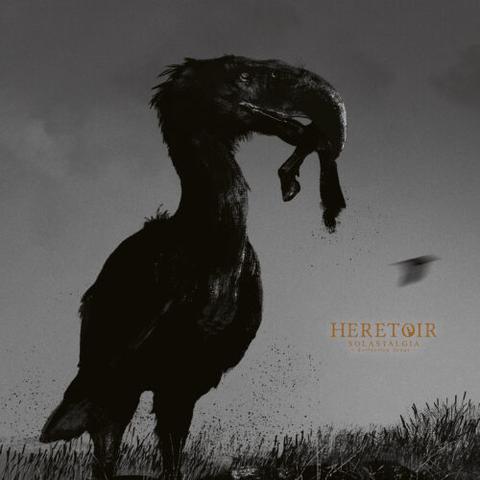
Fall in the Pacific Northwest means two things: foggy air and the official start of sadboi season. And German post-black quintet HERETOIR are here to offer a choice soundtrack for the colder, darker months ahead. Since its inception as a solo project by multi-instrumentalist David Conrad in 2006, HERETOIR has been a mainstay in the blackgaze scene, crafting music that has been a long-standing source of catharsis while operating in the darkness with other well-known acts like Alcest and Fen. Solastalgia marks the trio’s fourth full-length album, but the first one we’ve reviewed here. Still, the group’s presence at AMG Industries isn’t entirely new. On the heels of their 2017 sophomore album The Circle, drummer Nils Groth spoke candidly in an interview with staff emeritus Muppet about how music can be a vital outlet for dealing with mental health. Since then, HERETOIR shifted to a collaborative songwriting process to define the darker and ethereal sound of their third album, Nightsphere. That same collaborative spirit now forms the core of Solastalgia, which explores themes of alienation and grief over the loss of our natural world.

Crafted to be an immersive listen, Solastalgia follows a heavy-light-heavy progression. High-energy tracks like “You are the Night,” “Burial” and “The Ashen Falls” boast the crunchy riffs, trem-picked guitars and rhythmic aggression of The Circle, while “Dreamgatherer,” “The Heart of December” and “Rain” shift toward the softer Alecstian sounds of Nightsphere during Solastalgia’s more contemplative middle. Groth absolutely pummels his kit for over an hour with tight blasts, hard-hitting hardcore rhythms, and eclectic fills that add tons of stylistic flair. Likewise, Conrad delivers a standout vocal performance, adding to the material’s raw, emotional feel with Katatonian sadboi cleans and Novembre-like murmurs contrasting blood-curdling screams and sweeping choral hooks. A high-quality production, with a smothering bass tone and cinematic elements like spoken word (“The Ashen Falls”), piano (“Solastalgia,” “Rain”,) and flute (“Season of Grief”) magnifies the immense emotional weight of HERETOIR’s music, creating a charged, multilayered atmosphere fraught with inner conflict and catharsis.

HERETOIR is adept at building a palpable sense of tension and releasing it through explosive crescendos, weaving a rich sonic tapestry of contrasting dynamics. They masterfully execute this formula across the album’s ten1 tracks with serene, reverb-drenched blackgaze textures juxtaposed by furious blasts, crushing breakdowns and soaring choruses. On “Inertia,” a pensive beginning of ominous piano and cascading tremolos abruptly halts—a pin-drop then detonates, unleashing a devastating maelstrom of thick distortion and ear-piercing screams that propels the track forward. “Season of Grief” is a dynamic journey that gradually builds momentum, shifting from unexpected death metal passages to a quiet, ghostly acoustic bridge before an epic, atmospheric crescendo—driven by Groth’s technical fills—brings the song to an enthralling conclusion. Throughout Solastalgia’s runtime, Conrad’s fluid vocals are key to fusing the album’s wide influences. He seamlessly transitions from soaring, Howard Jones-esque (Killswitch Engage) cleans (“You Are the Night”) to a grief-stricken fry (“Inertia”) and even burly death metal growls (“Season of Grief”), balancing accessibility with profound sorrow and grief.2

With such emotional veracity, an album of Solastalgia’s caliber could easily become too emotionally taxing. But HERETOIR deftly prevents listener burnout by bookending the record with its most expansive compositions. However, while this structure largely succeeds, Solastalgia’s flow is somewhat disrupted by the back-to-back placement of softer tracks like “Dreamgatherer” and “The Heart of December.” Although these tracks provide necessary breaks, their weaker hooks and limited variation make Solastalgia’s middle—from “Rain” through “The Heart of December”—feel a bit like a slog. Furthermore, the inclusion of “Metaphor,” an In Flames cover, at the very end detracts from the album’s flow and would have been better suited as a bonus track.

Even with its minor flaws, Solastalgia provides the perfect welcome to colder and darker seasons, offering a soundtrack for those who seek catharsis and solace in confronting inner turmoil. It successfully blends the best of The Circle and Nightsphere, creating a powerful and immersive tour de force of emotional intensity. Its songwriting takes listeners on a musical journey through a spectrum of genres, from serene blackgaze to aggressive hardcore, progressive death metal, and even screamo. For those drawn to the dark and melancholic, HERETOIR has created a record that successfully fuses their past into an experience that is sure to satisfy.

Rating: Very Good!
DR: 7 | Format Reviewed: 320 kb/s mp3
Label: AOP Records
Websites: heretoir.bandcamp.com/album/solastalgia | heretoir.com | facebook.com/heretoir
Releases Worldwide: September 19th, 2025

#2025 #35 #Alcest #AOPRecords #AtmosphericBlackMetal #BlackMetal #Fen #GermanMetal #Heretoir #InFlames #Katatonia #KillswitchEngage #Novembre #PostMetal #Review #Reviews #Sep25 #Shoegaze #Solastalgia

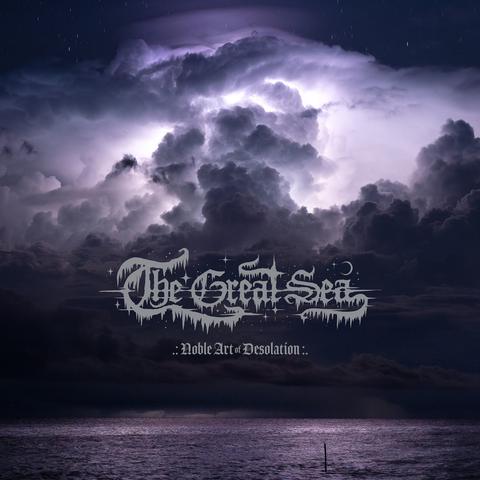
Blackened metal wanderers The Great Sea release their debut album, Noble Art Of Desolation. Review at FFR, https://flyingfiddlesticks.com/2025/04/22/the-great-sea-noble-art-of-desolation-aop-2025/ #metal #heavymetal #rock #hardrock #blackmetal #AOPRecords #TheGreatSea #Germany
The Great Sea, Noble Art Of Desolation (AOP 2025)

Blackened metal wanderers The Great Sea release their debut album, Noble Art Of Desolation. From their beginning in 2022, German metal band The Great Sea have endeavored to “create an atmosphere th…

Flying Fiddlesticks Review

Zéro Absolu – La Saignée Review

By Thus Spoke

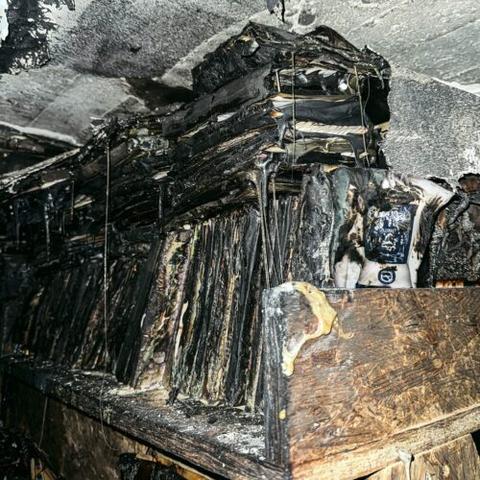
La Saignée is Zéro Absolu’s debut, but the members already have a storied past. Not only comprised of notable black metal artists—from Alcest, and Regarde Les Hommes TomberZéro Absolu is itself a reinvention. After their original name—Glaciation—was stolen and illegally registered as IP by a bitter temporary band member, they had no choice but to evolve. In concept, La Saignée defends the band’s integrity, and that of the wider (black) metal scene against the poisonous ideas that tear it down, its lyrics described by the members as “confronting [both of their] enemies.” It partially explains the odd cover art, which is not an AI abomination, as it might at first appear, but a photograph taken in the aftermath of the fire that devastated Noeseblod (formerly Helvete) Records in Olso last April. Zéro Absolu are here to make a statement, and the way they choose to deliver it in La Saignée says a lot.

Zéro Absolu’s black metal proper is distinctively French, with deep and exuberant guitar tones, gravelly vocals, and a vague sense of nostalgia hovering about its refrains. There is more than a hint of Glaciation, of course, as well as Abduction, Seth, and countless others. Yet, now more than in the band’s previous incarnation, the admixtures of styles from those who comprise it are given freer reign. Gazey Alcestian plucking and serene vocalisations, and dark post-black turns from the playbook of Regarde les Hommes Tomber play a larger role amidst the frosty second-wave tremolo and drum. La Saignée moves between its aspects as mood takes it, unspooling the manifesto that Zéro Absolu have created. This is where the album’s structure plays a crucial role, for La Saignée consists of only two songs. The first, title track—an epic of over twenty minutes—feels like the raison d’être for this record and for Zéro Absolu themselves, rising and falling anthemically. The second, “Le Temps Détruit Tout,”—comparatively short at 13 minutes and change—is more reflective and solemn overall, though not without its own blackened surges of ardour. This duality more or less completely dissolves La Saignée into one piece, making it more stirring and immersive, and thus serving as the apt instantiation of Zéro Absolu’s declarative (re-)entrance.

By marrying an evocative black metal core with the threads of post-black at their disposal, Zéro Absolu create something powerful. Dispossessed of a lyric sheet, my French is too poor to parse the words—from both vocals and the static-blurred samples that surface across the runtime.1 Zéro Absolu’s execution, however, leaves little room to doubt their sincerity. The howls and screams which cry out these verses in unison burn with fierceness. The sweeping rise and fall of melancholic refrains—just as much as their incremental, understated derivations— carry tides of emotion in blazing tremolos just as much as the latter drip it in subtly with resonant plucks. La Saignée repeatedly peaks between emphatic intensity and the musings of ambience, and this dynamism feels real to the process of delivering an impassioned disquisition. Yet the other face of the record, which is less straightforward, shows the far-reaching, introspected core. Not only the atmosphere garnered by the stripped-back mellifluousness of gaze, but also the time given over to more abstract soundscapes as the chiming, sometimes eerie synths, lend La Saignée further layers of intrigue, depth, and feeling. It culminates in a rich, emotionally nuanced, and flowing experience that makes you forget, at times, what exactly you’re listening to,2 and not care because it is that immersive.

None of the above is to say that La Saignée is mind-blowingly unique, or beyond devastatingly affecting. But this is partly due to how high the bar already is for modern French black metal, not to mention that set by Zéro Absolu themself, in their previous form as Glaciation. Putting that to one side, I’ll concede that the structure, ideal as it is for immersion and intensity, somewhat runs against memorability, and in a related sense, immediacy. It takes some patience, and more than a few listens, to really appreciate the magnificence of La Saignée, and while you’ll certainly enjoy each of those listens very much (if you’re inclined towards this genre at all), it lacks some supererogatory obvious excellence that demands your respect instantly. This could also mean that mileage will vary between listeners, though I do believe that with time, all will trend towards the favourable.

As a means by which the musicians of Zéro Absolu return to the black metal scene, La Saignée is a powerful choice. In its free-flowing, dual-partite structure, they are reborn and make an emotionally affecting, honest-feeling, and wonderfully executed statement. This is surely just the first step in a new and vibrant career for the band, and what a first step it is.

Rating: Very Good
DR: 6 | Format Reviewed: 320 kbps mp3
Label: AOP Records
Website: Bandcamp
Releases Worldwide: January 31st, 2025

#2025 #35 #Alcest #AOPRecords #BlackMetal #FrenchBlackMetal #FrenchMetal #Glaciation #Jan25 #LaSaignée #MelodicBlackMetal #PostBlackMetal #RegardeLesHommesTomber #Review #Reviews #Seth #ZéroAbsolu

Zéro Absolu - La Saignée Review | Angry Metal Guy

A review of La Saignée by Zéro Absolu, available January 31st worldwide via AOP Records.

Angry Metal Guy