Azitaka 🇨🇺
 Sam
Sam Amgine
 AnarchoQueer
ancom #antifascist #anarchist

@soberaim
Tristemente el culto al dinero es un cáncer.
#filosofia #capitalismo #anarchist #society #communism #economia #venezuelan
Debería ser dignificante para el trabajador responder a la pregunta "¿a qué te dedicas?" porque en tanto no robe a nadie, no haga daño a nadie, y no dependa de nadie... Puede ir por el Mundo con la frente en alto.
Pero la pregunta que usualmente le sigue es deshumanizante: "¿y cuánto ganas?".
Cuando se responde con la verdad, no importa si eres médico, estafador, docente, etcétera:
Si ganas mucho dinero te admiran, tu oficio no se cuestiona. Pero si no ganas lo que el otro individuo quiere escuchar, eres un fracaso.
#filosofia #capitalismo #anarchist #society #communism #economia #venezuelan
What if you hate rules, e.g. an #anarchist?
Well, what is anarchy? It comes from Greek philosophers, who considered **direct democracy** - where the electorate decides policy itself, rather than some form of representation. The prefix 'an-' means 'not', as in the logical not, or without/lacking. The suffix '-archy' is used to form nouns describing a form of government or method of ruling.
3/
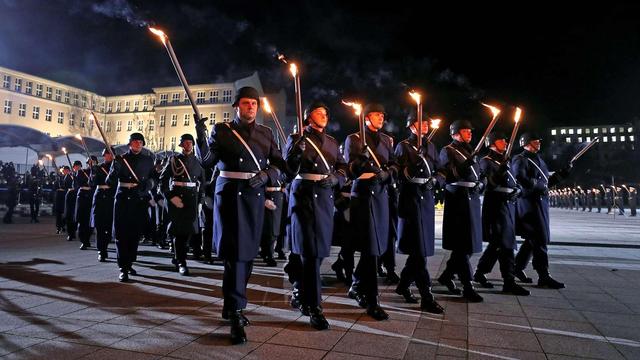
Berlin Parasites do the Anti-Berlin Fest in june
It's not against Berlin and its people. It's against what Berlin has become (again). A hub of the military-industrial complex. Genocide deniers, police brutality against the people, targeted policies. I live right nearby, after all. For so long, Berlin was our haven of anarchist freedom and subculture. What on earth has become of you? A victory for the faschos across the board.
https://word.undead-network.de/2026/05/21/berlin-parasites-do-the-anti-berlin-fest-in-june/
#anarchist #antiberlin #berlin #beton #diy #palestine #paradise #parasites #punk #resitance

(Chile) Anarchy in Active Hands. Text from the Sacco and Vanzetti Anti-Authoritarian Library in Memory of Mauricio Morales
A new May arrives, tinged with Black. Hearts race, and Mauri laughs again with his mocking laugh.
Seventeen years seems like a lifetime, and it’s the number since you’ve been physically gone. Seventeen years ago, on a cold morning on May 22, 2009, the explosive device you were carrying to attack the prison guards’ school detonated prematurely, causing your instant death.
Your body lay in the middle of the street, your bicycle and a revolver beside you, a single bullet lodged in your Adam’s apple. They will photograph you, and the powerful will display those images to instill terror. They will want to use you as a trophy, but your comrades will come out to defend you. They will not leave you alone, not that day, nor in the days to come. Even though many would like them to…
A police/media witch hunt will then be unleashed, and the circle of comrades with whom you forged your path will receive a wave of blows of different kinds, including eviction, imprisonment, and being forced underground. When civic or calculating morality advised silence and discretion to seek “protection,” your comrades raised the stakes and went out to reclaim you with pride, with audacity and anarchist commitment. We collectivized your ideas, your interests, values, and principles. We reclaim your anarchist life, so that it would not end on May 22, 2009.
Many of us did so, internalizing everything we had learned from the experiences of other comrades, from stories that we absorbed and that shaped our convictions and actions. Thus, everything one has learned becomes fire in decisive moments. And even if we do not yet perceive it, it will move and inspire others.
A sowing of memory began to take shape—to combat the absolute death that is oblivion, but also to emphasize your life.
We wanted—and still want—new comrades to know you through your actions: your ideas, writings, poems, stories, drawings, and songs. We seek for you to reach other territories hand-in-hand with your anarchist comrades—not through the press, historians, or criminologists; not through the caricature that Power constructs of you.
The sowing of *black memory* is a labor without pause or downtime; it asserts its stance in a manner that is categorical and uncompromising. For wherever ambiguity and silence arise, oblivion takes root—even as discourses subservient to Power insidiously creep in.
For this reason, we insist—we persist—in the act of doing: in affirming your life choices, your tools of struggle, and the person you chose to be—a warrior against every form of domination. Never a martyr; never the victim of a frame-up. Defiant and proud, possessed of a sarcasm and humor that melted away boundaries. That is how you departed… and that is how you remain with us—with your triumphs and your errors, with your stumbles and your beauties.
We have persisted in scattering your seed—and it has undoubtedly borne fruit. Hundreds of new comrades now know you; they access your ideas, practices, and writings fluidly and without hindrance—just as we wish it were with so many other comrades throughout history.
Diverse wills have committed themselves to propagating the contribution you made to Anarchy. And beyond whatever differences may exist between various paths, a profound respect prevails for the authentic gesture of keeping your memory alive. There is no competition, nor any attempt to hinder or tarnish the gestures of others; this distinguishes a genuine interest in nurturing memory from an egocentric struggle devoid of values. This distinguishes Black Memory from civic competition. This ought to be clear to everyone.
We have learned that cultivating and defending our memory is vital both for anarchists and for Anarchy itself; for if power intervenes in our processes—altering and rewriting our history—it will also modify our capacity for envisioning the future, hindering analysis and stagnating future processes.
“What gives meaning to life gives meaning to death.”
Memory allows us to find our comrades—to recognize them—transcending time, geography, and language. Thus, we recognize ourselves in their writings, in their demands, and in the commitments they undertook in the “here and now” through which they passed. Their joys nourish us, and their sorrows cause us pain as well.
In this way, we feel the absence even of those we never met, yet with whom we are bound by shared anarchist paths and actions in pursuit of total liberation.
Our commitment to that Anarchy—without compromise, without renunciation, without seeking permission from power, and free from rhythms dictated at its whim—binds us in solidarity with our anarchist comrade Kyriakos Xymitiris, who met his death on October 31, 2024, in Athens, Greece, in an accident while handling an explosive device. Kyriakos died instantly, while his anarchist comrade Marianna Manoura sustained severe injuries.
The incident triggered a massive police and media backlash; counter-terrorism units, deploying their full apparatus and specialized jargon, fanned out to detain, intimidate, pursue, and punish.
Arrests followed one after another as authorities sought out links and connections—and, of course, sought to shatter social circles and sever bonds of solidarity. Anarchist comrades in Greece and in other territories rose up in response, undertaking numerous acts of solidarity and remembrance.
For where there is no silence, there is no oblivion—and power can neither triumph nor impose its absolutism.
In April 2026, comrades Marianna Manoura and Dimitra Zarafeta were sentenced to 19 and 8 years in prison, respectively, on charges including criminal conspiracy, the manufacture of explosive devices, and the possession of firearms and ammunition, among other counts.
From the very moment of their arrest, both comrades have proudly affirmed their commitment to Anarchy and have defended the memory of their comrade Kyriakos. Their writings serve as a call for defiance and audacity in the face of the enemy, while simultaneously conveying a powerful message of love, comradeship, and an indelible devotion to the memory of Kyriakos.
In the early hours of March 20, 2026, a loud blast shook the neighborhoods of East Rome, Italy. Inside a park, an explosion brought down part of an abandoned building. Amidst the rubble, police subsequently reported the discovery of two bodies. Anarchist comrades Sara Ardizonne and Alesandro Mercogliano (Sandro) met their deaths at that location, in what appears to have been an accident involving the handling of an explosive device.
Both were comrades of profound dedication who made significant contributions to the anarchist cause. They were frequently targeted—placed in the crosshairs of the hunter; Sara, in particular, was under indictment from 2021 to 2025 as part of Operation Sibilla (charges which were subsequently dismissed). This operation was launched against anarchist comrades accused of inciting political violence, terrorism, and subversion through the anarchist publication *Vetriolo*—a case that involved, among others, their comrade Alfredo Cospito.
During a preliminary hearing for that case, Sara read a statement in which her concluding remarks asserted that the trial “convinces me that there is an enormous difference between the violence of the oppressed and that of the oppressors: the former adheres to an ethic; the latter, to none.”
Their comrade, Alesandro Mercogliano, had been sentenced in 2016 to five years in prison, accused of participating in attacks for which the FAI-FRI claimed responsibility. Ultimately, after spending more than four years behind bars, he was acquitted of all charges in 2020.
Their deaths have triggered the kind of police and media hysteria we have witnessed before—with those in power thirsting for more blood, issuing ludicrous statements, and whipping up winds of judicial vengeance directed against the comrades’ circle of associates, and in this instance, against their very bodies.
In an absurd, clumsy, and arrogant display of vindictive legal power, their bodies were withheld for several days; authority revels in—and seeks to perpetuate—those moments when it can exert absolute control over its declared adversaries.
Attempts were made to obstruct the release of their bodies to their families and comrades; false information was disseminated to ensure that the families would be left isolated, or accompanied by the fewest possible number of people. Furthermore, nearly 100 comrades were detained when they went to lay flowers at the site where Sara and Sandro had met their deaths. They believed that in this way they would silence the voices, that memory would be hushed, and that they could rewrite history at their leisure and to suit their own ends… but once again, they failed. The voices of our comrades—and the echo of solidarity—transcended borders, crossed territories, and found a home in other active hands.
Kyriakos, Sara, Sandro, Mauri, and so many other comrades: we are bound as siblings by their lives—lives that are sometimes best understood through their deaths; we are bound by their ideas and actions—regardless of the materials they chose to employ; we are bound by that which gave their lives meaning and purpose. That quest for absolute freedom which led them to walk paths that, at times, led to death.
It did not simply happen and then pass away; something always remains—our *black* memory—continuing to amplify the power of their lives.
Thus, nothing truly ends; everything continues… Here we stand… 17 years later… proving that you still move among us, Mauri—feeding the inner fire, laughing, debating, sharpening ideas to a razor’s edge, wielding the weapon, and staring down power and the powerful of the day.
With eternal love for Mauri and the comrades who have departed, and in solidarity with those who are imprisoned and persecuted.
May their names never be forgotten, and may more comrades find inspiration and strength in their legacy—for Zoé Aveilla and Snizana Paraskevaidou…
Long live Anarchy!
Sacco and Vanzetti Anti-Authoritarian Library
Black May

Ariane Gransac Is Dead: A Life That Was Intense, Rebellious and Anarchist
Ariane Gransac passed away in Perpignan on Sunday 5 April 2026, at the age of 84: her funeral is to take place at Perpignan crematorium on 15 April.
Rather than succumb to sadness at her leaving, I would prefer to remember her joie de vivre back when I first met her some sixty years ago around 1966, following her brave participation in the unforgettable abduction in Rome of Franco’s ambassador to the Vatican.
Ariane was the daughter of a top manager in the perfume industry and could easily have settled for the privileges offered by financial comfort, but that did not sit well with her rebellious temperament. She quickly began hanging out in anarchist circles in Paris, becoming a member of the French Anarchist Federation’s Emile-Henry Group and, being an amateur painter, she frequented cultural circles with libertarian leanings.
If there was anything that set her apart, it was without doubt her strong personality, a blend of lively intelligence and a fondness for clever and mordant irony that could cause dismay, but which was not incompatible with huge kindness and hyper-sensitivity. Ariane was a real character and that was part of her charm.
For upwards of ten years, she threw herself body and soul into the libertarian struggle against Francoism, alongside Octavio Alberola, taking part in nearly every action mounted by the FIJL, many of them under the aegis of the First of May Group. Following that successful abduction in Rome in 1966, she travelled to Madrid that October to lay the groundwork for a kidnapping that did not come off but triggered several arrests.
Out of solidarity with those arrested, she took part in several direct actions carried out by the First of May Group in London, targeting Francoist agencies: then, in 1968, she moved to Brussels to prepare for the kidnapping of Franco’s ambassador to the European Economic Community, Alberto Ullastres, only to be arrested on 8 February before that operation could be carried out.
In 1974, by which point she was no longer involved in FIJL operations, but out of solidarity with Salvador Puig Antich, she had a hand in the kidnapping of Baltasar Suárez, the director of the Banco de Bilbao in Paris: she was arrested on 22 May in Avignon together with Alberola.
After Franco died, she engaged with the French libertarian movement and made it her business to keep alive the memory of Latin American popular movements, especially in Peru and Bolivia where, thanks to Liber Forti, she struck up connections with Bolivian labour organization, the COB.
It goes without saying that this intense activity always went hand in hand with a deep-seated embrace of anarchist ideas about the fight against patriarchy, in accordance with the guidelines of the Mujeres Libres.
After her mother died (Ariane had been caring for her in Paris) she settled once and for all in Perpignan in 2007, but, in the wake of deep depression between 2013 and 2015, her cognitive decline grew more pronounced and, in the end, she was admitted to a care and retirement home in December 2022. There is no doubt but that, after four years in that situation, her death would have come as a welcome relief.
With the exception of her last few years, Ariane had the courage to live the life she had chosen with intensity, relentlessly defying domination in all its forms in the name of freedom. Which is how we shall remember her.
This article by Tomás Ibáñez appeared first on the Redes libertarias site and has been taken from the version that appeared, dated 9 April 2026 on the Blog de Floreal website
https://florealanar.wordpress.com/2026/04/09/ariane-gransac-est-morte-une-vie-intense-rebelle-et-anarchiste/
Brief notes by the KSL:
Franco’s ambassador to the Vatican was Monsignor Marcos Ussia.
Ariane’s portrait of Stuart was used on the cover of his third volume of autobiography, Edward Heath Made Me Angry. See Ariane Gransac painting Stuart Christie https://www.katesharpleylibrary.net/g4f6wd and Paris 1973; Antonio Téllez, Ariane Gransac, Stuart Christie and Octavio Alberola https://www.katesharpleylibrary.net/1vhkfw.
Ariane’s essay Women’s Liberation (1984) appears in Robert Graham’s Anarchism: A Documentary History of Libertarian Ideas: Volume 3: The New Anarchism (1974-2012) p.212-216.
Translated by: Paul Sharkey.
Source: https://www.katesharpleylibrary.net/mpg6nj
https://abolitionmedia.noblogs.org/?p=32956 #anarchist #ArianeGransac #europe #FIJL #FirstOfMayGroup #France
Identifying as #AntiDeutsch while claiming to be "leftwing" or even worse, as often is the case, #anarchist, is similar to saying that you're an anti-rapist with the exception for a particular ethnicity.
Emancipation is ethnically universal or it's #racism
-- no exceptions allowed.
And if you support or tolerate the oppression, apartheid, colonizing and genocide of a people, then you --are-- on the #righwing spectrum.
Antideutsch should be kicked hard out of anarchist spaces and shunned.
 Reverend Elvis
 witchescauldron
 abolitionmedia
 xekola