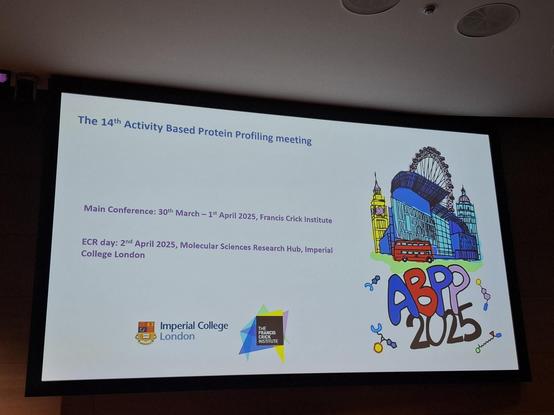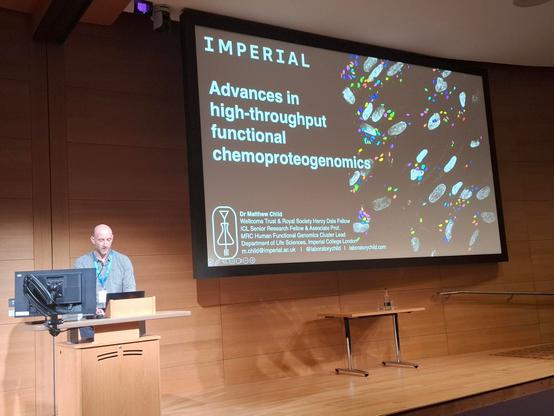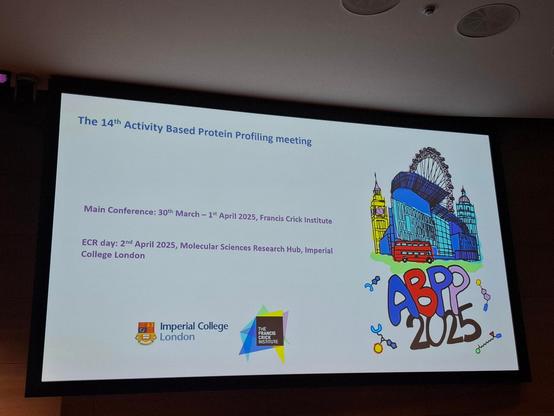
Did you enjoy the amazing #ABPP2025 meeting? Or were you sad that you could not attend?
If so, we are happy to announce that the next iteration of the meeting will happen in beautiful Leiden in The Netherlands in 2027. Keep an eye on this space, to be the first one to learn more. (1/2)

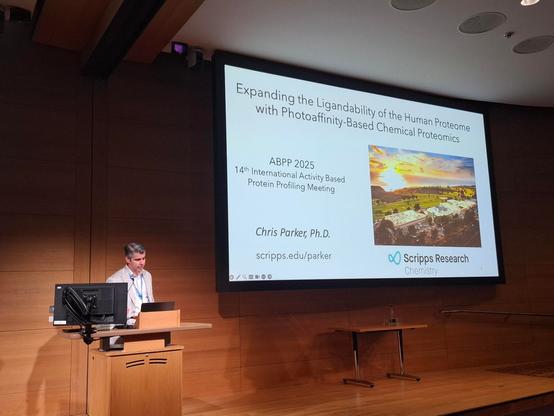
A chemoproteomic workflow was developed to determine the interaction sites of photoaffinity probes in cells, enabling the identification of diverse binding pockets and providing evidence of their tractability to small-molecule action.
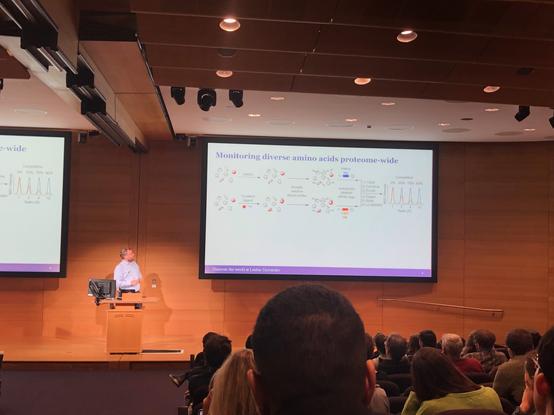
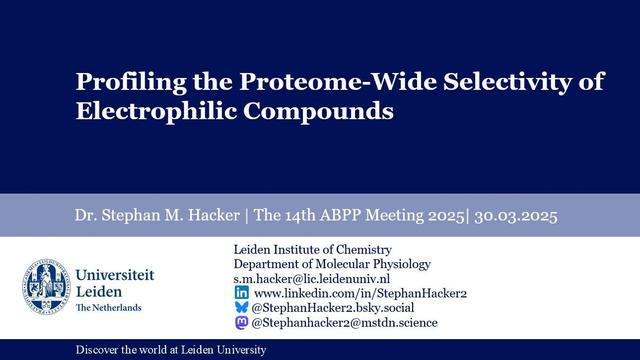
Targeted covalent inhibitors are powerful entities in drug discovery, but their application has so far mainly been limited to addressing cysteine residues. The development of cysteine-directed covalent inhibitors has largely profited from determining their proteome-wide selectivity using competitive residue-specific proteomics. Several probes have recently been described to monitor other amino acids using this technology and many more electrophiles exist to modify proteins. Nevertheless, a direct, proteome-wide comparison of the selectivity of diverse probes is still entirely missing. Here, we developed a completely unbiased workflow to analyse electrophile selectivity proteome-wide and applied it to directly compare 54 alkyne probes containing diverse reactive groups. In this way, we verified and newly identified probes to monitor a total of nine different amino acids as well as the N-terminus proteome-wide. This selection includes the first probes to globally monitor tryptophans, histidines and arginines as well as novel tailored probes for methionines, aspartates and glutamates.