| CriticalBiomass (HU) | https://criticalbiomass.hu |
| Articles at Qubit (HU) | https://qubit.hu/author/dolphin |
| CriticalBiomass (HU) | https://criticalbiomass.hu |
| Articles at Qubit (HU) | https://qubit.hu/author/dolphin |
We are transitioning in mathematics from an era of proof scarcity to an era of proof abundance, but our mathematical infrastructure and culture has not yet adapted to this. As mentioned previously, there is now a strong (and growing) impedance mismatch between the three core components of mathematical problem solving: proof generation, proof verification, and proof digestion.
An early sign of this transition could be seen in the chaotic response to the initial "First Proof" challenge, in which many more potentially viable solutions to the given problems were produced than could be readily verified or digested, either by experts or by automated tools. And now we are seeing the same impedance mismatch at the Erdos problem website, where (since the release of GPT 5.5, as well as the highly publicized recent solution to Erdos problem #1196) there is now an unprecedented backlog of nearly twenty claimed full or partial solutions "pending assessment": https://github.com/teorth/erdosproblems/wiki/AI-contributions-to-Erd%C5%91s-problems . (Prior to this recent surge, this category contained one or two solutions at a time at best.) (1/5)
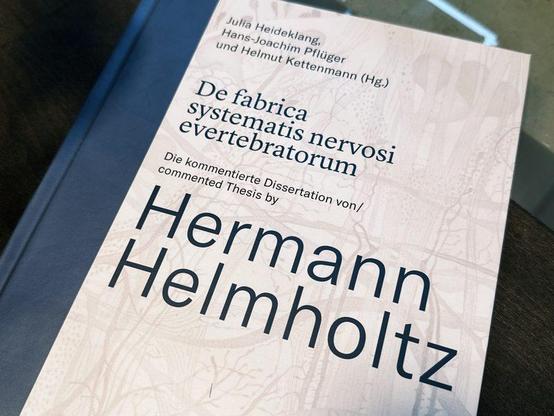
To my surprise, I recently learned that Hermann von #Helmholtz’s 1842 dissertation was not about #physics, but about the #NervousSystem. It was an anatomical study of invertebrate nervous systems, written at a time when the conceptual distinction between #neurons and #glia did not yet exist.
I wrote a short blog post about this fascinating early contribution to #neuroscience:
🌍 https://www.fabriziomusacchio.com/blog/2026-05-09-helmholtz_dissertation/
UK, welcome back to Erasmus+ 🇪🇺🇬🇧
The EU and the United Kingdom sealed the deal to bring the UK back into Erasmus+ from 2027.
We are rebuilding opportunities for the next generation to study, work and grow together, giving people the chance to connect across borders once again.
It will also help create and deepen partnerships between our academic institutions.
Together again through learning, exchange and connection 🤝
They're not wrong:
"Cancer Research UK (CRUK) has announced it will cease funding #openaccess (#OA) publishing costs, arguing that the current model is failing to deliver a fair and efficient system for disseminating research."
https://www.researchinformation.info/news/cancer-research-uk-to-stop-funding-open-access-publishing/
I wonder if the ORE announcement may have anything to do with that decision?
Are there any similar efforts going on in the UK?
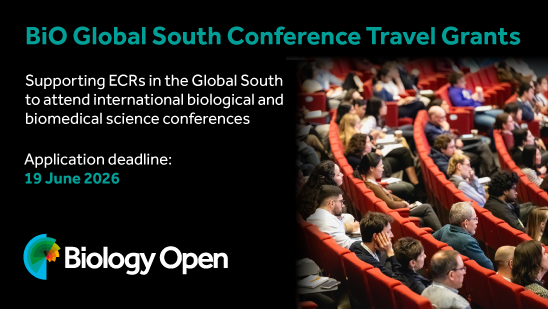
Biology Open is pleased to launch a new grant: BiO Global South Conference Travel Grants, to help ECRs based in the Global South attend international biological and biomedical science conferences.
Next application deadline: 19 June 2026.
https://bit.ly/3Q3GMMt
It's beginning!
EU journal replacement set to start this fall. Free OA publishing for all authors from 11 supporting countries. This is Germany's DFG press release:
"New Publishing Opportunities for Researchers: Germany Joins Open Research Europe"
https://www.dfg.de/en/news/news-topics/announcements-proposals/2026/ifr-26-21