 Emily_S
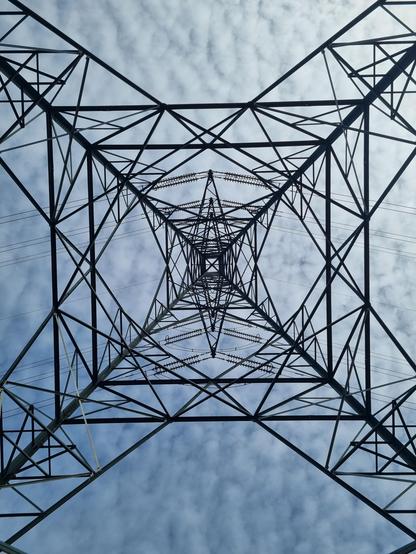
Fun view up an electricity pilon yesterday with the clouds in the background. Feels a bit like a quilt pattern.
Theoretical cognitive neuroscience
Boston University
Time, space, cognition
searchable
| Lab website | https://sites.bu.edu/tcn/ |
| Google scholar | https://scholar.google.com/citations?user=qu3oPf0AAAAJ |
To celebrate PI-day, I post my favorite website of all time: The Tau Manifesto.
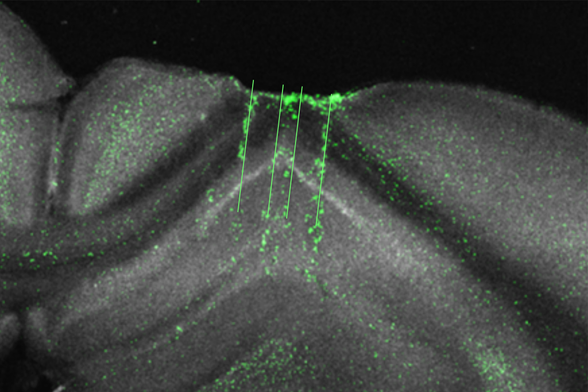
Whether the hippocampus is involved in unrewarded learning has been a controversial question. A new preprint finds that it may be critical for passively learning information.
By Natalia Mesa
Judith Fan is the recipient of the 2026 Lila R. Gleitman Prize. Dr. Fan is an Assistant Professor of Psychology (and, by courtesy, Education & Computer Science) at Stanford University. She received her Ph.D. in Psychology at Princeton University in 2016, following an A.B. in Neurobiology and Statistics at Harvard College.
Congratulations!
Mark Dombroski's lab is hiring at all levels: students, postdocs, staff scientists.
At the University of Colorado at Boulder – dream location for nature and mountain enthusiasts.
The type of wholesome science that I think we can all use in complex times: the physics of elephant whiskers. Unlike mice, elephants don’t whisk. The physics of their whiskers suggests they amplify touch.
 Redish Lab
 jonny (good kind)
 The Transmitter
 Ulrike Hahn
 Albert Cardona
 Peter Gleick
 Nicole Rust