lab_colombo

123 Followers
128 Following
171 Posts
Giorgio Colombo's #Computational #Chemistry and #Biology Lab; Always Room for Improvement; Dept. of Chemistry, University of Pavia, Italy
Happy to share our latest work "Large-scale energy decomposition for the analysis of protein stability". We use simple simulations to predict the impact of mutations on stability of more than 250 mutants in different folds. https://doi.org/10.1016/j.cstres.2025.01.001
#CompChem #CompBiol #AI #Biotech
Happy to share our work in JACS on protein allostery
https://pubs.acs.org/doi/full/10.1021/jacs.3c11396
Online now! Bivalent inhibitors of the BTB E3 ligase KEAP1 enable instant NRF2 activation to suppress acute inflammatory response https://www.cell.com/cell-chemical-biology/fulltext/S2451-9456(23)00435-X?rss=yes&utm_source=dlvr.it&utm_medium=mastodon #chembiol
Thrilled to share our story on the first rationally designed #covalent #HDAC inhibitor! YSR734 uses an SNAr-reactive electrophile to engage a noncatalytic nitrosylation site cysteine in #HDAC2, showing in vitro activity in AML & #DuchenneMuscularDystrophy!
https://pubs.acs.org/doi/10.1021/acs.jmedchem.3c01236

Hi Structural biologists!

Here is our article that helps you make the case that the experiment is still very much needed: https://www.nature.com/articles/s41592-023-02087-4

"AlphaFold predictions are valuable hypotheses and accelerate but do not replace experimental structure determination." Nature Methods (2023)

#Crystallography #MX #PDB #Alphafold #StructuralBiology @strucbio

AlphaFold predictions are valuable hypotheses and accelerate but do not replace experimental structure determination - Nature Methods

An analysis of AlphaFold protein structure predictions shows that while in many cases the predictions are highly accurate, there are also many instances where the predicted structures or parts of predicted structures do not agree with experimentally resolved data. Therefore, care must be taken when using these predictions for informing structural hypotheses.

Nature
Small molecule targeting of transcription-replication conflict for selective chemotherapy by Long Gu, Linda H. Malkas, and colleagues at @cityofhope and others https://www.cell.com/cell-chemical-biology/fulltext/S2451-9456(23)00221-0?rss=yes&utm_source=dlvr.it&utm_medium=mastodon
Hello, shiny-new GC-MS! We look forward to you replacing our vintage 1996 model 🧑‍🔬⚛🧪 #chemiverse

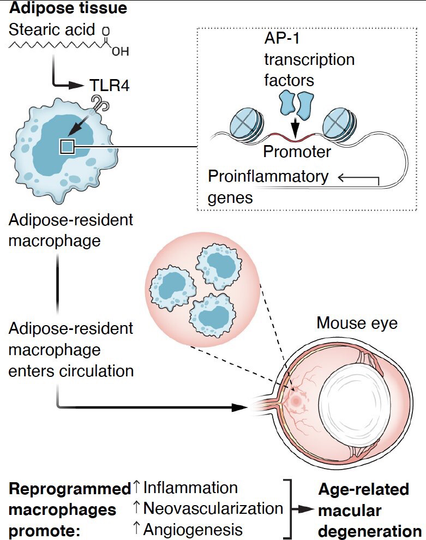
Obesity confers #macrophage memory

◽️Obesity triggers #epigenetic reprogramming of the innate immunity, lasting long after return to normal weight

◽️Stearic fatty acid (via TLR4) remodels chromatin & ↑AP-1 accessibility

◽️MΦ shift OXPHOS→ glycolysis

https://science.org/doi/10.1126/science.abj8894

Steven Shuken on X

My first @GygiLab paper is out in @an_chem! Under the mentorship of postdoc @qingyuhms I profiled electrophilic compounds’ effects on the proteome at >8k protein depth. The new Ascend takes 30% less time, improves quant, reveals relevant scarce proteins. https://t.co/LrBOAGnNl8

X (formerly Twitter)
A new system lets scientists tell which animal in a group ultrasonic noises are coming from when we can’t hear them, helping them study interactions. https://elifesciences.org/digests/86126/who-is-calling?utm_source=mastodon&utm_medium=social&utm_campaign=organic
Who is calling?

A new system makes it easier for scientists to assign ultrasonic vocalizations to the correct animal within a pair or group.

eLife Sciences Publications, Ltd