The Lasting Legacy of The Three Musketeers: Loyalty, Honour, and Historical Narrative
📰 Original title: Guide to the classics: 'all for one, and one for all' -- the enduring appeal of The Three Musketeers
🤖 IA: It's not clickbait ✅
👥 Users: It's not clickbait ✅
#...
The Lasting Legacy of The Three Musketeers: Loyalty, Honour, and Historical Narrative
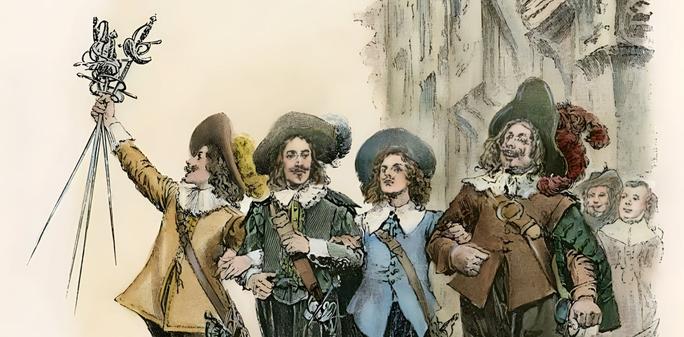
Alexandre Dumas’s The Three Musketeers, first published in 1844, continues to captivate readers due to its mix of adventure, historical context, and vivid characterisation. The novel introduces d’Artagnan, a young provincial noble, who forms an unlikely alliance with Athos, Porthos, and Aramis after a series of duels, establishing the famous motto “all for one, and one for all.” Rather than providing strict historical accuracy, Dumas blends 17th-century French politics, court intrigue, and social mobility with a narrative that emphasises comradeship, honour, and masculine identity. Each Musketeer embodies a distinct model of masculinity, reflecting the social and political expectations of their era: Athos represents restraint and noble authority, Porthos thrives on display and status, Aramis navigates between religious and worldly ambition, and d’Artagnan embodies adaptability and merit-based advancement. The novel also highlights the influence of women in political and personal spheres, with figures such as Queen Anne of Austria and Madame Bonacieux affecting outcomes through relationships and strategy. Its enduring relevance lies in the historically grounded, yet universally recognisable, depiction of loyalty, friendship, and political manoeuvring. The phrase “all for one, and one for all” endures not as nostalgia but as a model of solidarity built on risk, obligation, and shared action, illustrating how unity can be maintained in a competitive and mistrustful world.