17 Followers
98 Following
131 Posts
developer, ex mathematician, pretty far left, trying to find a post twitter landing site.
I think most people *should* try to have have 72 hours' worth of supplies on hand just on GP. But the EU offering that guidance in response to a specific escalation (and presumed expansion) of Russia's war on Ukraine is a really, really, really bad sign.
https://www.cnn.com/2025/03/26/europe/european-union-stockpile-member-states-intl-latam
EU urges citizens to stockpile 72 hours’ worth of supplies amid war risk

European Union citizens should stockpile enough food and other essential supplies to sustain them for at least 72 hours in the event of a crisis, the EU Commission has said.

CNN

The Electronic Frontier Foundation has released an open source project called Rayhunter. It is designed to run on an inexpensive (~$20) mobile hotspot and look for signs of mobile spying devices called cell-site simulators. Also known as Stingrays or IMSI catchers, they masquerade as legitimate cellphone towers, tricking phones w/in a certain radius into connecting to the device rather than a tower.

https://www.eff.org/deeplinks/2025/03/meet-rayhunter-new-open-source-tool-eff-detect-cellular-spying

Meet Rayhunter: A New Open Source Tool from EFF to Detect Cellular Spying

Rayhunter is a new open source tool we’ve created that runs off an affordable mobile hotspot that we hope empowers everyone, regardless of technical skill, to help search out cell-site simulators (CSS) around the world.

Electronic Frontier Foundation

Yeah sure ban TikTok,
it’s true, it does collect way too much data on its users.

But then also ban Facebook,
and ban Google,
and ban Instagram,
and ban Twitter,
and most importantly don’t forget to
ban ALL the proctoring software
and ban ALL the data brokers!

Do you see the problem here?

A ban will solve nothing.
Strong privacy regulations
with strong enforcement will.

#Privacy #PrivacyLaw #TikTok

#Random

"We will rebuild" is repeated a lot after climate disasters nowadays. Sadly, i don't think you can "rebuild it back like it was" and expect different results and a repeat nowadays.

Personally, I think the Japanese have the right idea with "Tsunami Stones"

Smithsonian: These Century-Old Stone “Tsunami Stones” Dot Japan’s Coastline

“Remember the calamity of the great tsunamis. Do not build any homes below this point.”

https://www.smithsonianmag.com/smart-news/century-old-warnings-against-tsunamis-dot-japans-coastline-180956448/

These Century-Old Stone "Tsunami Stones" Dot Japan’s Coastline

"Remember the calamity of the great tsunamis. Do not build any homes below this point."

Smithsonian Magazine

@strypey

Thanks for this.

@tzimmer_history has a good post this week about how to calibrate our crazy Trump shit alarms.

Let’s not oxygenate every Trump outrage, he says, instead ask 3 questions:

1. Who’s likely to be hurt?
2. Can this really happen/work?
3. What can we learn about American authoritarianism?

More (and clearer) here:

https://thomaszimmer.substack.com/p/navigating-the-nonsense-and-propaganda

Navigating the Nonsense and Propaganda of Clownish Authoritarianism

Ignoring what Trump says won’t work. Constant outrage is not a viable strategy either. We must find a more productive way to engage Trump’s dangerous outlandishness

Democracy Americana

I thought I understood the extent to which the broad availability of mobile location data has exacerbated countless privacy and security challenges. That is, until I was invited along with four other publications to be a virtual observer in a 2-week test run of Babel Street, a service that lets users draw a digital polygon around nearly any location on a map of the world, and view a time-lapse history of the mobile devices seen coming in and out of the area.

The issue isn't that there's some dodgy company offering this as a poorly-vetted service: It's that *anyone* willing to spend a little money can now build this capability themselves.

I'll be updating this story with links to reporting from other publications also invited, including 404 Media, Haaretz, NOTUS, and The New York Times. All of these stories will make clear that mobile location data is set to massively complicate several hot-button issues, from the tracking of suspected illegal immigrants or women seeking abortions, to harassing public servants who are already in the crosshairs over baseless conspiracy theories and increasingly hostile political rhetoric against government employees.

https://krebsonsecurity.com/2024/10/the-global-surveillance-free-for-all-in-mobile-ad-data/

The Global Surveillance Free-for-All in Mobile Ad Data – Krebs on Security

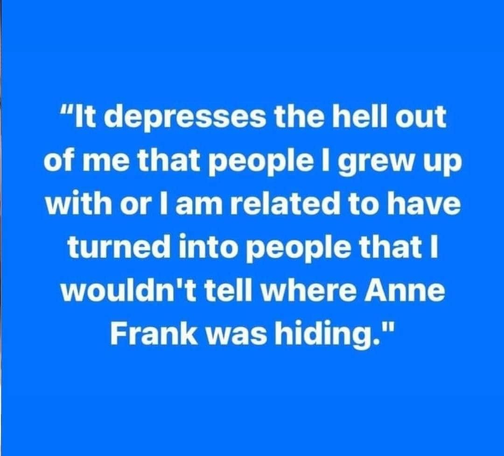
Well, this really hits hard, doesn't it?

#VoteBlue

Watch out, Mr. Waffles!!

For the last time:

Abyss = for staring into
Void = for screaming into

Please stop screaming into the abyss we are not insured for that

To Recap

The British Library:

- used unsupported, unpatched software as critical infra
- used multiple IT vendors with varying levels of access
- lacked sufficient in-house staff to coordinate a proper security policy
- lacked resources (or leadership, probably) to appropriately fund an infrastructure refresh program
- launched remote access during COVID
WITHOUT MFA

And although we cannot say for sure that the Terminal Server was the point of access, it's a good dang bet. Rhysida works smarter, not harder.

As usual, the reality of defense is not sexy malware research. It's not breathlessly shouting about patching 0-days. It's the quotidian work of getting the basics right, not taking shortcuts, and making security—across the CIA triad—a budget priority.

In cultural and educational institutions, it is very common to think of IT systems as an afterthought, or ancillary to the primary mission. These institutions maintain this mentality at their own considerable risk. This extends to the governments and organizations who fund these institutions.