Capitalism is going great
| OpenPGP | 23da7c0eaa711f0170013595b518d342eb2d4805 |

| OpenPGP | 23da7c0eaa711f0170013595b518d342eb2d4805 |
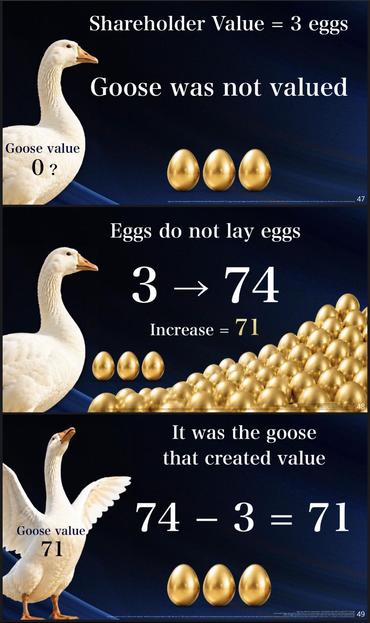
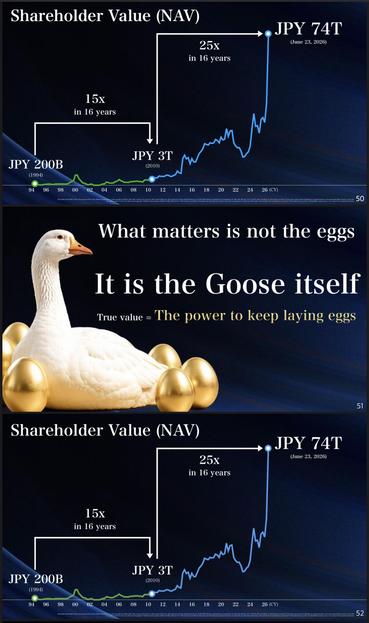
I extracted some goose from slide so you don't have to. Screengrab As A Service.
It was goose that created value.
Value is goose!
You are goose! Not factory!!!
Factory is where you work not who you are!


For any project that relies on collaboration, it doesn't matter how smart an individual is if they drive other people away. The underlying technical points might have a lot of merit, but I would not want to use a tool that would have me interact with people like that that would berate me for filing a bug. I would certainly not want to contribute code to such a project.
I am amazed how many people confuse "being a dick" with "having a personality". I hate the "asshole genius" trope because all it's done is convince assholes that they are geniuses, and non-geniuses to think the way to appear smart is to be an asshole.
If you can't communicate effectively ("play well with others"), you're not nearly as smart as you think you are. Smart people know how to get shit done, and the only way to get shit done at a scale beyond what any given human can do on their own is collaboration. And no one wants to collaborate with an asshole.
This is who they are...
Solidarity to #TritaParsi
And here’s @henry nailing the key point: it doesn’t matter if so-called AI “works.” What matters is that the value of your labor goes down, and workers are pushed further into precarity.
But what *really* matters, of course, is what we collectively decide to do about that.
The Subplot project (I and @kinnison) has written a policy on use of generative AI for contributing to Subplot. Summary: please don't.
Subplot is a tool to document what the acceptance criteria for a system are, and how they are verified.

Linus Torvalds has officially released Linux 7.1-rc3, and with it comes a stark proclamation: the days of modest, predictable patch cycles are over. The Linux kernel is now living in an era of massive, AI-fueled code surges, and Torvalds believes this is not a temporary spike but the new baseline for development. The AI-Driven Productivity Boom For the past few release cycles, Torvalds had noticed an unusual uptick in the volume of incoming kernel patches. Initially, he dismissed it as a temporary anomaly—a "blip" in the data. However, with the release of 7.1-rc3, he has changed his tune. Given that the kernel is well past its major version jump, yet the current release is significantly larger than expected for this stage in the cycle, Torvalds now asserts that this is the new normal. He attributes the surge directly to the widespread adoption of AI coding tools by developers. In previous cycles, this point in the release would see developers consolidating features. Now, AI tools enable them to be "a bit more productive," submitting more code each week and fundamentally altering the pace of kernel development. Networking Dominates, Hardware Support Expands This release cycle is heavily defined by networking. A full third (33%) of all patches are dedicated to networking core and drivers, making it the single largest area of focus. Beyond routine fixes, the update brings notable hardware compatibility improvements. For the first time, Linux 7.1-rc3 includes support for USB-C networking on Apple Macs. It also adds specialized audio handling for high-end DJ equipment, specifically the AlphaTheta (formerly Pioneer DJ) EUPHONIA series. On the architecture front, significant work has been poured into the Chinese LoongArch (LoongArch) CPU architecture, with patches targeting KVM virtualization performance and interrupt handling. Patch Distribution: Networking (33%) dominates the 7.1-rc3 cycle, followed by security/stability fixes and hardware support patches. A Surge in Memory Safety and the Rise of Rust One of the most interesting aspects of this release is the high volume of memory safety patches. These fixes, often targeting "use-after-free" vulnerabilities in drivers like Bluetooth and GPU modules, are a constant headache for kernel maintainers. However, the report notes a silver lining: the concurrent increase in the use of the Rust language within the kernel. Rust has memory safety built into its core design. As more kernel components are rewritten in Rust, the long-term hope is that the need for these high-volume, manual memory safety fixes will gradually diminish, leading to a more stable and secure kernel foundation. Key Hardware Additions: Apple Mac USB-C networking, AlphaTheta/Pioneer DJ EUPHONIA audio support. Looking Ahead: Stability and Timely Release With the patch volume reaching new heights, the immediate concern is whether this will delay the final release of Linux 7.1. Torvalds and the team are hopeful that the larger patch sets will not cause any delays, allowing the stable version to be pushed out to the public on schedule. A timely release is crucial for users eager to get support for new hardware, from the latest Apple Mac accessories to professional DJ equipment. For now, the Linux kernel is officially adapting to a faster, AI-accelerated development rhythm.
 Mx. Luna Corbden 🪿🐸
 Felix Reda
 nixCraft 🐧
 Esteban Küber
 Radical Graffiti
 stefania maurizi
 Ethan Marcotte
 Lars Wirzenius
 ell1e coding things