John P. Friel, Ph.D.

512 Followers
279 Following
592 Posts

Director of the Alabama Museum of Natural History • He/Him/His

I worked in natural history museums for over 24 years and have extensive experience in collections-based research, collections management, citizen-science programs, exhibit planning, fundraising, grant writing, and museum administration.

Verified Linkhttps://museums.ua.edu/people/john-friel/
Link Treehttps://linktr.ee/john.friel
I heard there was a barbeled fish
That morphometrics distinguish.
They called it Phenacorhamdia suia.
Brazilian catfish are diverse.
I don't think I could write a verse
For each to scan with Cohen's Hallelujah.

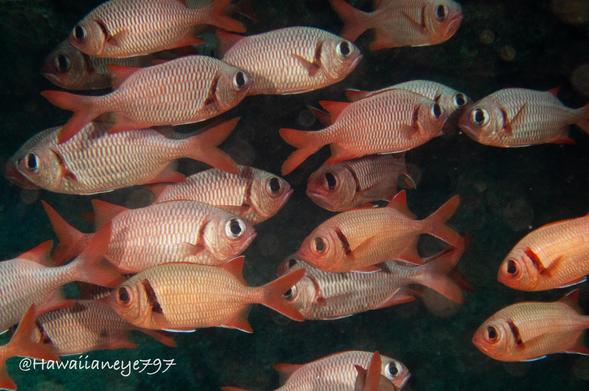
Found only in #Hawaii Blueline Surgeonfish feature fine wavy blue lines that cross their flattened oval bodies. Surgeonfish have small sharp "scalpels" at the base of their tails. Your #Hawaii #sealife #photooftheday

#animals #wildlife #nature #outdoors
#photography #nature #animals #climatechange #wildlife #environment #follow #outdoors #explore #camera #underwater #scubadiving #Visuallyimpaired #fish #Wednesday

Hi, do you care about #ballpythons and animal welfare?

Would you like to help fund an episodic docuseries exploring pythons in the wild, their role in the #reptile hobby and help sponsor a novel scientific study on #ballpython behavior and welfare in captivity?

If so, please check out this GoFundMe for the Ball Python Deep Dive Project:

https://www.gofundme.com/f/ball-python-deep-dive-project?utm_campaign=p_cf+share-flow-1&utm_content=undefined&utm_medium=copy_link&utm_source=customer&utm_term=undefined

#royalpython #snake #snakes

Tuesday’s #megafauna is xiphactinus, a #fish that lived between 112 and 65 million years ago. At up to 20 feet long, it is one of the largest bony fish to ever have lived. Its long, slender body would have allowed it to travel at high speeds, reaching 37 miles per hour. Its fanlike pectoral fins and large tail fin made it a powerful swimmer, capable of leaping from the water (like modern-day dolphins.) This has led to speculation that #xiphactinus could prey on pterosaurs by snatching them from the sky.

Whether or not the behemoth fish ate pterosaurs, it was definitely a voracious predator. Its sharp teeth and large size would have allowed it to feed on many smaller animals in the ocean, including fish, turtles, and even young mosasaurs. In one of the images below, a 13-foot-long xiphactinus skeleton contains the 6-foot long skeleton of a smaller fish–its last meal. However, another image shows a xiphactinus skeleton within the remains of a large shark--also xiphactinus's last meal, in a sense. Despite its appetite, xiphactinus was not an apex predator of the inland sea, and did sometimes fall prey to other, more vicious megafauna.

What is a species? Evolution is complicated and so are genetics, and defining the term can be a lot more difficult than you may think.

I spoke with Nancy Simmons (bat biologist & Curator-in-charge of the Department of Mammalogy at AMNH) and Bruno de Medeiros (entomologist & Assistant Curator of Insects at The Field Museum) about the challenges of not only describing new species, but also determining exactly what the word "species" entails.

https://www.cnn.com/2023/05/12/world/what-is-a-species-explainer-scn/index.html

#science #SciComm #species

A new study proposes why there are so few insects in the ocean, relating back to the oxygen-centric mechanism they use to harden their exoskeletons!
https://phys.org/news/2023-05-explanation-insects-ocean.html
Study offers explanation for why there are so few insects in the ocean

Scientists from Tokyo Metropolitan University have proposed a hypothesis for why insects are so rare in marine environments. They previously showed that insects evolved a unique chemical mechanism to harden their shells that uses molecular oxygen and an enzyme called multicopper oxidase-2 (MCO2). Now, they argue that this gives them a disadvantage in the sea, while it confers advantages that help them on land, placing MCO2 at the heart of insect eco-evolution.

Phys.org
After An Insect Detox, Can Once-Poisonous Frogs Get Their Spice Back?

Poison frogs living in human care aren’t poisonous, thanks to a “detox” diet of mild insects, like crickets and fruit flies. Can adding alkaloids to a frog’s diet help it regain its toxins and get its “spice” back?

Smithsonian's National Zoo