Arwyn Edwards

297 Followers
175 Following
112 Posts
Academic microbiologist for planetary health: polar ecology to pandemics, portable genomics & turkey basters. Toots only represent my metaorganism. Cymro.

#Evolution of the #snow #algae genus Raphidonema suggests divergence from a cosmopolitan genus to endemic phylotypes since the last ice age by #microevolution

New research in the ISME Journal on:
https://www.nature.com/articles/s41396-023-01359-3

#microbiology #biodiversity

Evolution of snow algae, from cosmopolitans to endemics, revealed by DNA analysis of ancient ice - The ISME Journal

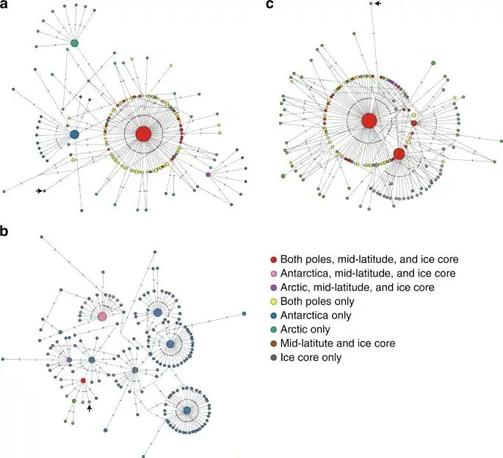
Recent studies of microbial biogeography have revealed the global distribution of cosmopolitans and dispersal of regional endemics, but little is known about how these processes are affected by microbial evolution. Here, we compared DNA sequences from snow/glacier algae found in an 8000-year-old ice from a glacier in central Asia with those from modern snow samples collected at 34 snow samples from globally distributed sites at the poles and mid-latitudes, to determine the evolutionary relationship between cosmopolitan and endemic phylotypes of snow algae. We further applied a coalescent theory–based demographic model to the DNA sequences. We found that the genus Raphidonema (Trebouxiophyceae) was distributed over both poles and mid-latitude regions and was detected in different ice core layers, corresponding to distinct time periods. Our results indicate that the modern cosmopolitan phylotypes belonging to Raphidonema were persistently present long before the last glacial period. Furthermore, endemic phylotypes originated from ancestral cosmopolitan phylotypes, suggesting that modern regional diversity of snow algae in the cryosphere is a product of microevolution. These findings suggest that the cosmopolitans dispersed across the world and then derived new localized endemics, which thus improves our understanding of microbial community formation by microevolution in natural environments.

Nature

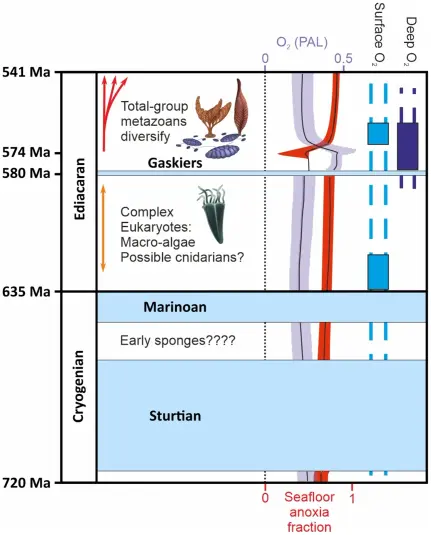
How Animals May Have Conquered #SnowballEarth https://eos.org/articles/how-animals-may-have-conquered-snowball-earth

Animal survival strategies in #Neoproterozoic ice worlds https://onlinelibrary.wiley.com/doi/full/10.1111/gcb.16393

Some modern #Antarctic inhabitants such as #anemones live upside down affixed to the underside of the sea ice. One of the favorite feeding strategies of #krill is grazing #microbes on this upturned plane. Perhaps early #animals foraged and found shelter in such locations, too.

How Animals May Have Conquered Snowball Earth

We know there were animals during Earth’s chilliest era. The question is, What did they look like?

Eos

Before Christmas I had a long chat with Dan Bennettt of the BBC about #viruses in the #Arctic and the risks they pose in the context of #climate change.

It may sound like it, but I promise I wasn't speaking down a drainpipe, just in my office's questionable acoustics - but a wide ranging chat about #microbes, #permafrost, #glaciers #feedbacks #genomics #WelshWeather https://www.sciencefocus.com/planet-earth/instant-genius-podcast-zombie-viruses-arctic/

Instant Genius Podcast: Zombie viruses in the Arctic, with Dr Arwyn Edwards

The world’s polar regions are melting. Beneath the ice lurks all kind of microbes, but how much of a threat do they really present?

BBC Science Focus Magazine
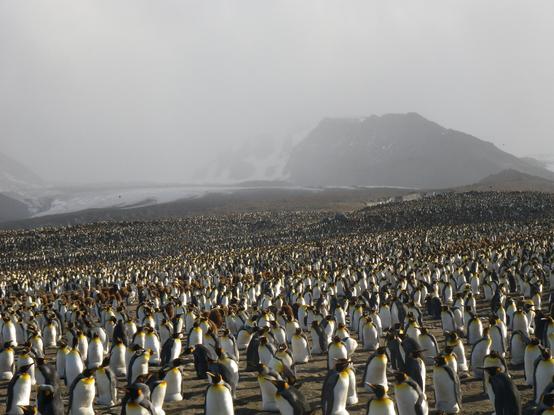
Most companionable neighbours for fieldwork on South Georgia #fieldworkfriday #fieldphotofriday

So how much organic stuff is on Saturn's moon Titan anyway?

A huge amount. Let's see if we can constrain it a bit.

Here is an artistic rendering of the greater Sikun Labyrinth region on Titan. Pretty much everything in this scene is stacks of organic molecules. Even those cliffs and deep canyons.

Everything. Organic. Molecules.
Whoa.

[short thread]

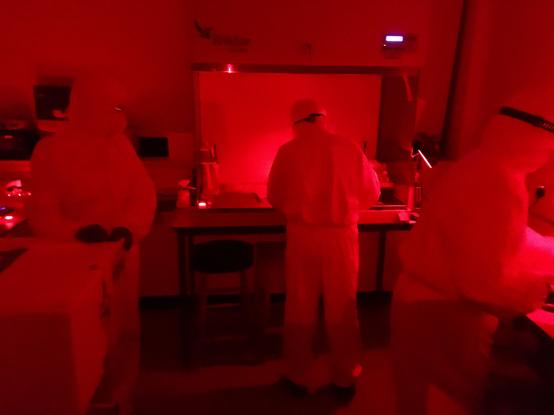
I haven't contributed as much here recently - been rather busy working with our #postdocs to process samples from #polarnight. As shown by one of the team, this requires a laser-like focus to avoid contamination or sample thawing while working in the dark...
Eisteddfa Gurig
Pandoravirus: the melting Arctic is releasing ancient germs – how worried should we be?

A Pandoravirus has been revived after remaining dormant in the Siberian permafrost for nearly 50,000 years.

The Conversation

What a weird #weather pattern in the #arctic right now..
Extremely anomalously warm over #Greenland, #Alaska #Svalbard + #BarentsSea
Cold over #Nunavut

#WeirdWeather
#PolarVortex
http://polarportal.dk/en/weather/nbsp/current-weather/

Current Weather: Polar Portal