89 Followers
109 Following
15 Posts
Science Comms | British Trust for Ornithology | Ornithologist | Naturalist | Volunteer | Author | Views my own. (he/him) #IntotheRedBirds #SciComms #Ornithology #UrbanEcology #Beetles
PronounsHe/Him
Twitter@MikeToms
Websitehttps://www.bto.org/about-bto/our-staff/mike-toms
A peek inside the gorgeous entomology notebook of a 19th century naturalist. https://blogs.loc.gov/manuscripts/2023/07/bugging-out-over-jacob-stauffers-sketches-of-insects-1859-1880/

Rare birds of prey regularly disappear on King’s #Norfolk estate of Sandringham and police do absolutely nothing…zero suprise.

Feudalism is of course alive and well in these parts. Professed love of nature by the royals has always been at odds with their shooting parties.

https://www.theguardian.com/uk-news/2023/jul/02/sandringham-royal-estate-linked-to-many-deaths-and-disappearances-of-protected-birds

Royal estate linked to many deaths and disappearances of protected birds

Cases linked to king’s Sandringham estate in Norfolk include alleged poisoning and shooting of some of UK’s rarest birds of prey

The Guardian
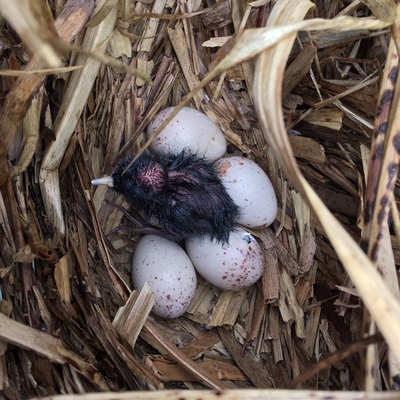
Our brood of Magpies, being monitored for the Nest Record Scheme, fledged on Thursday evening. The adults went from being quiet and unobtrusive around the nest to full on loud and angry once the chicks were out and in the surrounding bushes. Every Jackdaw, Crow and Kite now triggers a big response. A real privilege to follow these birds through from nest construction to fledging, especially as so few are monitored here in the UK despite being common and widespread.
Our paper published #openaccess today presents trends for 22 UK butterfly species in gardens, and shows increases in abundance generally larger than reported from wider countryside monitoring. A great example of #citizenscience https://resjournals.onlinelibrary.wiley.com/doi/full/10.1111/icad.12645
Fascinating review of the science behind the difficulties in communicating facts. One of the things we’ve been doing is using arts and culture approaches to tell convincing scientific narratives. "Why facts don't change minds: Insights from cognitive science for the improved communication of conservation research": https://www.sciencedirect.com/science/article/pii/S0006320722004396
Very sad to hear that Ronnie Blythe has died. His quiet voice on the countryside, mixing nature and rural communities, has always provided a link back to the generations that came before. A remarkable man, rooted in place and community. https://www.theguardian.com/books/2023/jan/15/ronald-blythe-obituary
Ronald Blythe obituary

Nature writer whose 1969 book Akenfield, a portrait of a rural life rapidly disappearing from view, was acclaimed as a classic

The Guardian

"Selecting specific wavelengths for ornamental lighting reduces the attraction of insects while maintaining adequate illumination of monuments for aesthetic purposes, resulting in a lower environmental impact on nocturnal insects."

Méndez et al (2022) Attraction of Insects to Ornamental Lighting Used on Cultural Heritage Buildings: A Case Study in an Urban Area

https://www.mdpi.com/2075-4450/13/12/1153

#insects #lightpollution #openaccess

Attraction of Insects to Ornamental Lighting Used on Cultural Heritage Buildings: A Case Study in an Urban Area

Artificial light at night (ALAN) reduces insect populations by altering their movements, foraging, reproduction, and predation. Although ALAN is mainly associated with streetlights and road networks, the ornamental illumination of monuments is making an increasing (but not well-studied) contribution. We compared insect attraction to two different types of light sources: a metal halide lamp (a type currently used to illuminate monuments) and an environmentally sound prototype lamp (CromaLux) comprising a combination of green and amber LEDs. The experiment was performed within the pilot CromaLux project in Santiago de Compostela (NW Spain). The abundance and diversity of the insects captured between June and October 2021 in the areas surrounding both light sources and in an unlit area were compared. By limiting the light emitted to amber and green, the CromaLux lamps reduced the number and diversity of insects, morphospecies, and orders attracted to the light, with similar numbers captured as in the unilluminated area, while a greater diversity of insects was captured beside the metal halide lamp. This effect has been demonstrated for almost all insect orders trapped, especially in Diptera, Lepidoptera, Coleoptera, Hemiptera, and Hymenoptera. On the contrary, Psocoptera showed a similar attraction to the CromaLux and metal halide lamps, a phenomenon whose causes deserve further investigation. As expected, Diptera were the most diverse and abundant insects in all samples, but the abundance of Lepidoptera was unexpectedly low (4%), which is in line with the worldwide evidence of the progressive decline of populations of this group. The study findings provide evidence that selecting specific wavelengths for ornamental lighting reduces the attraction of insects while maintaining adequate illumination of monuments for aesthetic purposes, resulting in a lower environmental impact on nocturnal insects. This study provides reference data for developing principles of good practices leading to possible regulatory and legal solutions and the incorporation of specific measures for artificial lighting of monuments and urban structures.

MDPI
Confuciusornis shifan; a newly described from the Jehol Biota in China. Due to ash preservation, many of its fossils are found with soft tissues intact. This is also one of the best fossil sites in the world for early birds. Love the feather preservation in this sample.
#fossils #paleontology
https://www.nature.com/articles/s42003-022-04316-6
A new confuciusornithid bird with a secondary epiphyseal ossification reveals phylogenetic changes in confuciusornithid flight mode - Communications Biology

A new species of Confuciusornis, a genus of basal birds from the Early Cretaceous, reveals that these early birds had stronger flight capability and more diverse flight modes than previously expected.

Nature

Did you know that as well as being completely adorable, springtails have super-smart skin?

The structures of their exoskeletons are so amazingly effective at repelling water, dirt and microbes that materials scientists are trying to reverse-engineer their surfaces to improve water filters, streamline ships' hulls and even make smudge-proof smartphone screens!

More info in a university article here here: https://www.dur.ac.uk/news/newsitem/?itemno=39286

#SoilFauna #SoilBiodiversity #Collembodon #Collembola #Springtail #SoilMesofauna #MacroPhotography #SoilEcology #Soil

How a tiny bug inspires surfaces that don’t get wet - Durham University

Pilot study by colleagues in #BirdStudy suggests urban sites might be a sink habitat for wider countryside Blue Tit and Great Tit populations. Using #ColourRinging and resighting to look at movements between urban and rural sites. #BTOScience #UrbanEcology #FreeToView https://www.tandfonline.com/doi/full/10.1080/00063657.2022.2139814
Evidence that rural wintering bird populations supplement suburban breeding populations

Blue Tits Cyanistes caeruleus and Great Tits Parus major wintering in rural areas tended to move further to breed the following breeding season and more frequently cross the urban–rural boundary, t...
Taylor & Francis