Mayuri Sadoine 🧫🌿🔬

158 Followers
79 Following
49 Posts
Tenure-Track Junior Professor (she/her) Exploring Impacts of Climate Change on Plant-Microbe Interactions #biosensors #ClimateActions #NewPI 🇪🇺🇺🇦
Personal websitehttps://mayurisadoine.owlstown.net
Linkedinhttps://www.linkedin.com/in/mayuri-sadoine-7082694b/
Bluesky@mayurisadoine.bsky.social

A very warm welcome to Bethel Tadesse 🎉 who will be joining my team next week as an Assistant Engineer 🔧✨

Learn more about Bethel here 👉 https://spmir-group.academicwebsite.com/people

Wishing you a wonderful start, Bethel 🌟 I’m truly excited to tackle new challenges together and to see all the great things we’ll achieve 🤝🚀

#Engineering #Research #Collaboration #Teamwork

SPMIR Group - People

A very warm welcome to Théo Perche 🎉 who will be joining my team as a PhD candidate next week 🚀 for a big adventure with us!

To learn more about Théo, check out 👉 https://spmir-group.academicwebsite.com/people

Wishing you the best possible start, Théo 🌟 — I’m really looking forward to collaborating with you on this exciting project 🤝✨

#PhD #Research #Collaboration #NewBeginnings #Teamwork #ScienceJourney

SPMIR Group - People

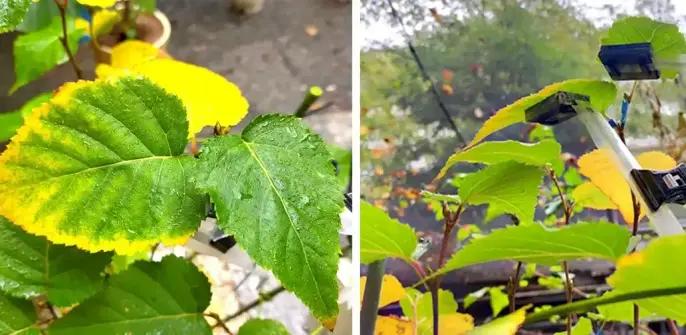
New Smart #Agriculture Technology for Monitoring Plants

Researchers have developed leaf-mounted sensor to monitor #plants health & stress. This device tracks changes in leaf color, providing real-time data on #plant conditions. Affordable and precise, it supports smart agriculture by enabling farmers to address stress-prone areas efficiently, boosting crop yields and resource management.

https://globalplantcouncil.org/new-smart-agriculture-technology-for-monitoring-plants/ #science

Ethylene and epoxyethane metabolism in methanotrophic bacteria: comparative genomics and physiological studies using Methylohalobius crimeensis https://www.microbiologyresearch.org/content/journal/mgen/10.1099/mgen.0.001306?TRACK=RSS
Ethylene and epoxyethane metabolism in methanotrophic bacteria: comparative genomics and physiological studies using Methylohalobius crimeensis

The genome of the methanotrophic bacterium Methylohalobius crimeensis strain 10Ki contains a gene cluster that encodes a putative coenzyme-M (CoM)-dependent pathway for oxidation of epoxyethane, based on homology to genes in bacteria that grow on ethylene and propylene as sole substrates. An alkene monooxygenase was not detected in the M. crimeensis genome, so epoxyethane is likely produced from co-oxidation of ethylene by the methane monooxygenase enzyme. Similar gene clusters were detected in about 10% of available genomes from aerobic methanotrophic bacteria, primarily strains grown from rice paddies and other wetlands. The sparse occurrence of the gene cluster across distant phylogenetic groups suggests that multiple lateral gene transfer events have occurred in methanotrophs. In support of this, the gene cluster in M. crimeensis was detected within a large genomic island predicted using multiple methods. Growth studies, reverse transcription-quantitative PCR (RT-qPCR) and proteomics were performed to examine the expression of these genes in M. crimeensis. Growth and methane oxidation activity were completely inhibited by the addition of >0.5% (v/v) ethylene to the headspace of cultures, but at 0.125% and below, the inhibition was only partial, and ethylene was gradually oxidized. The etnE gene encoding epoxyalkane:CoM transferase was strongly upregulated in ethylene-exposed cells based on RT-qPCR. Proteomics analysis confirmed that EtnE and nine other proteins encoded in the same gene cluster became much more predominant after cells were exposed to ethylene. The results suggest that ethylene is strongly inhibitory to M. crimeensis, but the bacterium responds to ethylene exposure by expressing an epoxide oxidation system similar to that used by bacteria that grow on alkenes. In the obligate methanotroph M. crimeensis, this system does not facilitate growth on ethylene but likely alleviates toxicity of epoxyethane formed through ethylene co-oxidation by particulate methane monooxygenase. The presence of predicted epoxide detoxification systems in several other wetland methanotrophs suggests that co-oxidation of ambient ethylene presents a stress for methanotrophic bacteria in these environments and that epoxyethane removal has adaptive value.

microbiologyresearch.org

New PI diaries: Hiring people and building a lab

Read this latest 'diary entry' from Margot Smit, a new PI from the Center for Plant Molecular Biology (ZMBP), University of Tübingen:

https://thenode.biologists.com/hiring-people-and-building-a-lab/careers/

New PI diaries: Hiring people and building a lab - the Node

On my first day at the ZMBP last October I saw our lab space and my first thought was ‘I have a lab!’. A little over half a year later, this May, our lab

the Node
♻️🆓: Is a seasonally reduced growth potential a convergent strategy to survive drought and frost in plants?
https://doi.org/10.1093/aob/mcac153
Is a seasonally reduced growth potential a convergent strategy to survive drought and frost in plants?

AbstractBackground. Plants have adapted to survive seasonal life-threatening frost and drought. However, the timing and frequency of such events are impacted by

OUP Academic
Digital Microbe: a genome-informed data integration framework for team science on emerging model organisms https://www.nature.com/articles/s41597-024-03778-z
Digital Microbe: a genome-informed data integration framework for team science on emerging model organisms - Scientific Data

The remarkable pace of genomic data generation is rapidly transforming our understanding of life at the micron scale. Yet this data stream also creates challenges for team science. A single microbe can have multiple versions of genome architecture, functional gene annotations, and gene identifiers; additionally, the lack of mechanisms for collating and preserving advances in this knowledge raises barriers to community coalescence around shared datasets. “Digital Microbes” are frameworks for interoperable and reproducible collaborative science through open source, community-curated data packages built on a (pan)genomic foundation. Housed within an integrative software environment, Digital Microbes ensure real-time alignment of research efforts for collaborative teams and facilitate novel scientific insights as new layers of data are added. Here we describe two Digital Microbes: 1) the heterotrophic marine bacterium Ruegeria pomeroyi DSS-3 with > 100 transcriptomic datasets from lab and field studies, and 2) the pangenome of the cosmopolitan marine heterotroph Alteromonas containing 339 genomes. Examples demonstrate how an integrated framework collating public (pan)genome-informed data can generate novel and reproducible findings.

Nature

#PlantScience Research Weekly: Sept 22 (https://plantae.org/plant-science-research-weekly-sept-22-2023/)
Reviews: Rapid auxin signaling;
Plant genome evolution; Nanotechnology & insights from cross-kingdom RNA;

*Time to fight the over-hype;
*MAPs & tomato fruit shape; *Wild rice relative to improve drought tolerance;
*Bacterial pathogens deliver channels to plant cells;
*Mutualist-pathogen transition of plant-fungal interaction; *Putting conservation gardening on the map;
*Large effect genetic trade-off caused by CBF2

Plant Science Research Weekly: Sept. 22, 2023 | Plantae

Review: Rapid auxin signaling: Unknowns old and new You might think you’ve read enough about auxin, but I recommend you take this opportunity to read one more article, this very interesting and…

Plantae

Seven plant capacities to adapt to abiotic stress:

1️⃣ Energy
2️⃣ Repair
3️⃣ Communication
4️⃣ Supply-chain
5️⃣ Exclusion
6️⃣ Shape-shifting
7️⃣ Asset management

https://doi.org/10.1093/jxb/erad179

#DarwinReview by Rana Munns and A Harvey Millar

#Cold #Deficiency #Drought #Flooding #Heat #Nutrient #Oxidative #Salinity #Toxicity #Stress #AbioticStress

Seven plant capacities to adapt to abiotic stress

This review presents seven inherent plant capacities that are essential for reproductive success during the stresses of drought, salinity, flooding, temperature

OUP Academic
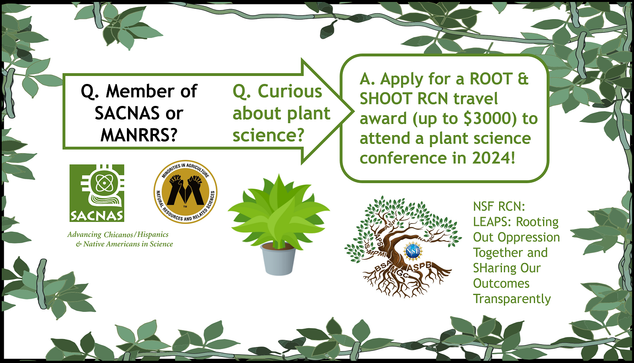
Like #PlantScience? Member of MANRRS or SACNAS? The NSF-funded ROOT & SHOOT program has 10 generous travel awards for student/mentor pairs (at least one a member of MANRRS or SACNAS) to attend a plant science conference in 2024.
https://rootandshoot.org/2024-root-shoot-sacnas-manrrs-travel-award-application-open/
Apply by November 10, 2023
ROOT & SHOOT SACNAS/MANRRS 2024 travel award application open – ROOT & SHOOT