Using AI as a teaching partner: enhancing critical thinking and digital literacy in microbiology https://journals.asm.org/doi/10.1128/jmbe.00326-25

Cameron Thrash
- 228 Followers
- 117 Following
- 7.1K Posts
Professor, USC Marine and Environmental Biology, microbe hunter. Not a bot. he/him
End-to-end mapping of membrane transport from chemical structure to microorganisms https://www.biorxiv.org/content/10.64898/2026.05.12.724480v1?rss=1
Coarse-graining metabolic networks via feature learning reveals cross-species growth laws https://www.biorxiv.org/content/10.64898/2026.05.13.725055v1
Cultivation-independent high-quality microbial genome reconstruction from environmental samples with midi-metagenomics https://genome.cshlp.org/content/early/2026/05/14/gr280099124
Cultivation-independent high-quality microbial genome reconstruction from environmental samples with midi-metagenomics
Since the majority of microbial organisms still evade cultivation attempts, genomic insights into many taxa are limited to cultivation-independent approaches. However, current methods of metagenomics and single-cell genome sequencing have individual drawbacks, which can limit the quality as well as completeness of the reconstructed genomes. Current attempts to combine both approaches still use whole genome amplification techniques which are prone to bias. Here, we propose a novel approach for the purpose of genome reconstructions that utilizes the potential of cell sorting for targeted enrichment and depletion of different cell types to create distinct cell fractions with sufficient DNA amounts, circumventing amplification. By distributing sequencing efforts over these fractions as well as the original sample, coassemblies become highly optimized for coabundance variation based binning approaches. "Midi-metagenomics" enables accurate metagenome-assembled genome (MAG) reconstruction from individual sorted samples with higher quality than coassembly and binning of multiple distinct samples and therefore improves analyses of the so-called "microbial dark matter".
Mechanisms of chromosomal DNA replication in Escherichia coli and Bacillus subtilis https://academic.oup.com/femsre/advance-article/doi/10.1093/femsre/fuag021/8678207?rss=1
Dependency–Competition Tradeoffs Structure Microbial Niches and Nitrogen Cycling https://academic.oup.com/ismecommun/advance-article/doi/10.1093/ismeco/ycag134/8678967
Bacterial Physiology in the Context of Algal Partners https://www.annualreviews.org/content/journals/10.1146/annurev-micro-042924-052612?TRACK=RSS

Bacterial Physiology in the Context of Algal Partners
Marine bacteria display diverse lifestyles, many of which are shaped by close associations with microalgal partners. In the photic zone, where microalgae fix carbon through photosynthesis, bacteria consume algal-derived organic matter and often exhibit growth patterns that mirror algal activity and abundance. These interactions expose bacteria to strong fluctuations, with bursts of algal exudates during high productivity alternating with periods of scarcity. To cope, algal-associated bacteria have evolved strategies that balance rapid growth with the ability to endure starvation. This review highlights current knowledge and open questions in the physiology of algal-associated bacteria across three stages: the growth phase, supported by algal resources; the starvation phase, marked by storage strategies and a regulated decrease in cellular functions; and the transitions between these states, shaped by algal cues and corresponding bacterial responses. I hope this synthesis of our current understanding and the challenges ahead will inspire broader recognition of the importance and excitement of studying bacterial physiology in an environmental context.
Genome-scale metabolic model guided metabolic flux analysis in the endophyte Alternaria burnsii NCIM1409 https://link.springer.com/article/10.1007/s00449-026-03338-2
Genome-scale metabolic model guided metabolic flux analysis in the endophyte Alternaria burnsii NCIM1409 - Bioprocess and Biosystems Engineering
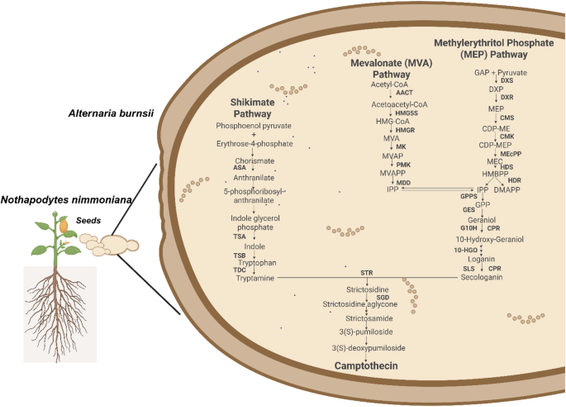
Camptothecin (CPT), a monoterpene indole alkaloid widely used in anticancer therapy, faces production bottlenecks arising from its plant-based origin. In this study, we systematically investigated the metabolic network of the camptothecin-producing fungal endophyte Alternaria burnsii NCIM1409 using an integrative framework combining genome-scale metabolic modeling and 13C-based pathway analysis. A genome-scale metabolic model, AltGEM iDD1552, was reconstructed, encompassing 2,188 reactions, 2,148 metabolites, and 1,552 genes, and was manually curated to incorporate camptothecin biosynthetic pathways. Key enzymatic control points, including secologanin synthase and tryptophan decarboxylase, as potential targets were identified using flux balance for enhancing CPT production. Additionally, metabolic tracer analysis using 20% [U-13C6] glucose and 99% [1-13 C] glucose labeling confirmed the active involvement of glycolysis, the pentose phosphate pathway, and the tricarboxylic acid cycle in central carbon metabolism. Overall, this study establishes a systems-level framework for understanding and optimizing camptothecin biosynthesis in A. burnsii NCIM1409. Collectively, this integrative systems-level analysis elucidates the metabolic capabilities of A. burnsii NCIM1409 and provides rational strategies for optimizing camptothecin biosynthesis, laying the groundwork for sustainable microbial production of this high-value anticancer compound.
Practical guide for marine exo-metabolomic sample preparation https://academic.oup.com/ismej/advance-article/doi/10.1093/ismejo/wrag115/8676650
Isolation, identification, and characterization of low-density polyethylene (LDPE) degrading bacterial isolates from a river water ecosystem https://link.springer.com/article/10.1007/s00203-026-04947-x
Isolation, identification, and characterization of low-density polyethylene (LDPE) degrading bacterial isolates from a river water ecosystem - Archives of Microbiology
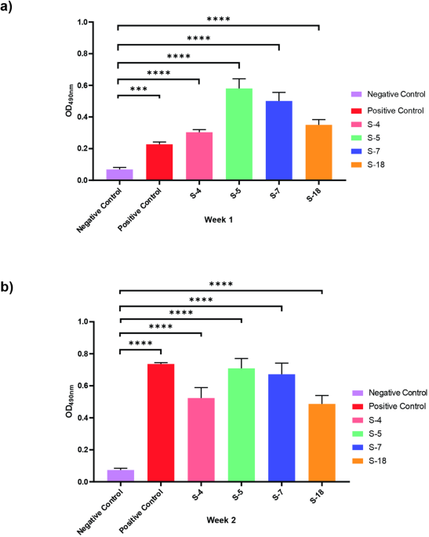
The increasing accumulation of low-density polyethylene (LDPE) waste in the environment poses a growing threat to natural ecosystems due to its resistance to degradation. In this study, bacterial isolates were screened for their LDPE-degrading capability. Four distinct bacterial strains were isolated based on their ability to degrade polyethylene, out of which the strain identified as Serratia nematodiphila demonstrated the highest LDPE degradation activity of 1.53%. The other strains identified as Escherichia coli, Priestia aryabhattai, and Raoultella ornithinolytica also demonstrated LDPE degradation activity ranging from 0.36 to 1.11%. The LPDE degradation led to surface erosion and microbial colonization. The attenuated total reflectance-Fourier transform infrared analysis also indicated bond cleavage through changes in characteristic functional groups of the LDPE strip. The high-performance liquid chromatography–tandem mass spectrometry analysis detected multiple oxidative degradation byproducts, including polyethylene glycol derivatives, esters, and fatty acids in the synthetic media suggesting microbial assimilation of LDPE fragments as carbon sources. This study demonstrates the ability of bacterial strains isolated from the river water ecosystem to utilize the UV-pretreated LDPE as the sole carbon source for potential use in plastic waste management.