
Markus Wagner

360 Followers
238 Following
284 Posts

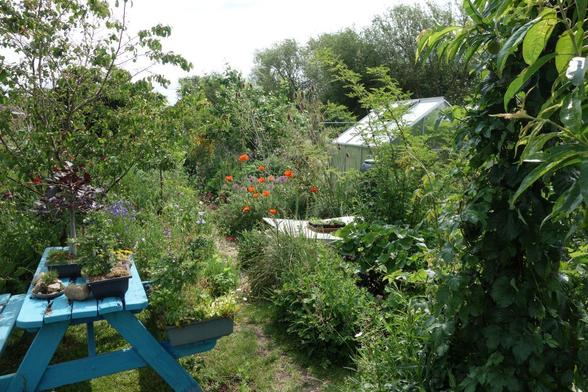
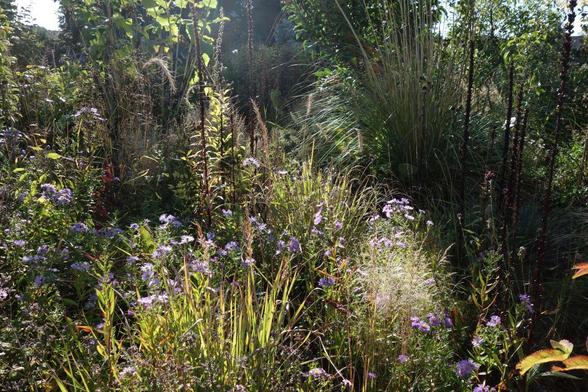
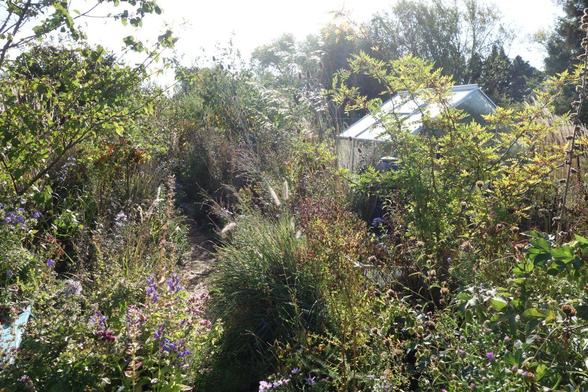
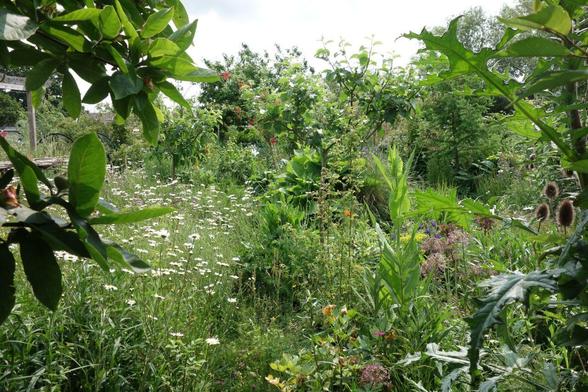
If you live in the UK you can vote for my wildlife and climate-change allotment garden in a big BBC Gardeners’ World Magazine garden competition which wants to find the best garden out of 20 past winners (I am Nadine Mitschunas, Judge`s Choice Winner 2021):

Gardens of the Year 2026 - Best of the Best

https://www.gardenersworld.com/news/gardens-of-the-year-2026-best-of-the-best/

My allotment is full of flowers, fruit and veg and a happy place not just for me but all the wildlife as well. 🦋 🐝 🕷️
The Alpine Research Sites in the Stubai Valley: The @uniinnsbruck operates two research sites in the Stubai Valley, which form the LTER Master Site Stubai (https://deims.org/324f92a3-5940-4790-9738-5aa21992511c). They comprise cultivated and abandoned meadows and pastures and a subalpine forest. Main research topics are the influence of land use and drought events on ecosystem processes. For more information on these and other sites please visit our website: https://www.uibk.ac.at/fakultaeten/biologie/alpine-forschungsstaetten/index.html.en
#alpine_research #research
Stubai (combination of Neustift meadows and Kaserstattalm) - Austria | DEIMS-SDR

The LTER grassland sites in the Stubai Valley are situated near the village of Neustift (47° 7′ N, 11° 18′ E). They include a valley bottom meadow at 970 m a.s.l., cut 3-4 times per year, as well as three grasslands differing in land use, which are located on the mountain slope in the vicinity of the Kaserstattalm: a mountain meadow at 1810 m a.s.l. (one cut, lightly grazed in late summer), a pasture at 1870 m a.s.l. and a grassland at 1980 m a.s.l., which was abandoned in 1984. Documentation of management history and vegetation dynamics of the whole area date back to 1865, and detailed information on the current socio-economic situation and future land-use scenarios is available.

My first ever blog, written with Journal of Ecology Biological Flora Editor Tony Davy and Richard Jefferson, about some detective work for our recent Meadow Crane's-bill account:

'The (malic) acid test in the Biological Flora of Geranium pratense: a cautionary tale'

https://jecologyblog.com/2023/11/09/the-malic-acid-test-in-the-biological-flora-of-geranium-pratense-a-cautionary-tale/

#grassland #plants

The (malic) acid test in the Biological Flora of Geranium pratense: a cautionary tale

While producing the recent Biological Flora account for Meadow Crane’s-bill, Geranium pratense L., its authors stumbled on an extraordinary error that had been perpetuated and elaborated in the lit…

Journal of Ecology Blog

Repost from @JEcology

The latest #BiologicalFlora of Britain & Ireland contains info on all aspects of the #ecology of #meadow cranesbill, Geranium pratense

Read the blog👉https://jecologyblog.com/2023/10/19/the-ecology-conservation-of-meadow-cranes-bill-geranium-pratense/

Read the full account👉https://besjournals.onlinelibrary.wiley.com/doi/10.1111/1365-2745.14205

The ecology & conservation of meadow crane’s-bill (Geranium pratense)

Richard Jefferson and colleagues highlight some fascinating aspects of the ecology and conservation of meadow crane’s-bill in their recently published Biological Flora of Britain and Ireland: Geran…

Journal of Ecology Blog
Orsi Valko introducing keynote speaker Andras Kelemen on the first day of the 18th Eurasian #Grassland Conference #EDGG_EGC2023 today at the Körös-Maros National Park Visitor Centre in Szarvas, Hungary. Very much looking forward to an interesting week in the company of likeminded grassland researchers!

I just discovered that in our recent mob grazing paper Allan Savory's surname had been changed during article production to 'Savoury'. In one instance also to lower-case. 🤔

While I don't share his belief of the enormous benefits of holistic grazing, I am also doubtful about the need to bring his name in line with British English.

This is annoying but at the same time it demonstrates the importance of carefully checking page proofs. I thought I had done that but obviously not carefully enough.

Structured Decision Making Remains Underused in Ecological Restoration Despite Opportunities ($)

https://link.springer.com/article/10.1007/s10669-023-09940-z

Ecological restoration has yet to fully adopt structured decision making (SDM). This six-step framework balances stakeholder values and evaluates alternatives, paving the way for transparent decisions, wiser use of resources and more effective outcomes. 🌱

#Botany #BotanyAI

Structured decision making remains underused in ecological restoration despite opportunities - Environment Systems and Decisions

Ecological restoration is considered an essential activity as we attempt to repair anthropogenic degradation. Yet, resources are limited and it is important that efforts focus on activities that are effective and yield successful restoration. Structured decision making (SDM) is an organized framework that is designed to incorporate differing values across stakeholders and evaluate alternatives. The SDM framework typically consists of six steps: define the decision problem, define objectives and evaluation criteria, develop alternatives, estimate consequences, evaluate trade-offs, and decide, implement, and monitor. Here, we posit that SDM is well suited for ecological restoration, yet remains underused. Specifically, tools such as stakeholder surveys, conceptual modeling, and multi-criteria decision analysis are notably useful in ecological restoration and can be applied under the SDM framework to ensure robust and transparent decision making. We illustrate the application of SDM to ecological restoration with case studies that used SDM alongside ecosystem service assessments, for species-as-risk management, and to assess action desirability across large and diverse stakeholder groups. Finally, we demonstrate how SDM is equipped to handle many of the challenges associated with ecological restoration by identifying commonalities. We contend that increased use of SDM for ecological restoration by environmental managers has the potential to yield wise use of limited resources and more effective restoration outcomes.

SpringerLink

I have only just come across this open access resource compiled by Henniges et al. but it looks very useful:

'A taxonomic, genetic and ecological data resource for the vascular plants of Britain and Ireland'

https://www.nature.com/articles/s41597-021-01104-5

#botany #ecology #taxonomy

A taxonomic, genetic and ecological data resource for the vascular plants of Britain and Ireland - Scientific Data

Measurement(s) Plant Taxonomy • Native status • Functional traits • Ellenberg indicator values • Life strategy • Associated biome • Origin of non-native species • Species distribution • Hybrid propensity • DNA barcodes • Genome size • Chromosome number Technology Type(s) digital curation • flow cytometry • Chromosome counts Sample Characteristic - Organism Tracheophyta Sample Characteristic - Environment archipelago Sample Characteristic - Location Great Britain • Ireland Machine-accessible metadata file describing the reported data: https://doi.org/10.6084/m9.figshare.16451142

Nature

Negative prospects for the #BlackForest: a new study raises concern that #forests in this region become increasingly #vulnerable in response to anticipated future #warming and #drought, even in environments that are commonly not considered water-limited. (or one should better say were not considered water limited before the impacts of #ClimateChange became clearly visible)

https://onlinelibrary.wiley.com/doi/10.1111/gcb.16897

It was great to be able to explain a bit about some of the work Green Shores is doing to restore saltmarsh in Scotland to the #Deluge project, as part of #ArtWalkPorty
We were at the salt marsh at Aberlady (not one of our restoration sites), a beautiful location with a board walk over the marsh to provide access to the beach beyond and prevent damage to the fragile habitat.
#Saltmarsh #NatureRestorationFund #Aberlady #AberladyNatureReserve