Dr. Julia V. Seidel

724 Followers
218 Following
158 Posts
-Fellow at ESO, now at the Observatory of the Côte d'Azur
-Won't shut up about the climate. Ours and extra-terrestrial.
hashtags#astronomy #exoplanets #astrophysics #climate
pronounsshe/her, sie/ihr
politicsüberzeugte Grüne

Doctor @JuliaVSeidel has been working on understanding the atmospheres of ultra-hot Jupiters and recently had a study published on spectroscopic observations with the Very Large Telescope of the layers of the atmosphere of Tylos (WASP-121b), 858 light-years away.

https://www.eso.org/public/news/eso2504/

“Out of science fiction”: First 3D observations of an exoplanet’s atmosphere reveal a unique climate

Astronomers have peered through the atmosphere of a planet beyond the Solar System, mapping its 3D structure for the first time. By combining all four telescope units of the European Southern Observatory’s Very Large Telescope (ESO’s VLT), they found powerful winds carrying chemical elements like iron and titanium, creating intricate weather patterns across the planet’s atmosphere. The discovery opens the door for detailed studies of the chemical makeup and weather of other alien worlds.

www.eso.org

Next up, we got @JuliaVSeidel about the biggest eye on the sky: the time-resolved winds of WASP-121 b in ESPRESSO‘s 4- UT mode ☕️ 🔭

Julia‘s favourite element on the periodic table is definitely sodium and she uses the superpower of ESPRESSO on the VLT to use all 4 unit telescopes as one big 16-m telescope 🤩

High SNR observations also reveals sub-features corresponding to winds of different kinds. #exoplanets5

I’m having my first proud #supervisor moment! 🤩

During my #studentship at #ESO in Chile, I had the opportunity to help @JuliaVSeidel supervising Yuri Damasceno during his master’s thesis. In his project, he studied the atmosphere of the ultra-hot Jupiter WASP-178 b 🪐 🔥

Yuri has done absolutely amazing work; go check out his #paper on #arXiv today: https://arxiv.org/abs/2406.08348

I want to thank you, Julia, for letting me have such a wonderful first supervision experience. For many more to come!

The atmospheric composition of the ultra-hot Jupiter WASP-178 b observed with ESPRESSO

We search for atmospheric constituents for the UHJ WASP-178 b with two ESPRESSO transits using the narrow-band and cross-correlation techniques, focusing on the detections of NaI, H$α$, H$β$, H$γ$, MgI, FeI and FeII. Additionally, we show parallel photometry used to obtain updated and precise stellar, planetary and orbital parameters. We report the resolved line detections of NaI (5.5 and 5.4 $σ$), H$α$ (13 $σ$), H$β$ (7.1 $σ$), and tentatively MgI (4.6 $σ$). In cross-correlation, we confirm the MgI detection (7.8 and 5.8 $σ$) and additionally report the detections of FeI (12 and 10 $σ$) and FeII (11 and 8.4 $σ$), on both nights separately. The detection of MgI remains tentative, however, due to the differing results between both nights, as well as compared with the narrow-band derived properties. None of our resolved spectral lines probing the mid- to upper atmosphere show significant shifts relative to the planetary rest frame, however H$α$ and H$β$ exhibit line broadenings of 39.6 $\pm$ 2.1 km/s and 27.6 $\pm$ 4.6 km/s, respectively, indicating the onset of possible escape. WASP-178 b differs from similar UHJ with its lack of strong atmospheric dynamics in the upper atmosphere, however the broadening seen for FeI (15.66 $\pm$ 0.58 km/s) and FeII (11.32 $\pm$ 0.52 km/s) could indicate the presence of winds in the mid-atmosphere. Future studies on the impact of the flux variability caused by the host star activity might shed more light on the subject. Previous work indicated the presence of SiO cloud-precursors in the atmosphere of WASP-178 b and a lack of MgI and FeII. However, our results suggest that a scenario where the planetary atmosphere is dominated by MgI and FeII is more likely. In light of our results, we encourage future observations to further elucidate these atmospheric properties.

arXiv.org

@JuliaVSeidel High-res / SNR observations allow resolving sub-features! So instead of taking the whole transit now, we can also just take parts of it and resolve it in time. If you do that, you see that the sub feature comes from egress suggesting dynamics in the form of an equatorial jet. So what those ingress show us?

Does it confirm the jet, suggest radial winds or is it a global day to nightside wind? We‘ll friends, I am not allowed to share it with you. Stay tuned! 🤫🚫 #ExSSV

Was die Sonne tagsüber einstrahlt, geben Beton, Asphalt, Holz und Stein nachts als Infrarotstrahlung wieder ab. Forschende sehen in diesem Prozess nun eine Chance für eine neue Energiequelle: Solarzellen, die auch nachts Strom erzeugen können. @radiermann  https://www.riffreporter.de/de/technik/photovoltaik-solarenergie-sonnenstrom-nacht-erneuerbare-solarstrom-infrarot
Sonnenstrom bei Nacht: Neuartige Solarzellen erzeugen im Dunkeln Energie

Die Solarzellen nutzen Wärme, die Oberflächen nach Sonnenuntergang abstrahlen. Das Potenzial verwerten sie allerdings bislang nur zu einem Bruchteil.

RiffReporter
I know rest and recovery is important to be a happy little human (and I just came back from holidays), but over Easter I will work on coding up a new thing and I am SO LOOKING FORWARD TO A WEEK OF UNINTERRUPTED CODING AAAHHHHHH

I have seen a few fellow researchers doing the #MonthOfArXiv on the bird app and I am really intrigued to try it.

The goal is to read and write a thread about a #paper on #arXiV every day (where there are new papers ofc). Anyone up for a #challenge together?

@phdstudents #phdlife #academia #phdjourney

85 years ago.

In April 1938, Guy Callendar published his seminal paper showing that Earth’s land areas had warmed over the previous 50 years.

He also suggested that man-made CO₂ emissions had caused around half of the observed warming.

85 years ago.

https://rmets.onlinelibrary.wiley.com/doi/abs/10.1002/qj.49706427503

I see some new faces from the #TwitterMigration so here's an #introduction for the newcomers.

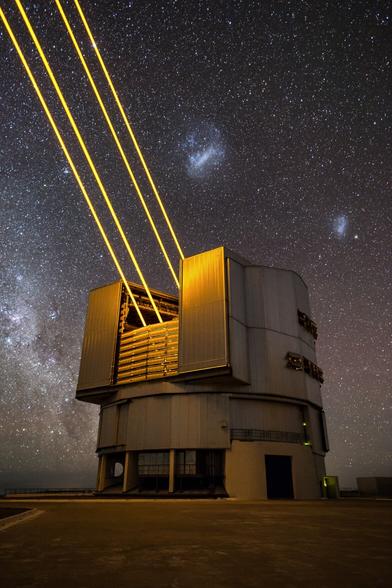
Hi! I'm an astronomer and science communicator at the European Southern Observatory. I used to work in #Chile with big telescopes like the one below (I'm also an avid astrophotographer!) but now I work full time in #scicomm as ESO Media Officer in #Germany.

So follow (at your own risk 😅 ) for cool #astronomy news and #astrophotography

really good article on AI-generated imagery falsely reifying an Americanist understanding of emotional expression as universally, historically objective

https://medium.com/@socialcreature/ai-and-the-american-smile-76d23a0fbfaf

AI and the American Smile

How AI misrepresents culture through a facial expression.

Medium