
681 Followers
1.3K Following
175 Posts

Group leader at
@EPFL

@SNSF_ch
Ambizione fellow

Cell & Dev. Biology of #Ichthyosporea
#Multicellularity | #Animal #Origins | #Evolution | #Embryo | #Development | #Protist | #Biodiversity | #Expansion #Microscopy | #Cell #Biology | #Cytoskeleton

www.dudinlab.com

📢JOB ADVERT📢

▶️ Warwick Mathematics Institute (WMI) invites applications for the post of Assistant/Associate Professor, to start in September 2024.

▶️ Application deadline: 22 October 2023

🔗 Apply here: https://warwick-careers.tal.net/vx/appcentre-ext/brand-4/candidate/so/pm/1/pl/3/opp/160-Assistant-Professor-Associate-Professor-101365-0823/en-GB

🔗 WMI webpage: https://warwick.ac.uk/fac/sci/maths/

#maths #mathematics #science #academia #JobOffer #hiring @academicchatter
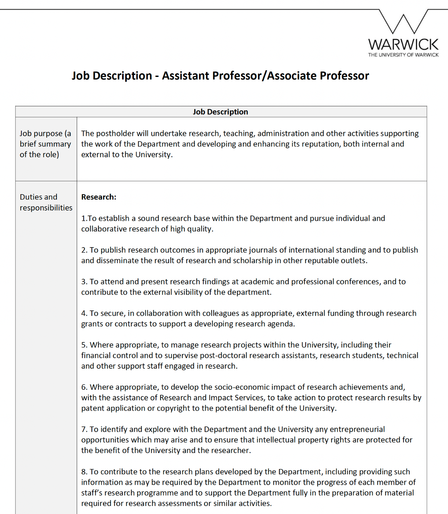
Assistant Professor / Associate Professor (101365 -0823) - University of Warwick

Title: Assistant Professor / Associate Professor (101365 -0823). Application Deadline:

RT @burnsajohn
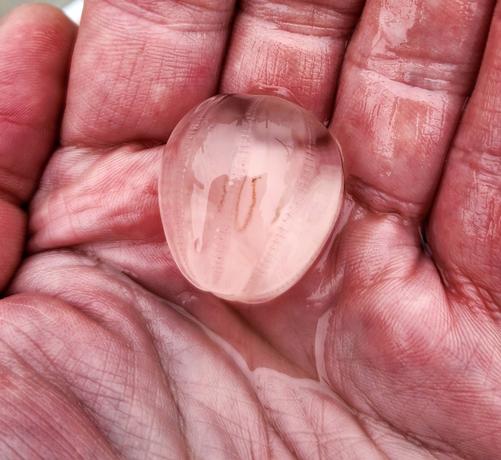
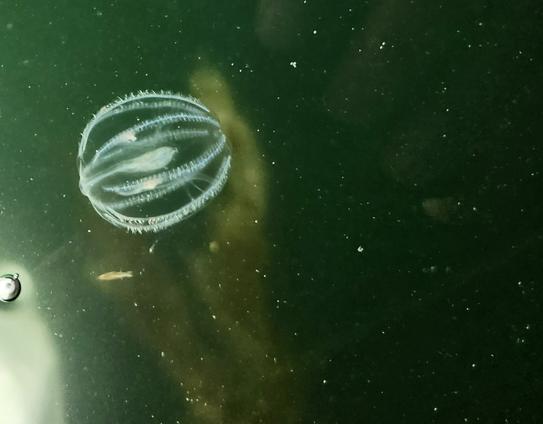
Caught a Ctenophore in my plankton net today. I know how they look, but I still looked like 😲🥹 when I put it back into the water and saw its irridescence! 🤯

RT @ArnauSebe
Job alert!
We are still looking for a bioinformatician to build a comparative single-cell db: unified pipelines, data curation, and cross-species integration. Work in close collab with
@RodericGuigo
@irenepapatheodo
@ExpressionAtlas
@emblebi

🗓️May 26
https://recruitment.crg.eu/content/jobs/position/bioinformatician-biodiversity-single-cell-database

RT @tera_levin
Today was a big day for the lab: we submitted our first real paper!!! 🥳 It's hard to believe we're here and I'm so excited and proud of us.

But this isn't a thread about the paper.
I want to share (esp with my senior colleagues) what it took for us to get from 2020 to here. 1/

RT @GaloGarciaIII
🚀 Ready to explore complex behaviors in microscopic organisms? 💥 Our team @ArcadiaScience has created a resource for you! Get started here by confining single cells under the microscope: https://research.arcadiascience.com/pub/resource-agar-microchambers 🎉 🧵[1/8]
Gotta catch ‘em all: Agar microchambers for high-throughput single-cell live imaging

Constraining motile microorganisms for live imaging often requires costly microfluidics or optical traps to keep them in view. We used patterned stamps and agar to make versatile, inexpensive “microchambers” and offer a way to predict the right chamber size for a given organism.

Arcadia Science

RT @PatrickLemaire_
Oyez, Oyez, we are seeking to expand our team by recruiting 3 new colleagues, #PhDstudents and #postdoc. If you love #LiveImaging, #lightsheet, #scRNAseq, #smFISH, #QuantitativeBiology, #ascidians, #embryos and, please read on (and RT) 👇

#sciencejobs @SFbd @ISDB @tlm @SMBdevBio

#Protists were the star of the show today.
---
RT @epflSV
Day 1 of #PortesOuvertesEPFL is a success, and we’re only halfway through!
https://twitter.com/epflSV/status/1652251652554993664
EPFL Life Sciences on Twitter

“Day 1 of #PortesOuvertesEPFL is a success, and we’re only halfway through!”

Twitter
Another fascinating venture by @PrakashLab & Team. 🤯
---
RT @PrakashLab
(1/n) “Period poverty” defined as lack of sanitary products & toilets to more than 500million women is a key roadblock in providing gender equity worldwide. Can sustainable, distributed, local, open-source bio-manufacturing help? Read our latest pre-print: https://chemrxiv.org/engage/chemrxiv/article-details/643daf011d262d40eaa857c8
https://twitter.com/PrakashLab/status/1651516294150361089
Agave Sisalana for distributed production of absorbent media for menstrual pads in semi-arid regions

Agaves are robust, draught tolerant plants that have been cultivated for their high-strength fibers for centuries and they hold great promise as a crop in the face of increasing water scarcity associated with a warming planet. Meanwhile, millions of women lack access to sanitary products to safely manage their menstruation particularly in low- and middle-income countries characterized by a dry climate. To address this issue, we show a processing route that transforms the leaves of the succulent Agave sisalana into a highly absorbent and retentive (23 g/g) material. The process involves delignification combined with mechanical fluffing to increase affinity for water and porosity, respectively. This process leads to a material with an absorption capacity exceeding those found in commercially available products such as menstrual pads. Finally, the carbon footprint water usage associated with this process is comparable with common alternatives with the added benefit that it can be carried out at small scales while remaining environmentally sustainable. Our work represents a step towards distributed manufacturing of essential health and hygiene products based on a local bioeconomy.

ChemRxiv

RT @solana_jordi
Proudly presenting our new bioRxiv:

The cell type atlas of the regenerating and asexually reproducing annelid Pristina leidyi

We show that a piwi+ cell population with a pluripotent stem cell signature underlies adult differentiation

https://www.biorxiv.org/content/10.1101/2023.04.25.537979v1

A tweetorial 🧵👇

RT @Pawel_Burkhardt
Was the nuclear-to-cytoplasmic ratio a key factor in the origin of animal multicellularity?

Our dispatch with @ColgrenJeffrey on the fantastic paper by Olivetta & @dudin_o out in @CurrentBiology (https://cell.com/current-biology/fulltext/S0960-9822(23)00307-X…)

Free link: https://sciencedirect.com/science/article/pii/S0960982223002981?dgcid=author @MSarsCentre @UiB