681 Followers
1.3K Following
175 Posts

Group leader at
@EPFL

@SNSF_ch
Ambizione fellow

Cell & Dev. Biology of #Ichthyosporea
#Multicellularity | #Animal #Origins | #Evolution | #Embryo | #Development | #Protist | #Biodiversity | #Expansion #Microscopy | #Cell #Biology | #Cytoskeleton

www.dudinlab.com

RT @burnsajohn
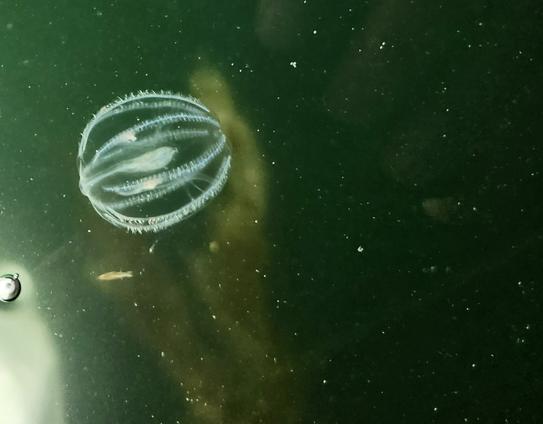
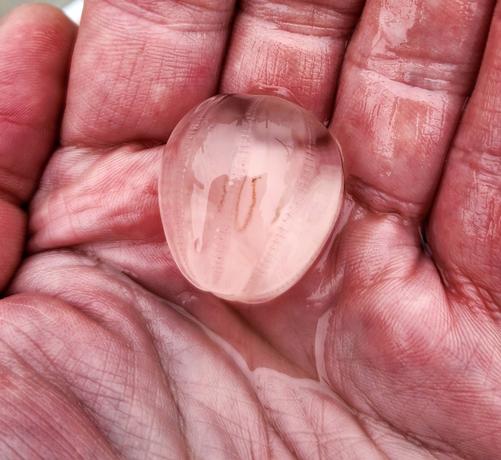
Caught a Ctenophore in my plankton net today. I know how they look, but I still looked like 😲🥹 when I put it back into the water and saw its irridescence! 🤯
RT @GaloGarciaIII
🚀 Ready to explore complex behaviors in microscopic organisms? 💥 Our team @ArcadiaScience has created a resource for you! Get started here by confining single cells under the microscope: https://research.arcadiascience.com/pub/resource-agar-microchambers 🎉 🧵[1/8]
Gotta catch ‘em all: Agar microchambers for high-throughput single-cell live imaging

Constraining motile microorganisms for live imaging often requires costly microfluidics or optical traps to keep them in view. We used patterned stamps and agar to make versatile, inexpensive “microchambers” and offer a way to predict the right chamber size for a given organism.

Arcadia Science
#Protists were the star of the show today.
---
RT @epflSV
Day 1 of #PortesOuvertesEPFL is a success, and we’re only halfway through!
https://twitter.com/epflSV/status/1652251652554993664
EPFL Life Sciences on Twitter

“Day 1 of #PortesOuvertesEPFL is a success, and we’re only halfway through!”

Twitter
Another fascinating venture by @PrakashLab & Team. 🤯
---
RT @PrakashLab
(1/n) “Period poverty” defined as lack of sanitary products & toilets to more than 500million women is a key roadblock in providing gender equity worldwide. Can sustainable, distributed, local, open-source bio-manufacturing help? Read our latest pre-print: https://chemrxiv.org/engage/chemrxiv/article-details/643daf011d262d40eaa857c8
https://twitter.com/PrakashLab/status/1651516294150361089
Agave Sisalana for distributed production of absorbent media for menstrual pads in semi-arid regions

Agaves are robust, draught tolerant plants that have been cultivated for their high-strength fibers for centuries and they hold great promise as a crop in the face of increasing water scarcity associated with a warming planet. Meanwhile, millions of women lack access to sanitary products to safely manage their menstruation particularly in low- and middle-income countries characterized by a dry climate. To address this issue, we show a processing route that transforms the leaves of the succulent Agave sisalana into a highly absorbent and retentive (23 g/g) material. The process involves delignification combined with mechanical fluffing to increase affinity for water and porosity, respectively. This process leads to a material with an absorption capacity exceeding those found in commercially available products such as menstrual pads. Finally, the carbon footprint water usage associated with this process is comparable with common alternatives with the added benefit that it can be carried out at small scales while remaining environmentally sustainable. Our work represents a step towards distributed manufacturing of essential health and hygiene products based on a local bioeconomy.

ChemRxiv

RT @solana_jordi
Proudly presenting our new bioRxiv:

The cell type atlas of the regenerating and asexually reproducing annelid Pristina leidyi

We show that a piwi+ cell population with a pluripotent stem cell signature underlies adult differentiation

https://www.biorxiv.org/content/10.1101/2023.04.25.537979v1

A tweetorial 🧵👇

RT @Pawel_Burkhardt
Was the nuclear-to-cytoplasmic ratio a key factor in the origin of animal multicellularity?

Our dispatch with @ColgrenJeffrey on the fantastic paper by Olivetta & @dudin_o out in @CurrentBiology (https://cell.com/current-biology/fulltext/S0960-9822(23)00307-X…)

Free link: https://sciencedirect.com/science/article/pii/S0960982223002981?dgcid=author @MSarsCentre @UiB

Hats off @Pawel_Burkhardt & Team. This is gorgeous.
---
RT @Pawel_Burkhardt
Thrilled to see ctenophores on the cover of
@ScienceMagazine🤩. Our latest work on the Syncytial Nerve Net in a ctenophore out now. Link: https://www.science.org/doi/10.1126/science.ade5645
Work supported by @MSarsCentre, @UiB, @ERC_Research. #ctenophores #evolution #syncytium.
https://twitter.com/Pawel_Burkhardt/status/1649117003842453520

RT @ZLabe
A striking visualization of human-caused climate change - watch what happens in the Arctic... 🫠

Temperature anomalies by latitude band (zonal mean) from 1880 to 2022. Visualization produced by @NASAViz at https://svs.gsfc.nasa.gov/5059. Data from @NASAGISS at https://data.giss.nasa.gov/gistemp/.

NASA Scientific Visualization Studio - Zonal Climate Anomalies 1880-2022

A visualization of zonal temperature anomalies. The latitude zones are 90N-64N, 64N-44N, 44N-24N, 24N-EQU, EQU-24S, 24S-44S, 44S-64S, 64S-90S. The anomalies are calculated relative to a baseline period of 1951-1980. This version is in Fahrenheit, an alternate version in Celsius is also available. A visualization of zonal temperature anomalies. The latitude zones are 90N-64N, 64N-44N, 44N-24N, 24N-EQU, EQU-24S, 24S-44S, 44S-64S, 64S-90S. The anomalies are calculated relative to a baseline period of 1951-1980. This version is in Celsius, an alternate version in Fahrenheit is also available. The visualization presents zonal temperature anomalies between the years 1880-2022. The visualization illustrates that the Arctic is warming much faster than other regions of the Earth.These temperatures are based on the GISS Surface Temperature Analysis (GISTEMP v4), an estimate of global surface temperature change. The latitude zones are 90N-64N, 64N-44N, 44N-24N, 24N-EQU, EQU-24S, 24S-44S, 44S-64S, 64S-90S. Anomalies are defined relative to a base period of 1951-1980. The data file used to create this visualization can be accessed here.The Goddard Institute of Space Studies (GISS) is a NASA laboratory managed by the Earth Sciences Division of the agency’s Goddard Space Flight Center in Greenbelt, Maryland. The laboratory is affiliated with Columbia University’s Earth Institute and School of Engineering and Applied Science in New York.

SVS
RT @FritzLaylin
📢We are looking for a technician and/or senior scientist. If you are interested in emerging model systems, quantitative cell biology, and living in the beautiful Pioneer Valley, APPLY! Thread here of recent work from the lab + FAQ: https://careers.umass.edu/amherst/en-us/job/508246/research-fellow-fritzlaylin-lab
Details - Research Fellow - Fritz-Laylin Lab | Human Resources | UMass Amherst

RT @adriaexists
Dear Friends and colleagues, I am thrilled to announce some #bignews ! The @social_fluids lab is moving to @CamZoology at @Cambridge_Uni where I’ll be taking up an Assoc. Prof position in Jan 2024. n1/6