Jonathan Lee

468 Followers
264 Following
74 Posts
Can music reshape the emotional narrative of our memories? We used a reconsolidation paradigm and fMRI to study this question. I'm very excited about the research pathways this illuminates! https://link.springer.com/article/10.3758/s13415-024-01200-0?utm_source=rct_congratemailt&utm_medium=email&utm_campaign=nonoa_20240703&utm_content=10.3758%2Fs13415-024-01200-0
Affective music during episodic memory recollection modulates subsequent false emotional memory traces: an fMRI study - Cognitive, Affective, & Behavioral Neuroscience

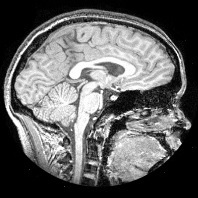
Music is a powerful medium that influences our emotions and memories. Neuroscience research has demonstrated music’s ability to engage brain regions associated with emotion, reward, motivation, and autobiographical memory. While music's role in modulating emotions has been explored extensively, our study investigates whether music can alter the emotional content of memories. Building on the theory that memories can be updated upon retrieval, we tested whether introducing emotional music during memory recollection might introduce false emotional elements into the original memory trace. We developed a 3-day episodic memory task with separate encoding, recollection, and retrieval phases. Our primary hypothesis was that emotional music played during memory recollection would increase the likelihood of introducing novel emotional components into the original memory. Behavioral findings revealed two key outcomes: 1) participants exposed to music during memory recollection were more likely to incorporate novel emotional components congruent with the paired music valence, and 2) memories retrieved 1 day later exhibited a stronger emotional tone than the original memory, congruent with the valence of the music paired during the previous day’s recollection. Furthermore, fMRI results revealed altered neural engagement during story recollection with music, including the amygdala, anterior hippocampus, and inferior parietal lobule. Enhanced connectivity between the amygdala and other brain regions, including the frontal and visual cortex, was observed during recollection with music, potentially contributing to more emotionally charged story reconstructions. These findings illuminate the interplay between music, emotion, and memory, offering insights into the consequences of infusing emotional music into memory recollection processes.
SpringerLink
I guess we do #introduction posts over here? I work on the #neuroscience (am I doing those hashtags right!?) of learning and memory, specifically how we learn while we navigate space and context. To do this, I take in vivo recordings (currently calcium imaging but ephys has my heart) of freely moving rats! After that, I use computational and mathematical approaches to analyze their neural activity! I am currently a BRAIN Initiative K99/R00 postdoc at Northwestern working with John Disterhoft and Sara Solla. I was trained at MIT with Matt Wilson, where I got my PhD in biology, and my BS is from Carnegie Mellon. Welcome!

A definitive statement about #BlueMonday, from the (reluctant) go-to expert

https://youtube.com/shorts/sMMHOHQdb2U?feature=share

The absolute definitive statement on #BlueMonday, by the go-to expert on the matter

YouTube

A really good paper on the nuances of "questionable research practices". Sometimes they're helpful and can actually increase reproducibility.

Reinagel, P. (2023). Is N-Hacking Ever OK? The consequences of collecting more data in pursuit of statistical significance. Plos Biology, 21(11), e3002345.

https://journals.plos.org/plosbiology/article?id=10.1371/journal.pbio.3002345#sec014

Is N-Hacking Ever OK? The consequences of collecting more data in pursuit of statistical significance

When an experiment comes to an end, it can be tempting to collect more data if a trend is observed that is “not quite significant”. This Essay uses simulations to investigate if this type of sample augmentation can ever be an acceptable practice and, if so, when it could be beneficial.

Modification of episodic memory valence through retrieval-update mechanisms requires a narrative link between events http://osf.io/a3qm5/

My response to *that* BBC article framing Covid as just another winter bug, "like flu", is here:
https://open.substack.com/pub/christinapagel/p/covid-is-not-just-a-regular-winter?r=8zv6v&utm_campaign=post&utm_medium=web

TLDR: it is NOT, because flu is "not just a bug", Covid is not a *winter* bug, and Long Covid remains a serious issue

Covid is not "just a regular winter bug"

Three points against a recent BBC article framing Covid as "just a regular winter bug"

Diving into Data & Decision making

2 openings for assistant professor and associate professor in the Psychological and Brain Sciences department where I’m currently at at Dartmouth College, USA, in Systems/Behavioral Neuroscience:

https://pbs.dartmouth.edu/news/2023/08/inviting-applications-professor-psychological-and-brain-sciences-systemsbehavioral

Please share to find me great future colleagues :)

“For a complete description of the Assistant Professor position, see http://apply.interfolio.com/130063.
For a complete description of the Associate Professor position, see http://apply.interfolio.com/130080.
Review of applications will begin October 15, 2023 and continue until the position is filled.”
#NeuroJobs #Neuroscience #Neuroscientist

Inviting Applications – Professor of Psychological and Brain Sciences, Systems/Behavioral Neuroscience

The Department of Psychological and Brain Sciences invites applications for two full-time faculty appointments in Systems/Behavioral Neuroscience.

Department of Psychological and Brain Sciences

Hi all,
This account is belong to Neural dynamics lab based in Geneva university.
We aim at identifying and modeling the spatiotemporal dynamics of neural activity at the local field potential and single-unit levels which support speech and language representations on the cognitive side, and epileptic seizures on the pathological side.
We use a variety of methods, from short- and long-term intracranial recordings from patients with epilepsy, statistical and mechanistic modeling of neural activity, and natural language processing tools such at GPT. Check out our website for more informations https://ndlab.ch

Give this massage a boost by a repost. And follow us if you're interested in our work.

#introduction #neuroscience #gpt #speechprocessing #epilepsy #ai #computationalneuroscience #computationalneuro #firstpost

Neural Dynamics lab |

@rmrahal Hi Rima, @rajiv has got a great Psychology starter PDF with lots of useful pointers/links, see https://rajivjhangiani.com/wp-content/uploads/2023/05/Psychology-OER-starter-pack.pdf - this includes both NOBA and his own brand-new Principles of Social Psychology (2022)

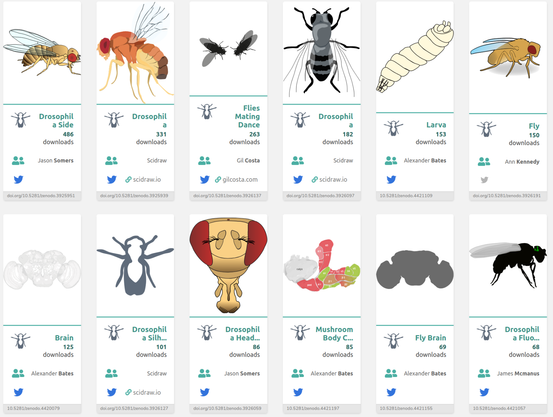
If you are drafting figures for a scientific paper or presentation, remember that https://scidraw.io/ exists: a repository of free SVG cartoons for science.

#SciDraw is supported by the Sainsbury Wellcome Centre – @SWC_Neuro

All content on SciDraw is shared under creative commons license (CC-BY) unless stated otherwise.

#inkscape #SVG #science

SciDraw | Scientific Drawings

SciDraw is an open repository of science drawings. Browse and contribute!.