RE: https://horche.demkontinuum.de/display/2196d4ee-7669-dbc1-1f9e-200464952498

Wow.

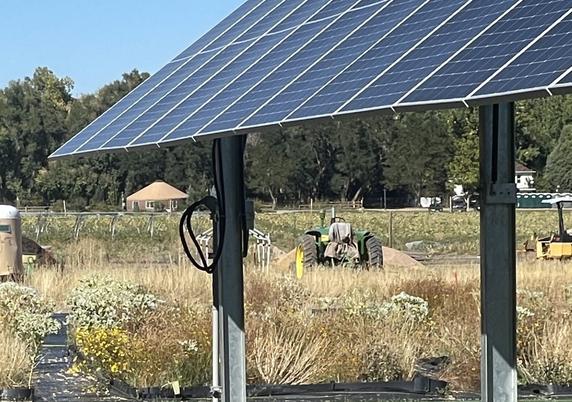
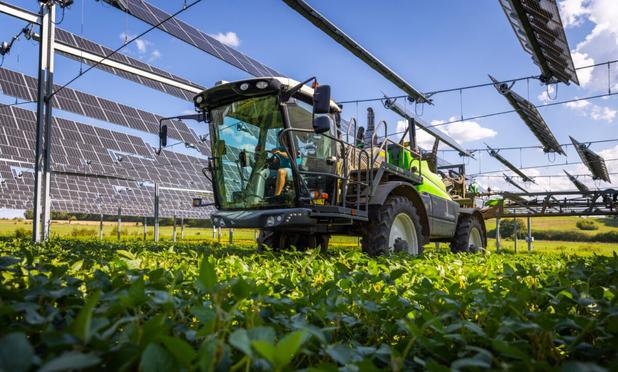
In addition to this, apparently farm yields INCREASE if you mix ground-dwelling crops with overhead PV panels, which provide shade/humidity traps for the plants and livestock.

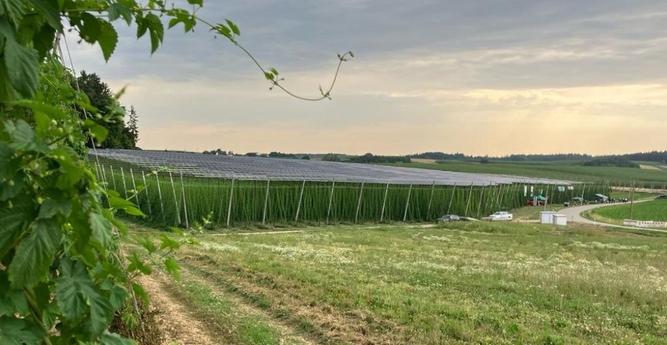
@cstross Yeah. The drought in Bavaria gets worse so our hop farmers put solar modules on top of the hop gardens. First test results are encourageing. https://www.ise.fraunhofer.de/de/forschungsprojekte/hopven.html
HoPVen - Fraunhofer ISE

Untersucht werden Auswirkungen der Agri-PV-Anlage und der Verwendung unterschiedlicher PV-Module auf die Lufttemperatur, Luftfeuchte, Lichtverfügbarkeit, Windgeschwindigkeit, sowie resultierende Änderungen der Qualität und der Menge des Hopfenertrags.

Fraunhofer-Institut für Solare Energiesysteme ISE
@cstross Just on a practical basis, you can improve the field drainage and water storage with the equipment used to install the panels. Double win.

@BashStKid @cstross
Some farms locally could do with roofs and gutters over parts of their fields, flooding reduced yield, sometimes to zero, and damaged soil. And roads.
Later, drought occurred. Now, leading half the rain off the field doesn't inevitably assuage a later drought, but one might hope to put some in an aquifer.
And half might not be enough - it was _very_ wet.

But.

@Photo55 @cstross Tree and hedge planting can often help with the flooding/runoff leading to crumbly poor soil in the dry season.

@BashStKid This is #Devon #rain #floods #fields #food there are roads narrow enough to surprise visitors partly due to the high banks, hedges etc.

Too much rain for them.

While one may stop the rain running out of the field, it forms a puddle, lake, unmanageable anaerobic mess, within the field, where crops were hoped for.

Reducing the water landing in the field, whatever one does with it, is worth thinking about, I think.

#rain #floods #food #solar #roof #drainage #gutters #farm #fields

@cstross

Depends on whether the crops were already getting too much sun, vs. barely enough. The places where solar panels improve yield are places where it's dry and hot. *

Places that are plenty shady and humid already, can lose production due to panels. But if the extra shade doesn't cause your crops to develop fungal diseases, the lost harvest can be balanced out by the electricity as an alternate source of income.

* https://coloradosun.com/2024/10/02/agrivoltaics-denver-botanic-gardens-chatfield-solar-power-vegetables/

A new solar farm is now shading Denver Botanic’s actual farm in one of the state’s biggest “agrivoltaics” experiments

$4.7 million investment from Denver climate change sales tax builds an “agrivoltaic” system at Denver Botanic’s Chatfield.

The Colorado Sun

@Kathmandu @cstross
* eg Gobi Desert

I also wonder how this may vary if the ground goes Nitrogen-deficient, fixed N often being a constraint to growth in last summer's conditions.

@cstross in matcha farms, shade is strategically added in the weeks leading up to harvest to juice chlorophyll production.
@cstross If only the polysilicon in many of them was not made by slaves.

@ravenonthill @cstross Any time we want to start factories with good union jobs making solar panels, it's not any more difficult than finding the money.

(And there's a shortage of productive investment opportunities.)

Solar PV as a technology is not defined by Chinese Communist Party policy.

@graydon @cstross Biden was working in that direction. Many of his economic programs were very good. He got no credit for them and the public complained that his good economy was bad.

Meantime, I intend to keep nagging people about slavery in China because it looks very much like we are heading for a global renewables market with slavery at its base. I regret to say that slavery seems to be making a comeback in many forms and many places.

https://adviceunasked.blogspot.com/2026/01/xinjiang-slavery-and-solar-panels.html

https://adviceunasked.blogspot.com/2026/02/slavery-and-solar-panels-bibliography.html

Xinjiang: Slavery and Solar Panels

In Xinjiang, western China, the polysilicon that is used the in the inexpensive photovoltaic panels that have become so widespread is manufa...

@ravenonthill @cstross At the Main Street level, and below, it was a bad economy. (Elite consensus to refuse to pay for labour is a real thing, and probably not fixable short of running the guillotines round the clock for a year.)

Saying "Argh, slave labour! unclean!" is correct, but wildly unhelpful. (Narrative of helplessness, supports fossil carbon "solar bad, actually" narratives, etc.)

"We should make these ourselves in ethical ways", perhaps helpful.

@graydon @cstross That's the vulgar Marxist explanation but employment was up, wages were up and had risen most for the people at the lowest wages levels, there was better funded healthcare. Except for shelter costs, it was the best economy in a generation for lower and middle income people. And maybe shelter costs swung public sentiment or maybe people just were reacting to the previous economy; it's still being studied. But it was a very good economy.

@graydon @cstross I think we need to keep talking about slave labor. And, yes, we should absolutely propose alternatives but we need to keep talking about it. The slave system in the United States was not abolished because of economic inefficiency; it was abolished because the slave holders were trying to spread it and because northerners were horrified by the reality of slavery.

(Added: miserliness promotes slavery, which is part of why I am critical of it.)

https://www.reddit.com/r/HistoryMemes/comments/1fp8m9r/comment/lovmkjc/

@ravenonthill @cstross The US attempt to abolish the slave system did not work (it failed, completely) in the case of the US Civil War, which is why the US slave system is run by government entities in forced labour institutions called prisons. Such attempts generally can't work because we live in a system under selection, not a moral universe.

Effective opposition to slavery has to combine greater distribution of agency and greater power (including economic). Otherwise is gets crushed.

@graydon @cstross please. The Civil War ended chattel slavery. Jim Crow was awful but slaves got legal rights, their marriages were respected by law, their children and spouses could not be sold at the whim of a master. Through the 20th century the position of Blacks in the United States improved, though there has also been backsliding. No, racism is not done. But rejecting all progress because it's not complete is vulgar Marxism.

@graydon @cstross that is also one of the arguments China uses to excuse their expanding slave system. And it is expanding. They've gone from polysilicon and plant fibers (yes, cotton) to all kinds of car parts and especially parts for those electric cars that are doing so well in international markets.

The US founders thought that slavery was going to wither on the vine, then the cotton gin was invented. I fear the sudden global push for renewables may work similarly in China.

@graydon @cstross we need a change in public economic consciousness. Our public seems to wobble between Protestant miseriness and vulgar Marxism. It would be good if we could explain economics to the public in a way that they could get behind.
@cstross the article you linked to is click bait. If you read the original science article also linked in there it’s a hypothetical from a couple of years ago.
Solar farms might be reaching a size where they can validate the . The effects of shade below solar panels, however, are well documented. That parts legit.
@cstross Here's the link to the 2024 article cited in that piece. It's all theoretical, based on solar panels that absorb nearly 100% of the sun's heat (many are reflective), require moisture to be present in the atmosphere, and in some instances can adversely impact other regions' ecosystems. https://www.science.org/content/article/massive-solar-farms-could-provoke-rainclouds-desert

@JamesWNeal @cstross yeah you do not want 100% absorption, you want as much heat rejection as possible because panels produce more power when they're cooler.

It's an interesting concept but certainly not something being deployed at scale now. The image is probably slop or an unrelated stock photo.

@azonenberg @JamesWNeal @cstross The original article is only based on a computer model
France agrivoltaics trials show early crop and livestock gains

Data from agrivoltaic canopy trials in France, developed by energy producer TSE and the French National Research Institute for Agriculture, Food and the Environment (INRAE), indicate measurable temperature, water-balance, and yield effects that reinforce the role of managed agrivoltaics in farm-level climate adaptation.

pv magazine International

@fazalmajid @cstross

What most people don't realise, is that photosynthesis was an optimum temperature range. That range changes, between species, based on anatomy.

@cstross I was watching a video about this in China desert, and kind of by accident, they found that the panels provide a place for dew to condense.

Then it runs down the panel and that causes enough dew drops to concentrate in one spot to irrigate the base of the panel for plants to grow.

Without the panels the drew had no where to condense and when it didn't accumulate enough drops to sustain plants.

Kind of an interesting side effect

@cstross it's nice to know our species might survive after all.
@cstross This honestly sounds almost like terraforming?
@ermo
So does what we've been doing for tens of thousands of years
@cstross
@cstross and having solar panels in grazing land increases the available food for the animals and provides shade for the animals, making them more comfortable and well fed.
@cstross Meanwhile there's a whole lot of people trying to convince us that solar farms cause heat under the panels and it just doesn't compute how they come to that conclusion.
@Tatjna @cstross solar panel mulch is such a happy byproduct of electricity farms! 🌱

You’ve got more sheep rearing expertise than me.

A sheep farmer told me that the amazing improvements in fleece yield and quality that Australian farmers see under solar panels don’t apply here in NZ because our sheep have facial eczema.

How could I respond to that??? Is there some misunderstanding about the climate under panels in NZ that’s different to AU?

@Tatjna

@futuresprog I think their argument is based in the idea that we have more humidity here, so in Australia having moisture under the panels would be a welcome thing but here it has the potential to create an environment that supports facial eczema spores.

I mean that sounds within the realms of possibility but also very much like reckons and not something that will have been studied.

A far bigger danger for facial eczema is generally higher temps and wetter summers from climate change.

@futuresprog Additionally, FE is generally picked up during low grazing (eg it lives in the base of the pasture). If the panels increase pasture growth you'd be less likely to be grazing the base.

Also, grass that grows in shade is less palatable so the grass directly under the panels won't be grazed as hard.

Finally, FE creates photosensitivity, so if you have sheep with it in your flock, they will absolutely love having easy shade to hide in.

Does that help?

@futuresprog PS I doubt that solar panels would necessarily improve fleece yield and quality here except by having generally healthier sheep.

Given how robust our sheep are and how little their fleece is worth compared with Australian merinos, I can see the $$ benefits to us being less than for them.

Thanks! That’s really useful and informative. A lot more than I already knew.

Higher humidity, exacerbated by climate change, more moisture under the panels, as you’ve explained, could make it all worse.

We will hopefully see some real data out of the Tauhei solar farm in Te Aroha when they have been running for a few years. Should come online later this year and they expect to have sheep under them.

Te Aroha though, probably more for sheep milk than fleece?

https://clarus.co.nz/tauhei-solar-farm

@Tatjna

Tauhei Solar Farm

We want Kiwis to enjoy the benefits of gas while keeping New Zealand clean and green. Renewable gas is part of our energy future and we're right behind it.

@futuresprog Yeah, Te Aroha is in the humidity band that has higher FE likelihood than here. We get it, but anywhere north of central plateau is worse off.

I think dairy results could be translated to fleece, given the quantity and quality of both are reliant on the wellbeing of the sheep. Fleece from humid areas isn't high quality anyway, it tends to be yellow, so I think focusing on the dollar value returns on healthier animals might be the key, such as meat and milk.

@cstross

Well known in Australia where sheep production and solar panels mix very well

@Kirsty @cstross

Just as long as you keep the wiring insulation out of the sheep's mouth.

Like cattle, they'll give anything softish, a good chew.

Trees also make shade, and produce humidity, and are probably better at transforming solar energy into something that does a lot more for an ecosystem than power your fridge

Planting trees and reducing energy consumption would be a better environmental win than planting annuals under solar panels

@cstross Erm, _not_ a good cloud to illustrate the point.

As someone who lived in Tornado Alley for a while, that a classic tornadic supercell. It's already formed the lower wall cloud. Next step is tornados.

Solar cells do NOT foster tornados!

@cstross if you read the study they refer to, this will only work in environments where there's a higher atmospheric water content. It'll work around the Persian Gulf but not in Australia, central Africa etc where there's no water source to provide the moisture
@cstross so its a canopy. Like in a forrest....
@cstross Sheep which graze underneath solar panels produce 15-30% more wool, I've read.
@cstross thats literally how trees work, though, we just... We just reinvented trees.
@foundseed Show me a tree that produces electricity.
@cstross did you look for one? Shall I read the articles to you in podcast format?

@cstross
yup

argi-solar
or
agrivoltaic are real things, does work, intercropping is real, shaded forage is good livestock management, (increased dairy production, reduces stress, )etc etc

wholly desertified landscape recovery mixing solar with cachements is well under way in seriously depleted chinese landscapes, blah blah

I just can't argue this stuff with folks who can't get their heads around it.
So, I don't bother.

@cstross Not a fan of that article, it was pretty meandering. But it did link to the source https://www.science.org/content/article/massive-solar-farms-could-provoke-rainclouds-desert

@davep

I've un-tagged Charlie,Am sure he gets plenty of noise in his feed.

That said;

yeah the article is kinda trash

that whole 'unexpected!' thing.

said so yday

no, not unexpected, modeled and anticipated well over half century back.

pv solar is a win, always was.

even solar heat harvesting is very real & productive, and always has been

old & hard to find expose' on early days of solar:

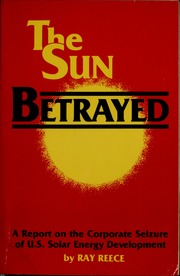
Ray Reece's "The Sun Betrayed"

https://archive.org/details/sunbetrayedrepor00reec

it's an old & ugly story

The sun betrayed : a report on the corporate seizure of U.S. solar energy development : Reece, Ray : Free Download, Borrow, and Streaming : Internet Archive

Includes bibliographical references

Internet Archive
@cpm Leaving China to take the lead in renewables and the west to reflexively lambast it thanks to oil lobby money (aka blatant corruption).

@davep
well

sure.

our electric utility outfits can shoulder a lot of this as well.

they love their coal plants.

every grid tied array *reduces* grid loading.

where's the fun in that?

The fun bit?

every installation I worked on in .WV yrs ago

the linecrews? the reg 'blue collar' folks? who did the final tie-ins?
Into It!
Excited about it.

the khaki&poloshirt white hardhats with the clipboards?

eh, , , not so much.

@cpm It's more the political class I'm pissed off with. It's purely about political will at this point.

@davep
indeed
no argument

kinda always was.

look
oil cos, utility cos *love* pv solar, telcoms as well.

can deploy anywhere, provide current relative to the ground state, which is a massive win for galvanic corrosion, and a host of other annoyances that plague built infrastructure. No matter the per-watt cost.

why they invested
but they have no interest in 'us' using it

truth:
pacific nw pot growers kept retail pv solar alive for decades

there's a fun story there

@cpm You can't leave it at that!

@davep

Just for fun:

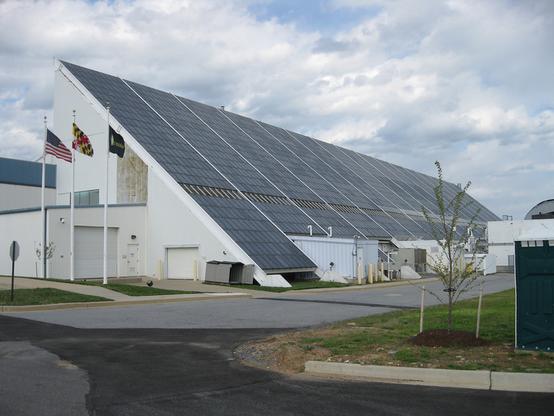
The Solarex Solar Breeder in Frederick, Md

Shortly before demolition

I social engineered my way onto the abandoned grounds one afternoon.
I remember it's construction.
Was to be the 1st of 5 nationwide

Nope

was to be located upriver near Berkeley Spngs, WV where the silica came from

but 'investors' wanted it near DC

1st, ARCO(defunct), later, BP, made sure it went nowhere.