@dynom @jupiter @ProcessParsnip @yacc143 @EUCommission
In addition: when home solar subsidies started, it was already a net benefit, the problem was that the return on investment was too long for a lot of people. It took about ten years to for the panels to generate enough electricity to cover the costs. They lasted another ten after that (estimated, it turns out they actually last longer, especially if you clean them), so over a twenty year period you were going to be paying a lot less. The subsidy did two things:
- Created demand that allowed economies of scale to bring down the component costs.
- Created demand that brought down the installation costs as installers got a lot of practice and it became routine.
The RoI for home solar is now in the 2-5 year range, so accessible for anyone who has a bit of spare capital. The component costs are low enough that the cost of building it into new builds is negligible and the value is high.
Large-scale wind and solar deployments had similar benefits.
In both cases, the benefits were already there but they needed economies of scale to bring the costs down. In contrast, LLMs do not really benefit from economies of scale. OpenAI and Anthropic lose more money as their number of users increases. The cost of running these models keeps going up as they increase in complexity, and they've already passed the point where large increases in compute translate to only small increases in performance.
The fundamental issues remain present. LLMs are not databases. They are fuzzy compressed pattern-matching engines. Even if they are trained entirely on true things, there is no way to prevent them from returning results that are incorrect because that's an intrinsic property of how neural networks function: they interpolate over a latent space and any point in the latent space that does not directly correspond to something in the training set (and some that do) will be filled in with things nearby. This may be correct, or it may be complete nonsense. The more complex the use case, the more likely it will hit places not covered by the training data and be filled in with plausible nonsense.
There's also an effect from the automation paradox: As LLMs become better at producing correct output, the importance of the human in detecting the errors becomes more important, but the human's attention is less focused on this. The recent study on Google's AI summaries showed that they are wrong about 10% of the time, which is well into the worst place: if they were accurate a couple of orders of magnitude more often, they'd be comparable to other information sources and wouldn't need checking. But they're correct often enough that people don't check them. This is a big problem outside some managed contexts.
There are some good use cases for this kind of thing. For example, pregenerating NPC dialog in a game. Walk around in something like The Witcher 3 and you'll overhear the same conversations dozens of times. An LLM could take all of these and produce a thousand alternatives. A human could quickly skim them to see which ones sound plausible and don't sound like they're hinting at quests that don't exist. Exam's can be generated quickly from the learning material and reviewed by an expert to ensure coverage of the subject material and good assessment practice, in less time than it takes to write them by hand. But these are fairly small benefits. Neither of these is core to what the company using them does. You're looking at, at best, a few percentage points in efficiency improvement, in a select few industries. And this comes with a huge environmental cost and at the cost of large-scale plagiarism, which causes far greater harm to the creative industries than any benefits.
 European Commission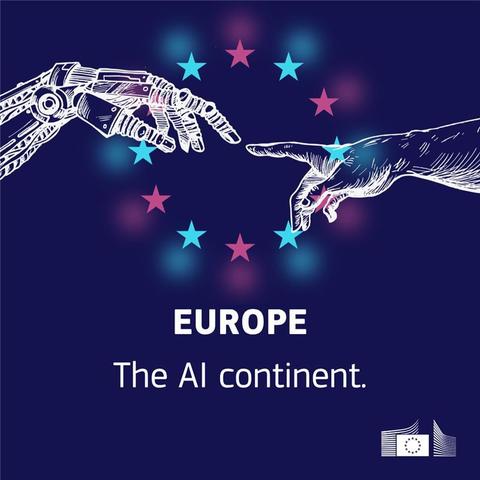
 David Chisnall (*Now with 50% more sarcasm!*)
 Andreas K
 Process "Tedious" Parsnip
 Juno Jove
 mossman
 Nick
Nick iwein
iwein Dynom
Dynom
 Space Burger Steve 🌌🍔🤪
 Nicole Parsons
 K_L_Cooper
 Gerard Cunningham ✒️
 olliestudio45
 Simon Rolfmore
 Jari Komppa 🇫🇮
 notsoloud
 Kim Spence-Jones 🇬🇧😷
 AlisonW ♿🏳️🌈♾️
 M Schommer
 Bruce Simpson, Ph.D.
 Flipper 🐬🏳️🌈
 Sandor Spruit 🇪🇺🇳🇱🇺🇦🇨🇦
 David Palk#RejoinEU 💖🇪🇺🕊🌈
 Knut 🏳️🌈 🇳🇴🧸
 Davidson
 GeraintLlanfrancheta
 Michal Valasek
 Violet Madder