
Part X: Developing a Way to do Action Scenes Without Money | Example Scene

I don't really know if all articles in this series are equal. So it could be part 4, or part 6 or part who knows what. But today I want to dump my thoughts about this video I did recently:
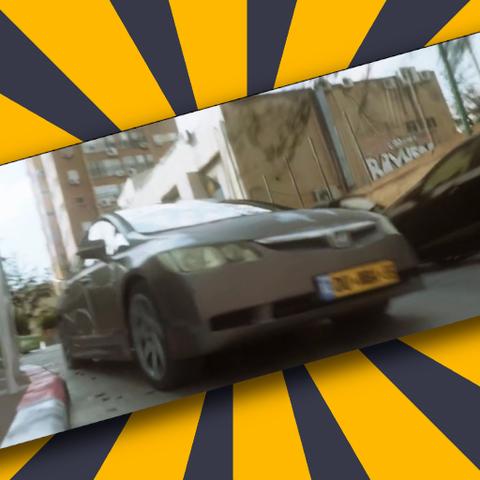

Part X: Developing a Way to do Action Scenes Without Money | Example Scene

I don't really know if all articles in this series are equal. So it could be part 4, or part 6 or part who knows what. But today I want to dump my thoughts about this video I did recently:

blenderdumbass . org


There were truly convincing CGI cars in Bad Boys II from 2004 about which I wrote an article. And so when 2 new ass movies that came out recently gave me such CGI-esque vibes looking at the CGI cars in those films, it felt utterly bamboozling. How did we go back in progress when it comes to CGI cars?


@Troler Overworked and underpaid artists.


The real question is why you switched to Roman numerals.


If you think about it, the first games that started to look kind of modern were car games. Games that were about shinny pieces of metal on wheels. Games that even when stylized, still needed to show shinny pieces of metal. This is how you get reflections in Need For Speed III: Hot Pursuit from 1998. This is how you get a game that look rather modern in Need For Speed: Underground which came out in 2003.

Super Tux Kart is also like that. The game has nice reflections and graphics for the cartoony graphics.


I knew even in 2018 that there is a fact of life when it comes to CGI: It is easier to do clean things in CGI, while it is easier to do messy things in real life. Or in other words: reality is not mathematically perfect. In reality you have trash, you have dirt, you have scraped paint and thumb-prints. You have texture.

The reason why the objects in 2001: A Space Odyssey worked was because they clashed with the natural world.


And the problem is, it is not as simple as simply adding some noise to the image. In small doses, adding some noise might help a little. But the dirt stuff must be more deliberate. There are places that are cleaner than others. There is story in the dirt. Scraped paint and thumb-prints tell you a lot of about the "character" of the object you are modeling.

https://inv.nadeko.net/watch?v=kT4p1GXq4HY


I ended up learning a lot, as you may know from article number x-1.

X = 10
10-1 = 9
Where is the first article?


First of all, I filmed the first half of the pitch with a help of a neighbor, whom I payed for the camera-work. After we shot everything leading to the action scene, I didn't really have a lot of money left. And I also didn't really like the new point where I would have to film the rest of the pitch.

Budget constraints are still effecting your filmaking. That's good. A lot of classics were created due to budget, such as Jaws


See, the beginning of the pitch happened in the perfect spot where almost no people pass by. The ending of it, that you can see in shots 8 and 10, is a far busier part of the neighborhood. I had to be on the street for the first half of this pitch, so the action beat could happen. But now since it is over. I no longer need to be on the street. And shooting the rest of it from the comfort of my house was a much more nice-sounding idea. The only problem was. I needed to transition somehow between the two in a smooth, sort of, way.

There is a missing person and a plunger poster on the post. I wonder why no one comes there.


This is what shots 10, 11 and 12 are for. Specifically shot 11, which is the glue of the transition. I knew I could run up to the camera in shot 10, which was originally planned to have the continuation of me speaking in it. But I could cut to shot 11. Where I could put shot 10 on the background, on a monitor. Therefor creating a smooth transition. I had to frame shot 11 such that we would see both the monitor ( representing the previous scene ) and the microphone ( representing the next scene ). I would pick up the microphone and that would prompt a cut to shot 12, which would be the composition I would use for the rest of the pitch.

Or you can be like this guy: https://inv.nadeko.net/watch?v=rPt5ZfGGjuI


Shot 4 in the sequence was from an outtake of me talking, where the camera-person yanked the camera sideways too slowly. I decided to use it as a reaction shot.

Impressive resourcefulness.


VFX shot 2 was almost simple, minus one rather annoying complication. The hole in between cars, through which the hero car goes, was always occupied by a member of subspecies of "parked cars". I had to basically get lucky and take this shot in a not too dissimilar lighting condition, when a car is not parked at that specific spot. I think I was going home from work and noticed that there was no car parked at that spot. So I grabbed a camera and quickly shot this plate.

You showed me an application you installed, for calculating the light angle.


VFX shot 1 was surprisingly simple. It is documented fully on my peertube channel. Since the camera was zoomed in and far away from the action, I could track it using the "tripod solver". Usually with camera tracking in Blender, you need at least 8 good points, to get a pretty good 3D track. But since the camera is so far away, there is barely any parallax. So I could use 2 points instead. 2, so I could track changes in rotation.

To those people who do not fully understand the world fully, it means completely. That is to say. Literally every single second worked on the models was documented. Praised be Madiator for providing so much space for BlenderDumbass' insane dedication to documentation.


Perhaps Blender should kick out the damn time-line from that window. And instead put a Dope-Sheet under the window ( like in the screenshot ), which could act as a timeline. And which also conveniently shows the keyframes I do with the mask, allowing me to even edit their timing. I probably need to do a proper complaining about it to the devs or something.

Ahem, Blender is free software. Fork it.

My job is done.


Sounds like a nightmare. But... if I make the building that casts the shadow onto the car a shadow-catcher too... this whole thing will end up being automatic. When I did The Package in 2018, that would be a total nightmare. Now it's just about placing the building in the correct spot in your 3D scene. What a time to be alive!

WHAT A TIME TO BE ALIVE!
https://inv.nadeko.net/channel/UCbfYPyITQ-7l4upoX8nvctg
Two Minute Papers

What a time to be alive - with Dr. Károly Zsolnai-Fehér.

Invidious


I cut out the cars from the reference shot. And I placed planes with the texture of those cars into the 3D scene. And it pretty much worked out of the box. I had to slightly deform those planes to give it a suggestion of parallax. And I had to yank the virtual camera quite violently, to hide the mess. But it worked.

Your Dani's race optimization spree has taught you how to optimize Blender, in the most messed way possible.


What did not work, is again probably would require some proper complaining to the Blender devs. For some reason I cannot turn on motion blur and rolling shutter in the same time. I get either one or the other and there is no way to apply any motion blur even in post to a rolling shutter shot ( it stops me from doing a vector pass ). There is absolutely no reason to simulate rolling shutter inside of Blender ( at least when it comes to visual effects ) if you don't have any motion blur in the same time. The whole idea of the rolling shutter is that it is a distortion of an image from fast motion. It has to have motion blur.

What if you alpha overlay the pictures?


I ended up not having any rolling shutter in this shot. But I really would have wanted it, to simulate the same type of camera I shot the rest of the sequence with. Remember shots 1 and 2, both had rather visible rolling shutter distortion.

WHAT IS WITH YOU AND ROMAN NUMERALS?!


The skid-mark was done using Blender's amazing dynamic paint simulation tools. I basically added a little object under the wheels that touches the ground. And made that object a "brush" while making the ground a "canvas". And it "rendered" for me a set of images of what it would look like if those "brushes" painted on the "canvas". Those images I could then put onto the plane as a texture. And render it as a pass, to composite between the shadow and the car.

Does this mean you can render actual painting? Like painting a canvas with brush and seeing the effects be applied in real time?


Is it good enough for VFX? Yes. Definitely. It is super good. I really enjoyed it. Rendering in Cycles ( with denoiser ) is fast. VFX shot 1 took about 10 minutes to render in 1080p, into the final form you see in the video. And I used CPU, because I don't want to have a proprietary GPU driver on my machine.

It is not good enough. It is not Avatar 1 tier yet.