 Matthias Krämer
 mhoye
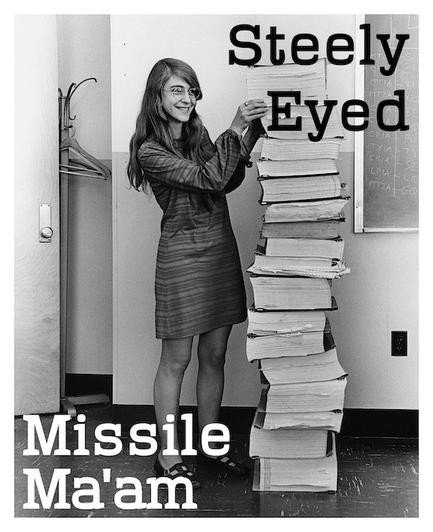
mhoyeA picture of Margaret Hamilton, programmer for the Apollo space program, standing next to not one single microsoft error message or bluetooth problem.
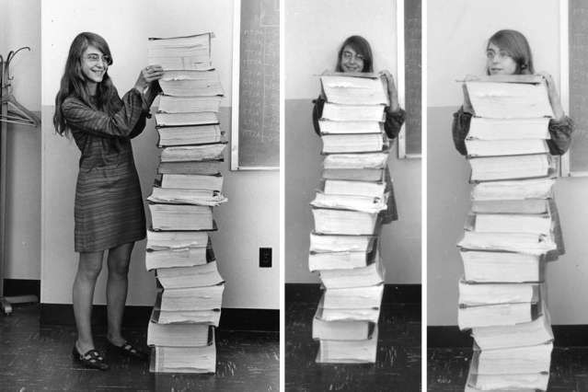
@mhoye Oh, that Hamilton! Sorry, I had musicals on the brain.
Speaking of... She deserves a musical.
@mhoye didn't know that either.
Honestly man the more I learn about women in computing in history, the madder I am about the state of tech today.
Yeah. Grace Hopper, the women of Bletchley Park, the "hidden figures" of NASA like Katherine Johnson who did the math to put Glenn in orbit and Dorothy Vaughn who ran the computers (the movie is ok, but total white savior bullshit).
I want to see more women in charge of tech. I want more badass tech-sisters running things.
Oh! I've just watched the first 5 mins, definitely going to watch it all. She's legit already funny. https://mastodon.social/@kottke/113165803319008468
@sarajw @mhoye I'm old enough to remember when I got into this field when there were more women in it. Back then, it was a way to make a decent living, but not a path to riches.
That changed with the internet boom and I ran into fewer women developers and sysadmins. Once it got out of its "clerical" status and into a path to riches, the demographics shifted. My first dev job iin 1990 was 40% women devs to 60%.
I've worked in places since then with NO women devs. Those all sucked, BTW.
@spacehobo is it just going to make me more mad or give me something constructive to do about it?
Otherwise nowadays I can only cope with fiction, novels, I need the escapism...
@eons yeeep:
"But by the 1970s, there was a change in mindset and women were no longer welcome in the workplace: the government and industry had grown wise to just how powerful computers were and wanted to integrate their use at a management level. “But they weren’t going to put women workers – seen as low level drones – in charge of computers,” explains Hicks. Women were systematically phased out and replaced by men who were paid more and had better job titles."
Also:
If women had continued to be a major force in computing, instead of being sidelined, the way the tech industry looks today would have been very different, she argues. “If women had been a more important part of the high tech industry all along, would so many platforms and apps have the same problems with rampant sexism and misogyny both in their workplaces and their products? Most likely not.”
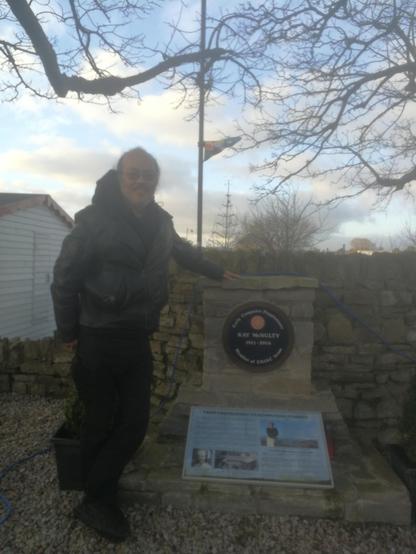
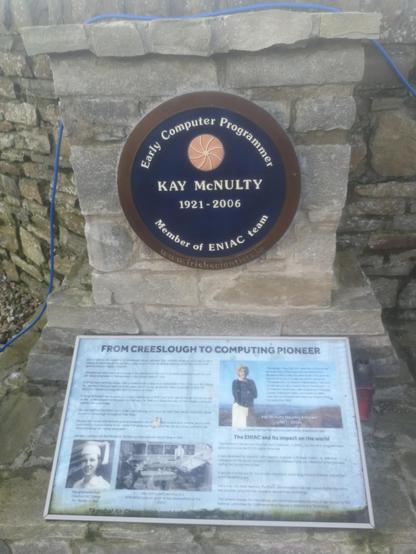
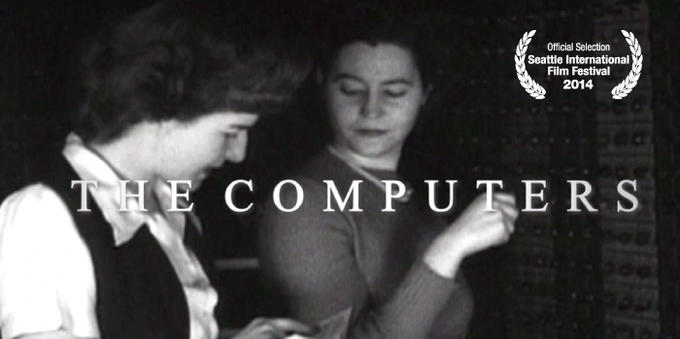
In 1946 six brilliant young women programmed ENIAC, the first digital computer, a secret WWII US Army project. Yet when the ENIAC was unveiled to the public, the women were never introduced and remained invisible to history. Kathy Kleiman produced the documentary The Computers to tell their story.
Yeah, and ever since then whole generations of programming boys have been cosplaying as her, despite most of them having not anywhere near half the responsibility.
In 2017 Margaret Hamilton was inducted into the Computer History Museum's Hall of Fellows. On that occasion I was privileged to accompany her on a private, docent-guided tour of the Museum's public display.
She looked about the same as she does in these pictures from the 1960s, albeit a little grayer; a bright, diminutive grandma.
But she was very humble and human. At one point we rounded a corner into the Apollo section. Prominently in the front of the exhibit was a reproduction of your left-hand photo. Upon seeing it, Margaret stopped and exclaimed, "Oh my gosh! Is that me?"
As Margaret explained it to me, NASA wanted the lunar lander's actual landing to be 100% automated with no manual override. She disagreed, and insisted on implementing an override. NASA didn't like the idea but Margaret just went ahead and wrote it.
Of course, on Apollo 11's final approach, the lander was headed for a field of giant boulders. Neil Armstrong used Margaret's code to override the computer and manually divert to the actual, safer, landing point.
@mralancooper @mhoye what a legend.
As I have written before:
Margaret E Hamilton
Her name is Margaret E Hamilton
She wrote 400,000 lines of code
Without one bug, without one bug
@mralancooper @mhoye she’s a genuine legend, what an amazing opportunity! 💕
this may be of interest… 👇
Attached: 4 images @[email protected] @[email protected] well since you mention it… I also made these stickers 🙃 the switch & the stickers (& a life-size standee of Margaret Hamilton & a DSKY) were for a display on the Apollo Guidance Computer that I put together for a recent vintage computer fair here in Canberra 💁♀️
i can see mackenzie davis playing her in the biopic.
@mhoye because she actually lived #CodeQuality during her career!
From the 1968 NATO Software Engineering conference (https://static.isthisit.nz/images/2022-08-nato-software-engineering/static/software-engineering-nato-1968.PDF) Djikstra was already seeing the need for change:
"I am convinced that the quality of the product can never be established afterwards. Whether the correctness of a piece of software can be guaranteed or not depends greatly on the structure of the thing made. This means that the ability to convince users, or yourself, that the product is good, is closely intertwined with the design process itself."
 Mark T. Tomczak
 Emma needs ☕️ and paying work
 Ludwig Vielfrass
 Sara Joy
 Third spruce tree on the left
 Space Hobo
 +>e
+>e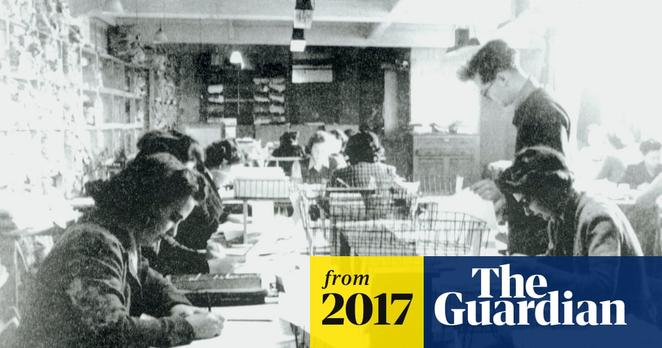
 The Janx Devil
 Howard Chu @ Symas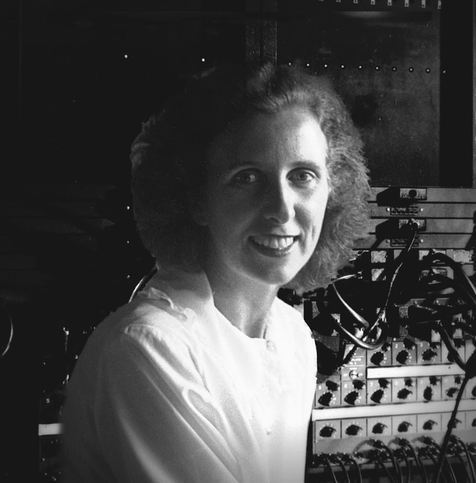
 craignicol
 kit
kit sport of sacred spherical cows
 DNA schedule
 Amgine
 Ross of Ottawa
 Shawn Hooper (he/him) 🇨🇦
 jd 🔆
jd 🔆 Benjamin Geer
 Brett R
 MrAlanCooper
 barsoomcore
 Adam Shostack

 Deborah Preuss, pcc 🇨🇦
 Fish Id Wardrobe ⁂
 James Baker 🍁
 itgrrl
  Dave W Smith
 Kierkethumbs up convincingly
 paul
paul
 Я⊛ḶḶ model ☭
 Ed Davies
 the gripe ibis
 Kevin Karhan
 John Deters
 aburka 🫣