This country is so big. I mean, I think I knew it intellectually but I don’t think I really understood it until I spent the last few days traveling through it by train. I come from a country that’s so small, you get two other countries’ cellular signal if you stand at your window.

In four days, I’ve been in three different time zones. I’m now three hours ahead of San Francisco, here in Atlanta.

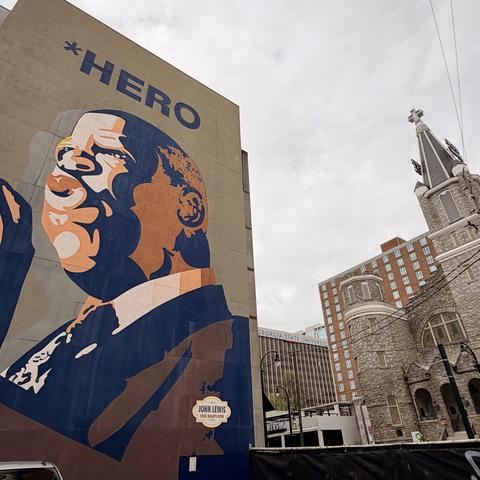
I’m in the south for the first time. It might as well be a completely different country. I’ll be checking out all the museums and monuments relating to civil rights while I’m here. This place was an important place in that struggle.

http://atlantacivilrights.com/civilrights/essay_detail.asp?phase=1

Atlanta in the Civil Rights Movement

When the train was passing through Arizona, they said Navajo Nation is larger than Vermont and Massachusetts put together. It kind of broke my brain.

I’ve found that when I try to spend more time learning about Black and Native history and culture, I get a much truer sense of the U.S. today, particularly how many of today’s problems seem to be continuations of old time racism and Civil War divisions.

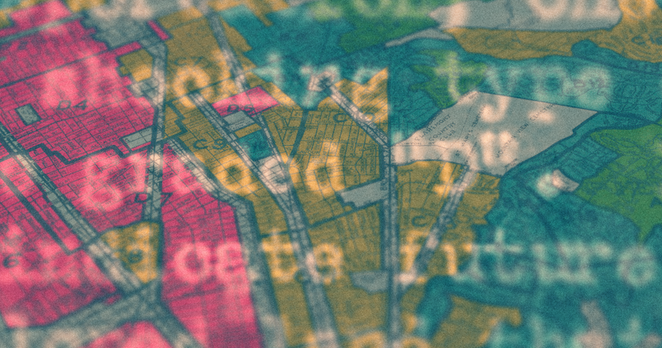
Even in California, whenever someone says ‘this neighborhood is nice’ or ‘this town is safe’, I always look up redlining. Almost always, the nice, safe places are places where Black, Asian, Hispanic, Native and other people were not allowed to buy homes. This is recent history.

I am so allergic to anyone who says words like nice and safe.

Learning about redlining helps me see why

‘Safe’ is almost always a perfect match for the places where non-white people were banned from living

https://dsl.richmond.edu/panorama/redlining/

Mapping Inequality

Redlining in New Deal America

I’ve only been in Atlanta a day and obviously there’s a lot I need to learn about it.

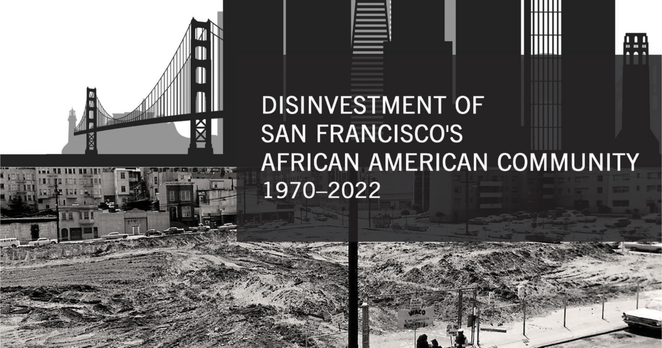
But it makes me sad that the city I live in has displaced its Black population but still thinks it is liberal and open and welcoming to all.

https://law.stanford.edu/publications/disinvestment-of-san-franciscos-african-american-community-1970-2022/

Disinvestment of San Francisco’s African American Community 1970-2022 | Stanford Law School

The San Francisco Human Rights Commission (SFHRC) has been tasked by the San Francisco Board of Supervisors to propose policies to repair enduring his

Stanford Law School

(When I worked at a Silicon Valley startup, I was curious about why they picked my Asian city to expand to before they went to other U.S. cities. They said ‘we think there’s more in common between SF and Singapore in terms of demographics and income)

Anyway, just remembering that now as I have spent the last few days outside of California. I knew there was a gap in my knowledge of the U.S. (which is very SF & NYC centric) but I am starting to see it is larger than I think.

A primary thing I am noticing:

The cities I’ve spent most of my time in are West Coast cities and New York City. This means that I actually haven’t ever been in a place that’s not.. at least 10-60% East Asian? Obviously I don’t consciously think about this daily, and it’s not a ‘I need that environment’ thing. It’s more that those places have long histories of East Asian migration and strong local communities.

Albuquerque and Atlanta have been the first places I’ve visited where that’s not the case.

I don’t feel like I consciously seek out East Asian food or groceries, but they were always *around me* whereas here I guess if I lived here I would have to drive really far to go somewhere in particular.

My friends in Oakland, CA often say ‘when someone said they were made fun of for their food in school I literally have no idea what they mean’ and this is one facet of it.

Something I’ve also been thinking about (as I’ve been dealing with some Singaporean haters who keep telling me that I chose a terrible place to live)

I feel like there’s no one way of life here. That probably sounds completely normal? But for people from very small countries, there is definitely a ‘this is the way you are supposed to be / live’ (never mind that that one prescribed way in even tiny, tiny places is usually a majority group dominating others)

But I feel like it would be laughable to even think that for the U.S., for a single town or city or state.

There’s maybe something here about the lack of national coherence that makes a lot of ‘America is X and Y’ feel incomplete

Also very tangential to my ‘immigrant discovering the rest of the US’ journey:

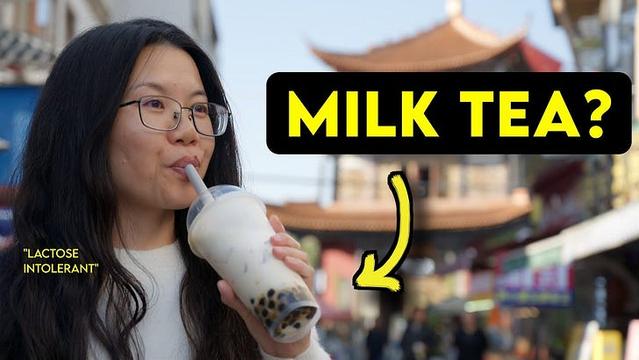
Anecdotally, many East & SE Asian immigrants seem to be only ‘lactose intolerant’ to Clover brand milk, which is the primary source of dairy whole milk in Northern California.

On a personal note I can attest that I am not intolerant of any whole milk most other places. Clover makes me so sick IMMEDIATELY. I have never experienced this anywhere else

This got me down a rabbit hole of trying to understand why. The best theory remains that Clover milk has A1 proteins which many of us can’t digest. It’s not scientifically proven, but on a ‘this doesn’t send us to the bathroom immediately’ scientific scale, A2 is much, much better. Clover also seems to be responding to this by putting out an A2 product, but until that is the default in coffee shops..

Nowhere else have I experienced this other than in Nor and Central CA (I’ve tested this in all the other states)

(Related: this excellent post on ‘if Chinese people are lactose intolerant, why all the milk tea? Sorry it’s a *stack)

https://open.substack.com/pub/chinesecookingdemystified/p/if-asian-are-lactose-intolerant-why

If Asians are Lactose Intolerant, why all the Milk Tea?

A puzzle: over 90% of East Asians are genetically lactose intolerant. So then why is there dairy everywhere?

Chinese Cooking Demystified Substack

Walking to and from the King Center

#Atlanta #Georgia

@skinnylatte
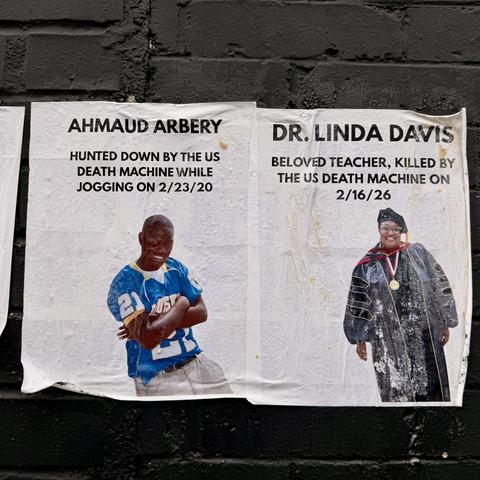
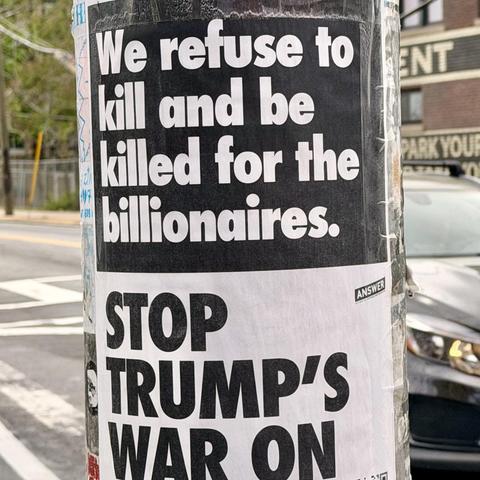
What’s the bottom part of « stop trumps war on…. »?
He’s waged war on so many different things.
@RiaResists Iran, but I left out the bottom because I think this is something that links to a pro-China leftist group

@skinnylatte

My kid can't handle A2 either, but once it turns into yogurt, buttermilk, or kefir the triplet form has broken down and it's fine.

Buffalo, goat, and sheep are also ok. I learned about a lot of very nice cheese finding a pizza topping she liked. 🙂

@eestileib yeah, the gut microbiome is so interesting
@skinnylatte when my partner's Irish diaspora family moved back to the eastern US after years in the Mediterranean and Middle East, they all found themselves intolerant to the milk here. We found a local A2 only farm and it's been fine.
@worldsworstgoth so curious. Wondering if it’s related to gut microbiome as well.
@skinnylatte it's not just a can't digest, it's an allergy, that's how the illness comes on immediately. I've got friends who get neuro symptoms from the allergy, relieved by avoiding milk or only drinking the A2 variety.
@onekind oh wow! did not know that!

@skinnylatte my bad. did some follow-up reading and it's an inflammatory pathway alright but not immune system-mediated. A1 casein -> beta-casomorphin 7 which activates μ-opioid receptors expressed in the GI tract and body, which explains how it has systemic effects. but the research is very clear that your hypothesis is well-founded. the 'Clover effect' is a side effect of mass production of food where Holsteins and Friesians are favoured for their milk output and hardiness over Guernsey and Jersey cows that produce A2 milk.

TIL that taking naloxone blocks the effect!

TIL that sheep, goat and camel milk are all naturally A2!

https://pmc.ncbi.nlm.nih.gov/articles/PMC4586534/

Checking your browser - reCAPTCHA

@skinnylatte Yes! I totally agree. Coming from Scotland even if people disagree there’s always a general consensus that this thing is always done this way. It’s both comforting and stifling at the same time. On the plus side you know exactly how everything works and what you’re meant to do but also if you suggest anything other than that to solve problems you get shut down.

Also it’s so weird getting interviewed for a job over there after living in the US and the interviewer asks where you went to elementary school because they are trying to find people that you both know or have in common.

@napalousa ha. People back home can tell exactly what school I went to, for reasons. It’s bizarre
@skinnylatte They don’t guess with me, but that leads a whole load of questions, who’s your mother, father, distant relative, school teacher, cousin, etc They have to know! It’s meant as a nice thing, but man it can be intimidating if you’ve never experienced that before.
@napalousa ha, someone on here had a theory that many British ‘inspired’ (lol) territories / ex / current colonies have a similar layer of class / caste imposed on whatever our societies already originally had. I can definitely understand that. Probably even translates to specific accents communicating social class too
@skinnylatte I can totally believe that!

@skinnylatte @napalousa

Also, they exported their shitty notions of bread to their colonies.

It's one of the lesser crimes of the British Empire, to be sure. But I count it among their crimes nonetheless.

@skinnylatte
I think a lot of our problems come from Americans who fail to appreciate or accept this. They think there is one way and it’s their way. All the evidence to the contrary—the mere fact of such diversity—drives them nuts and they treat it as a threat.
@mcmullin yes, and they like authoritarianism because they get to dictate their norms

@skinnylatte
“There’s maybe something here about the lack of national coherence that makes a lot of ‘America is X and Y’ feel incomplete.”

Definitely. This is something everyone underestimates, including Americans.

@skinnylatte

A general observation from an American who is interested in the outside world and enjoys talking to people from all over:

• Everyone knows us better than we know them.

• No one knows us as well as they think they do.

@mcmullin that’s all true, but due to power dynamics it does feel sometimes like Americans expect nuance for themselves but don’t extend that often to other. Like many are happy to say ‘all Chinese people are ax’ about what, 1.5 billion people? But sometimes get worked up when people from the outside don’t know the difference between Ohio and Oklahoma

@skinnylatte @mcmullin A lot of people seem to not be able to grasp the scope of how big the US and Canada are, and that not a single place represents the whole.

I remember travelling around Europe, beginning conversations in French so as not to be confused with being an American (it made a big difference, at least at the time) & the number of people who would ask, "do you know my cousin in Quebec?" Quebec is bigger than their countries, is only one of 10 provinces, 3 territories, so, no. :)

@skinnylatte @mcmullin And then travellers come, visit Vancouver, Montreal, or Toronto and then think they are experts on Canada. Not by a mile. :)

@CStamp @mcmullin I’ve met Europeans who believe they are experts on *all of Asia* :)

Americans too, but in a less serious way (like anime stuff / interest in Japan) vs a ‘I don’t understand why all of Asia didn’t just work the way we made it for you before you kicked us out of there unfairly’ kind of way

I know they also complain about everyone else conflating *all of europe* together

@skinnylatte @mcmullin LOL.

The importance of travel, too bad the world is such a messy place in which to travel these days.

Before working with an American company, I just saw Americans as pugnacious gun-toters, based on the news that come out of that country. It was when I spent time with my work visits down there that I learned more about the nuance of the American mind-set. That really is a hard thing to grasp unless you experience it first hand.

@skinnylatte
That’s certainly true. I didn’t mean what I said as a complaint, or as a moral comparison (much less one that would be favorable to Americans), just an observation about two kinds of knowledge asymmetry. The power dynamics you allude to are the reason for them.
@skinnylatte The “no one way of life” thing resonates with me; I don’t set out to be the weirdo but just seem to end up prefer doing everything in a way that’s unusual. The UK seems to lean a lot more into “no one way” attitude than Central Europe, which made some aspects of life in Britain nicer/easier. (Though a bunch of other aspects were significantly worse from my point of view.) But yeah, that whole thing is probably why I periodically toy with the idea of moving elsewhere.

@pmdj ha! Yeah. I can see that.

A British elderly woman I know in San Francisco once described it to me as, ‘if you decide you want to stand on one leg and knit, no one else tells you it’s a bad idea, in fact they’ll join you or encourage you’ about why she still lives there.

@skinnylatte having gone "the opposite way" with the US as the baseline, i think the US *does* have quite strong national coherence, but mostly only in the areas that you instinctively can adapt to (and so don't notice)

a stack lots of tiny little habits and assumptions, especially in the "minutiae of operating day-to-day life" domain. for example, the dominance of Brands™️. by extension, knowledge about where to go to get <product category>, at least by default. or how "every" school has "that" style of cinder block walls. generally lots of homes and other buildings with very similar construction. how to call or otherwise interact with a B2C services provider (i.e. things like what information you're likely need to have on hand. how the scripts usually go. implicit knowledge of what each individual person in that org can or cannot do) (tech megacorps broke a lot of this).

every country has this of course, but the US feels particularly weak at *explicitly* documenting and transmitting this information (apparently "most people" can still pick it up? but i found it a huge struggle). my hypothesis now is that because a lot of this developed *because of* a huge population boom, there wasn't ever a consideration of how to *continue* to transmit it.

otoh, the US *excels at* not having "one way of life" on the larger scale. i've discovered lots of ways that the US allows mobility and second chances that other countries simply don't. for example, the GED, community colleges, and generally quite robust re-credentialing infrastructure

@skinnylatte the way immigrant communities cluster is strange

I lived in a town south of Nashville and there was a big SE Asian community there for no clear reason including a Buddhist temple

@skinnylatte My folks used to drive 5 hours from where they settled in Northern Wisconsin to Chicago to buy groceries….

@skinnylatte Yeah I felt it when I moved to Chicago. ill say "I miss asian food" and the Midwest natives get miffed. There IS good Asian food here, but you have to go out and find it. Its not as ubiquitous or accessible.

For example I LOVE Korean food and having to drive an hour to get some half decent 물냉면 (mul nang myeon) on a hot day isn't the same as when I lived near LA and had to decide which of the Korean restaurants within 10 minutes I wanted to go to, or maybe I'll just go to Zion market and pick up the pack to make myself.

Not exactly the same since I'm white ... but its so baked into the culture I still miss it.

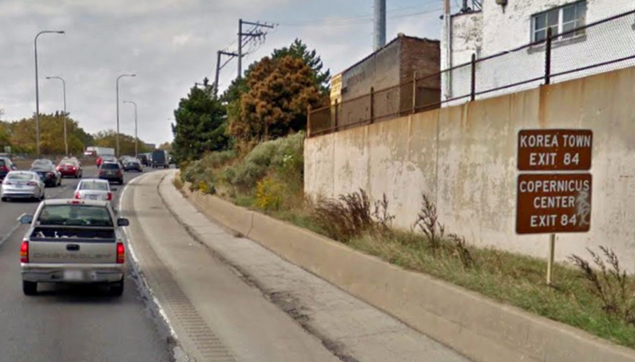
@varx @skinnylatte I also love Korean food. It's disappointing but a lot of our Korean families moved to the northern suburbs. Several of my favorite places have closed. Wbez did a curious city episode - https://www.wbez.org/shows/curious-city/what-happened-to-chicagos-koreatown/662cbf40-4fec-4af7-937f-de5f968ef5d4
A Sign From The Past: What Happened To Chicago's Koreatown?

Albany Park used to be home to Chicago's Korean community. But while some ethnic enclaves have grown, Koreatown has slowly disappeared.

WBEZ

@andrew773 @skinnylatte That's sad but it makes sense. My wife works in the loop and the west loop H-mart has been a lifesaver. Its pricy as heck but I can text her to pick something up on the way home when I get a craving.

If were gunna stay out here I need to take a Korean cooking class or something. Nothing hits quite the same. Even my vegetable-hating kid will just devour danmuji and pajeon.

@varx @andrew773 ha, as a former vegetable-hating child, if I hadn’t had access to Korean food I would not be into a single vegetable at all today

I like the recipes on Korean Bapsang

@skinnylatte literally yuuuuuuuge. But also yes the "American" demographic has more sub cohorts than you can possibly imagine!
@skinnylatte I routinely see people saying that the Philly neighborhood where my wife's house is is "unsafe" or "the hood" and I am just baffled because that does not match the lived experience.

@skinnylatte and the opposite too, I found. I've spent a lot of time in the US, on the cheap couch surfing and using airbnb when it was a house share situation, and staying in cheap hotels.

Reviews by Americans that said some area was "sketchy" always turned out to just mean "Black".

@skinnylatte and also, safe for whom?

@keira_reckons @skinnylatte exactly!

I feel way safer in a "migrant area" like #Keupstraße than say a "rich white people ghetto" like #Hahnwald, where everyone looks at you with disgust because you drive a 2007 Opel Corsa D and not a Porsche or Mercedes (AM)G…

I prefer the diverse and queer areas over the suburban hellscapes that look like the set location for " #Karen "

KAREN | Official Trailer 2021 | Rotten Film

YouTube
@keira_reckons @skinnylatte What I've found is that going by crime rates (and specific crimes against the strangers & such) most cities are fairly homogenous outside of having specific attractions or causes for shenanigans.

Of course crime rate is not a full view because it doesn't account for police aggression which is also a problem (it's just not counted because of the fundamental hypocrisy behind the definition of crime).

@skinnylatte
I am not so sure.
Take east palo alto. (It has been gentrified in the early 2000s, when IKEA moved in and such). But it was always not the nice part of the bay. Even heard that after the gentrification like 8 years ago.
Now Oakland and Hayward has been the not so nice parts. There are also not so nice parts of San jose.
And I hate hearing that but I have heard from non whites too.

Note I have not lived in the bay area for 8 years but I lived in San Mateo for 4 years and Sunnyvale for 8 years. I still have friends and family that live there too.

@pinskia the vast majority of the not so nice places of the east bay are because people of color were not allowed to live in Orinda, Lafayette, Antioch, Concord, etc

To me, 95% of ‘a place is unsafe’ can be attributed directly to racism. Even in the Bay Area. Nonwhite people can participate in racist structures too. Asians are famously anti Black. But these laws also impacted them

A Tale of Two Cities: How racism in housing deeds, redlining and gentrification led to the stark divide between Palo Alto and East Palo Alto

The bumpy potholes and ridges lining the floor of Highway 101, the historic highway traversing California’s west coast, don’t make for a smooth ride. Despite unpleasant rush hour traffic and rough paving, countless Palo Alto residents drive the lengths of 101 daily, and unofficial landmarks are recognizable to many: the all-too-familiar blue and yellow of...

The Oracle

@skinnylatte interesting, i've mostly been noticing the impact of the cold war / space race

curious to hear your observations!

@r probably two sides of the same thing? One is inward looking, the other is more the external / foreign policy stuff
@skinnylatte if you haven’t read Roxanne Dunbar-Ortiz’s book “An Indigenous Peoples’ History of the United States” I’d highly recommend it. It’s a good overview of how colonialism and counterinsurgent war built the United States, and how the legacy of those two systems pervade our current situation. As a white guy born in the land of Manifest Destiny Colorado it was really illuminating. https://www.beacon.org/An-Indigenous-Peoples-History-of-the-United-States-P1164.aspx
Beacon Press: An Indigenous Peoples' History of the United States

The first history of the United States told from the perspective of indigenous peoples

@skinnylatte Oh yes....so much is still going on today. A lot of state rivalries go back to the lead up to Civil War and were 'slave state' vs 'free state'. Like New Mexico (free) and Texas (slavers).
@kristinHenry @skinnylatte and after the Civil War, Arizona was set up by former confederate soldiers. The first time I realized that, I recalled all the 1950's black and white TV westerns. Those writers took pages out of history and made a half-hour morality play out of them. From the former soldiers, to the burning down of courthouses that held the Mexican land records, the first time I heard any of that was as a small child watching those old shows.