This country is so big. I mean, I think I knew it intellectually but I don’t think I really understood it until I spent the last few days traveling through it by train. I come from a country that’s so small, you get two other countries’ cellular signal if you stand at your window.

In four days, I’ve been in three different time zones. I’m now three hours ahead of San Francisco, here in Atlanta.

I’m in the south for the first time. It might as well be a completely different country. I’ll be checking out all the museums and monuments relating to civil rights while I’m here. This place was an important place in that struggle.

http://atlantacivilrights.com/civilrights/essay_detail.asp?phase=1
Atlanta in the Civil Rights Movement

When the train was passing through Arizona, they said Navajo Nation is larger than Vermont and Massachusetts put together. It kind of broke my brain.

I’ve found that when I try to spend more time learning about Black and Native history and culture, I get a much truer sense of the U.S. today, particularly how many of today’s problems seem to be continuations of old time racism and Civil War divisions.

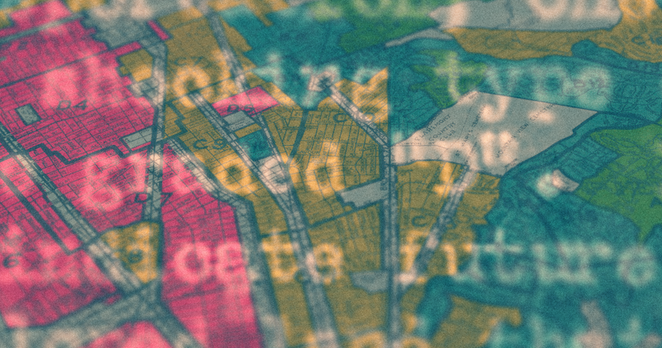
Even in California, whenever someone says ‘this neighborhood is nice’ or ‘this town is safe’, I always look up redlining. Almost always, the nice, safe places are places where Black, Asian, Hispanic, Native and other people were not allowed to buy homes. This is recent history.

I am so allergic to anyone who says words like nice and safe.

Learning about redlining helps me see why

‘Safe’ is almost always a perfect match for the places where non-white people were banned from living

https://dsl.richmond.edu/panorama/redlining/

Mapping Inequality

Redlining in New Deal America

I’ve only been in Atlanta a day and obviously there’s a lot I need to learn about it.

But it makes me sad that the city I live in has displaced its Black population but still thinks it is liberal and open and welcoming to all.

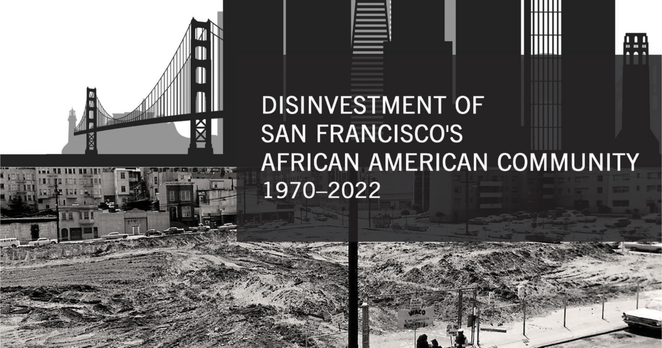
https://law.stanford.edu/publications/disinvestment-of-san-franciscos-african-american-community-1970-2022/

Disinvestment of San Francisco’s African American Community 1970-2022 | Stanford Law School

The San Francisco Human Rights Commission (SFHRC) has been tasked by the San Francisco Board of Supervisors to propose policies to repair enduring his

Stanford Law School

(When I worked at a Silicon Valley startup, I was curious about why they picked my Asian city to expand to before they went to other U.S. cities. They said ‘we think there’s more in common between SF and Singapore in terms of demographics and income)

Anyway, just remembering that now as I have spent the last few days outside of California. I knew there was a gap in my knowledge of the U.S. (which is very SF & NYC centric) but I am starting to see it is larger than I think.

A primary thing I am noticing:

The cities I’ve spent most of my time in are West Coast cities and New York City. This means that I actually haven’t ever been in a place that’s not.. at least 10-60% East Asian? Obviously I don’t consciously think about this daily, and it’s not a ‘I need that environment’ thing. It’s more that those places have long histories of East Asian migration and strong local communities.

Albuquerque and Atlanta have been the first places I’ve visited where that’s not the case.

I don’t feel like I consciously seek out East Asian food or groceries, but they were always *around me* whereas here I guess if I lived here I would have to drive really far to go somewhere in particular.

My friends in Oakland, CA often say ‘when someone said they were made fun of for their food in school I literally have no idea what they mean’ and this is one facet of it.

Something I’ve also been thinking about (as I’ve been dealing with some Singaporean haters who keep telling me that I chose a terrible place to live)

I feel like there’s no one way of life here. That probably sounds completely normal? But for people from very small countries, there is definitely a ‘this is the way you are supposed to be / live’ (never mind that that one prescribed way in even tiny, tiny places is usually a majority group dominating others)

But I feel like it would be laughable to even think that for the U.S., for a single town or city or state.

There’s maybe something here about the lack of national coherence that makes a lot of ‘America is X and Y’ feel incomplete

@skinnylatte
“There’s maybe something here about the lack of national coherence that makes a lot of ‘America is X and Y’ feel incomplete.”

Definitely. This is something everyone underestimates, including Americans.

@skinnylatte

A general observation from an American who is interested in the outside world and enjoys talking to people from all over:

• Everyone knows us better than we know them.

• No one knows us as well as they think they do.

@mcmullin that’s all true, but due to power dynamics it does feel sometimes like Americans expect nuance for themselves but don’t extend that often to other. Like many are happy to say ‘all Chinese people are ax’ about what, 1.5 billion people? But sometimes get worked up when people from the outside don’t know the difference between Ohio and Oklahoma

@skinnylatte @mcmullin A lot of people seem to not be able to grasp the scope of how big the US and Canada are, and that not a single place represents the whole.

I remember travelling around Europe, beginning conversations in French so as not to be confused with being an American (it made a big difference, at least at the time) & the number of people who would ask, "do you know my cousin in Quebec?" Quebec is bigger than their countries, is only one of 10 provinces, 3 territories, so, no. :)

@skinnylatte @mcmullin And then travellers come, visit Vancouver, Montreal, or Toronto and then think they are experts on Canada. Not by a mile. :)

@CStamp @mcmullin I’ve met Europeans who believe they are experts on *all of Asia* :)

Americans too, but in a less serious way (like anime stuff / interest in Japan) vs a ‘I don’t understand why all of Asia didn’t just work the way we made it for you before you kicked us out of there unfairly’ kind of way

I know they also complain about everyone else conflating *all of europe* together

@skinnylatte @mcmullin LOL.

The importance of travel, too bad the world is such a messy place in which to travel these days.

Before working with an American company, I just saw Americans as pugnacious gun-toters, based on the news that come out of that country. It was when I spent time with my work visits down there that I learned more about the nuance of the American mind-set. That really is a hard thing to grasp unless you experience it first hand.

@skinnylatte
That’s certainly true. I didn’t mean what I said as a complaint, or as a moral comparison (much less one that would be favorable to Americans), just an observation about two kinds of knowledge asymmetry. The power dynamics you allude to are the reason for them.