This country is so big. I mean, I think I knew it intellectually but I don’t think I really understood it until I spent the last few days traveling through it by train. I come from a country that’s so small, you get two other countries’ cellular signal if you stand at your window.

In four days, I’ve been in three different time zones. I’m now three hours ahead of San Francisco, here in Atlanta.

I’m in the south for the first time. It might as well be a completely different country. I’ll be checking out all the museums and monuments relating to civil rights while I’m here. This place was an important place in that struggle.

http://atlantacivilrights.com/civilrights/essay_detail.asp?phase=1
Atlanta in the Civil Rights Movement

When the train was passing through Arizona, they said Navajo Nation is larger than Vermont and Massachusetts put together. It kind of broke my brain.

I’ve found that when I try to spend more time learning about Black and Native history and culture, I get a much truer sense of the U.S. today, particularly how many of today’s problems seem to be continuations of old time racism and Civil War divisions.

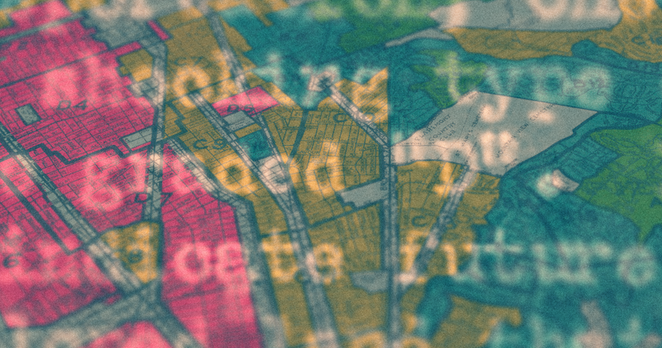
Even in California, whenever someone says ‘this neighborhood is nice’ or ‘this town is safe’, I always look up redlining. Almost always, the nice, safe places are places where Black, Asian, Hispanic, Native and other people were not allowed to buy homes. This is recent history.

I am so allergic to anyone who says words like nice and safe.

Learning about redlining helps me see why

‘Safe’ is almost always a perfect match for the places where non-white people were banned from living

https://dsl.richmond.edu/panorama/redlining/

Mapping Inequality

Redlining in New Deal America

@skinnylatte I routinely see people saying that the Philly neighborhood where my wife's house is is "unsafe" or "the hood" and I am just baffled because that does not match the lived experience.